REVIEW · STOCKHOLM
Walking Tour of Stockholm’s Old Town, Gamla Stan
Book on Viator →Operated by NORDIC FREEDOM TOURS · Bookable on Viator
Old Town Stockholm has a way of feeling huge—until you have a plan. This walk strings together the best-known medieval corners of Gamla Stan with clear, human-sized stops, from the tiny Järnpojke statue to the grand Royal Palace area. I especially like the steady pace and how the guide turns small details into big context, plus the fact that many stops are quick and admission-free.
The main thing to think about is the walking: expect cobblestones, some hills, and very limited places to sit.
In This Review
- Gamla Stan, step by step
- Key highlights you’ll feel on the street
- A two-hour Gamla Stan plan that actually works
- Starting at Mälartorget: your “Old Town map” comes alive
- Järnpojke and Prästgatan: tiny statue luck meets real street life
- Riddarholm Church and Mynttorget: power, faith, and a view toward the Royal area
- Tyska Brunnen and St. Gertrud: the Old Town story gets more specific
- The narrowest alley in Europe: Mårten Trotzigs gränd
- Nobel Museum area and Stortorget: the “modern idea” meets old streets
- Storkyrkan and the church-and-cathedral contrast
- Finnish Church (Finska Kyrkan) and the Royal Palace finale
- Price, group size, and what you’re really buying
- Shoes, weather, and pacing: the real-world tips
- Should you book the Gamla Stan Old Town walk?
- FAQ
- How long is the Walking Tour of Stockholm’s Old Town, Gamla Stan?
- What language is the tour offered in?
- How much does the tour cost?
- Where do I meet, and where does the tour end?
- Is a mobile ticket provided?
- Is tipping included in the price?
- Will the tour run in bad weather?
- FAQ
- Can I cancel and get a refund?
Gamla Stan, step by step
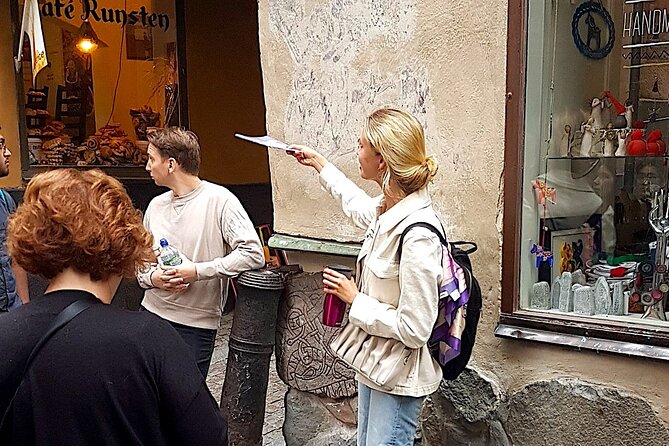
You’ll start at Mälartorget 4 and finish near the Royal Palace (Kungliga slottet). The route keeps you moving through Old Town without wasting time on big backtracks, and it works well as a first-day orientation. One practical drawback: most of it is outdoors, and winter cold or windy waterfront air can make you glad you dressed in layers.
Key highlights you’ll feel on the street

- Järnpojke, the tiny lucky bronze: rub the head of Stockholm’s smallest public statue for good luck
- Riddarholm Church on Riddarholmen Island: a medieval burial church tied to Swedish monarchs
- Mårten Trotzigs gränd: Europe’s narrowest alleyway at about 90 cm wide
- Nobel Museum stop in the Old Town setting: Nobel Prize stories in an 18th-century building (established 2001)
- Storkyrkan, St. Nicholas Cathedral: Stockholm’s oldest Old Town church, mixing Gothic and Baroque
- Royal Palace finale: the official residence with over 600 rooms and several museums nearby
You can also read our reviews of more walking tours in Stockholm


A two-hour Gamla Stan plan that actually works
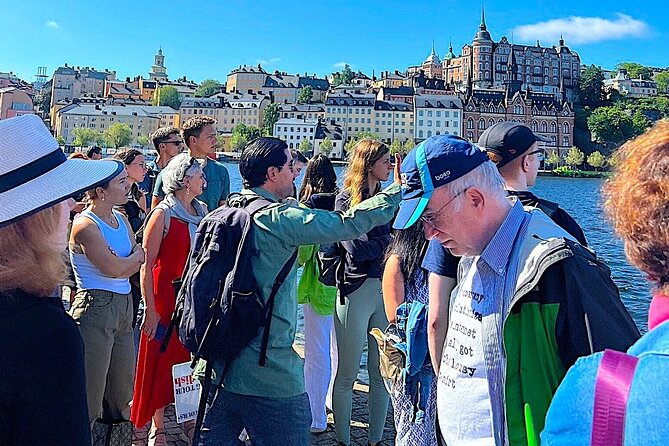
Gamla Stan can be wonderfully chaotic: narrow streets, camera-happy façades, and church towers popping up around every corner. This tour helps you sort it out. In about 2 hours, you’ll cover a compact sweep of the Old Town that gives you bearings quickly—without needing to commit to a full day.
For me, the best value is the shape of the walk. You’re not just ticking off famous names. Each stop is positioned so you naturally understand where you are—statues, squares, and churches that show how the city formed and how power and culture gathered in the same few blocks.
And because the tour is guided in English with a group cap of 25 travelers, the experience stays personal. It’s small enough that the guide can keep you together, but big enough that you’re not stressed about missing timing in a one-guide-for-everyone situation.
Starting at Mälartorget: your “Old Town map” comes alive
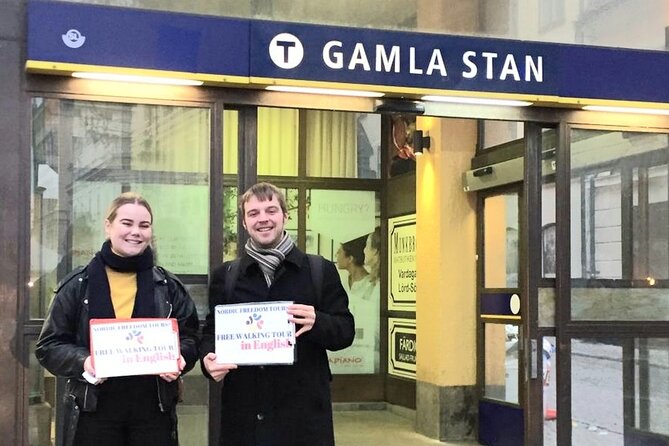
You meet at Mälartorget 4 and start walking right into the older fabric of the city. That matters more than it sounds. The first stretch is when your brain builds the basic geography: which direction key landmarks sit, how streets funnel you toward squares, and why Gamla Stan feels like a maze until you learn the pattern.
This is also where you’ll notice the tour’s practical rhythm. Most stops are short—around 10 to 15 minutes each—so you get enough time to look closely, then move on before the area starts to blur together. If you want history without getting stuck in one place, this format fits well.
Järnpojke and Prästgatan: tiny statue luck meets real street life
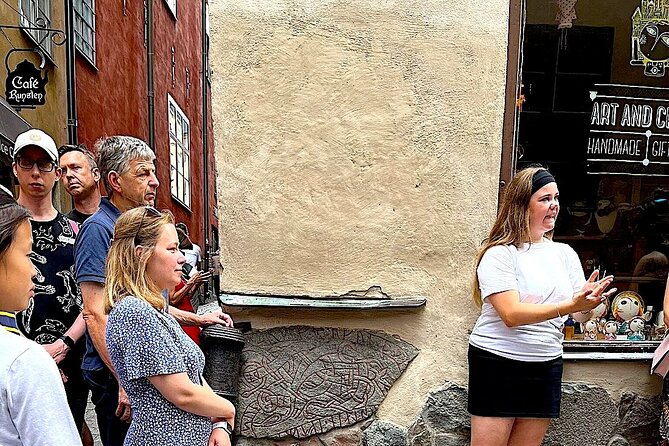
The walk begins with Järnpojken (Iron Boy), a small bronze figure described as the smallest public statue in Stockholm. It’s affectionately known as the Boy Looking at the Moon, and the tradition is simple: rub the head for good luck. This is the kind of stop that’s quick, fun, and instantly memorable—especially if you like quirky local customs.
From there you transition into the feel of the neighborhood. Prästgatan is a narrow, cobblestone street lined with colorful historical buildings, with shops and cozy cafés along the way. This is where the tour stops being “museum mode” and starts feeling like you’re moving through a lived-in historic district.
If your goal is to leave with practical next steps—where to wander for photos, where cafés cluster, what streets feel most atmospheric—Prästgatan is the kind of stop that helps.
Riddarholm Church and Mynttorget: power, faith, and a view toward the Royal area
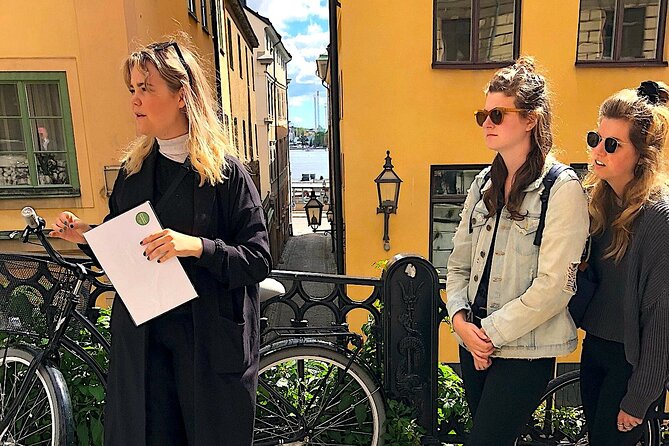
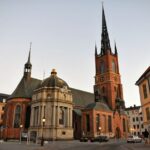
Next up is Riddarholm Church, on Riddarholmen Island near the Royal Palace. This is not just a pretty church; it’s a historic burial church known for medieval architecture and for being the final resting place for Swedish monarchs. When a tour includes a landmark like this, it’s doing something valuable: it connects the romantic postcards to the real machinery of the past.
Then you move to Mynttorget, a historic square with a strong sense of place. It’s known for its atmosphere and its proximity to the Royal Palace area, which makes it a useful pause point. Squares in Gamla Stan aren’t just resting spots—they’re where you can reset your bearings and see how buildings relate to one another.
One caution: squares can be windy, especially near water. If you’re visiting in winter, plan for that first wave of chill and wear a layer you can zip on and off.




Tyska Brunnen and St. Gertrud: the Old Town story gets more specific
Some tours focus only on the big sights. This one adds texture. Tyska Brunnen (the Tyska Brunnen well) is a historic well from the 17th century. It’s a short stop, but it signals the medieval heart of the city: water, trades, everyday life, and the structures that supported the city before modern services.
Then comes St. Gertrud’s Church, a medieval church with origins dating to the 1300s. Stops like this are worth it because the guide can point out what makes older churches different from newer ones—how style and time show up in the building fabric. Even if you’re not a church expert, you’ll start recognizing visual cues.
If you’re the type who loves learning what you’re seeing—why something is placed where it is, or what a building’s age implies—these two stops are a highlight stretch.
The narrowest alley in Europe: Mårten Trotzigs gränd
Here’s a stop that’s pure Stockholm character. Mårten Trotzigs gränd is often described as Europe’s narrowest alleyway, around 90 cm wide, dating back to the Middle Ages. It’s almost comically small when you stand in front of it, and that’s exactly why it works.
The guide’s job here is to turn the “wow, it’s tiny” moment into a sense of how cities were shaped by practical limits—land use, street planning, and how people moved through tight spaces. You get a quick, satisfying jolt of perspective.
This is also a good spot to slow down for photos. Just remember you’ll be moving with a group, so don’t stop too far off the walking line.
Nobel Museum area and Stortorget: the “modern idea” meets old streets
After the narrow alley, the route includes the Nobel Museum. The museum showcases Nobel Prize laureates and their innovative achievements, and it’s established in 2001 in a building that dates back to the 18th century. Even if you don’t go deep inside on this stop, you’ll understand why it belongs here: the Old Town provides the setting, while Nobel’s global influence brings the modern layer.
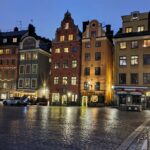
Then you reach Stortorget, a historic square dating back to the 13th century. Stortorget is known for colorful buildings and it’s closely associated with the Nobel Museum area. This pairing makes sense on foot. It helps you connect a specific museum story to the broader town setting around it.
If you like linking places across time—medieval squares to global ideas—this section is where your brain starts to click.
Storkyrkan and the church-and-cathedral contrast
Next comes Storkyrkan (St. Nicholas Cathedral), described as the oldest church in Stockholm’s Old Town. It was originally built in the 13th century and served as the city’s main place of worship. The architecture blends Gothic and Baroque styles, which gives you that classic “how Europe changed over centuries” feeling without needing a long lecture.
What I like about including multiple churches on the same walk is the contrast. You’re not just repeating the same type of stop. You see time layers. You notice different eras showing up in shape and style.
It’s also a smart move for practical visitors. Cathedrals tend to be easy to recognize and easy to orient around. If you get lost, you’ll remember the big church anchor.
Finnish Church (Finska Kyrkan) and the Royal Palace finale
The route continues to the Finnish Church (Finska Kyrkan), built in 1725 and serving the Finnish-speaking community. It’s described as Baroque in style and carries cultural heritage importance for that community. This stop is valuable because it shows Gamla Stan wasn’t frozen in time. It adapted, welcomed people, and reflected broader Scandinavian connections.
Finally, the tour ends near the Royal Palace (Kungliga slottet). This is the official residence of the Swedish monarch. It’s a grand Baroque structure with over 600 rooms, and it hosts several museums. Even if you just spend a short time outside on the finish stretch, you’ll get a strong “closing scene” feeling that ties the whole walk together.
If you still want more after the tour, this is where you can keep moving on your own—museums, viewpoints, and nearby sights all cluster around the palace area.
Price, group size, and what you’re really buying
At $13.30 per person for about 2 hours, the price is low compared to many guided walks in Europe. But the real value isn’t just the dollar amount—it’s the concentration of major stops in a short window.
You’re paying for:
- a guide who keeps the walk organized and paced for a group
- English narration that helps you understand what you’re seeing
- a route that hits key landmarks in a way that’s easier than self-navigation on your first day
The tour is also capped at 25 travelers, and that matters for listening. You’ll hear better, the group stays together, and the guide can keep momentum without leaving people behind.
One more value clue from guide feedback: guides such as Ben, Märta, Helena, and Josephine came through as energetic storytellers who handle questions and keep the group moving. That’s exactly what you want from a short orientation-style tour.
Shoes, weather, and pacing: the real-world tips
This is a walking tour with lots of cobblestones and limited places to sit along the way. That means your choice of footwear is not optional. Wear comfortable shoes with grip, especially if it’s cold or wet.
There’s also some uneven terrain and small hills in spots. Most people can participate, but if you’re managing knees or chronic pain, build in some patience. The stop-by-stop rhythm helps, but you still need to tolerate walking between points.
Finally, the tour requires good weather. If it’s canceled for poor conditions, you’ll be offered a different date or a full refund.
If winter is on your trip plan, bring hand warmers and dress in layers. Even on clear days, the waterfront wind can sneak in.
Should you book the Gamla Stan Old Town walk?
I’d book this if you want a first-day orientation to Stockholm that’s focused on the best parts of Old Town without a huge time commitment. It’s also a strong pick if you like short stops, clear explanations, and a guide who uses humor while keeping you moving.
I would skip it or choose a different option if you can’t handle cobblestones, standing for long stretches, and outdoor wind. This tour is easy to follow, but it isn’t a “sit-down-and-glance” experience.
Also, if you care about timing, notice how it’s commonly booked about 16 days in advance. Popular guided walks in central areas fill, so you’ll save stress by booking sooner rather than later.
FAQ
How long is the Walking Tour of Stockholm’s Old Town, Gamla Stan?
It lasts about 2 hours.
What language is the tour offered in?
The tour is offered in English.
How much does the tour cost?
It costs $13.30 per person.
Where do I meet, and where does the tour end?
You start at Mälartorget 4, 111 27 Stockholm and the tour typically ends near the Royal Palace (Kungliga slottet), 107 70 Stockholm.
Is a mobile ticket provided?
Yes, you get a mobile ticket.
Is tipping included in the price?
No. Tip is not included.
Will the tour run in bad weather?
The tour requires good weather. If it’s canceled due to poor weather, you’ll be offered a different date or a full refund.
FAQ
Can I cancel and get a refund?
Yes, you can cancel for free up to 24 hours in advance for a full refund. If you cancel less than 24 hours before the start time, you won’t get a refund.