REVIEW · STOCKHOLM
From Stockholm: Viking Culture Guided Tour with Transfer
Book on GetYourGuide →Operated by Sweden History Tours · Bookable on GetYourGuide
Runestones and grave fields sit just outside Stockholm. This guided outing uses real, still-standing Viking-age sites to explain how people lived, believed, and ruled long before Stockholm was a powerhouse. You’ll travel out into the Swedish countryside, then finish with time in Sigtuna, one of Sweden’s oldest towns.
I love how the tour starts at Broby bro, where you walk through a grave field and hear the story of Estrid, a woman identified from a 1995 skeleton discovery. I also love the stop in Sigtuna, with a guided town walk plus enough time to slow down near the bay, the old wooden streets, and the church ruins.
One potential drawback: the pace is efficient, so photo timing can be tricky if the guide is standing directly in front of stones or buildings during explanations.
In This Review
- Key takeaways for your Viking-age day
- Pickup in Stockholm and the real 6-hour rhythm
- Broby bro and the pagan grave field that holds over 1000 years
- Estrid’s story: how a 1995 skeleton became a named person
- Jarlabanki’s Causeway: a long 11th-century bridge story
- A Viking council site: where decisions shaped daily life
- Sigtuna: Sweden’s oldest still-existing town and its museum streets
- How the guides can change everything: Olof, Gabriel, Eric, Calle, Quentin
- Shoes, layers, and how much walking you actually do
- Food reality check: lunch is on you
- Cost and value: is $193 for 6 hours fair?
- Who should book this Viking culture tour
- Should you book it? My straight take
- FAQ
- How long is the Viking culture guided tour with transfer?
- What does the price include?
- Is lunch included?
- Where will I be picked up in Stockholm?
- What language is the live guide?
- How much walking should I expect?
- What should I bring for the tour?
- Is the tour suitable for kids or older adults?
- Can I cancel for a full refund?
- Is there a pay-later option?
Key takeaways for your Viking-age day
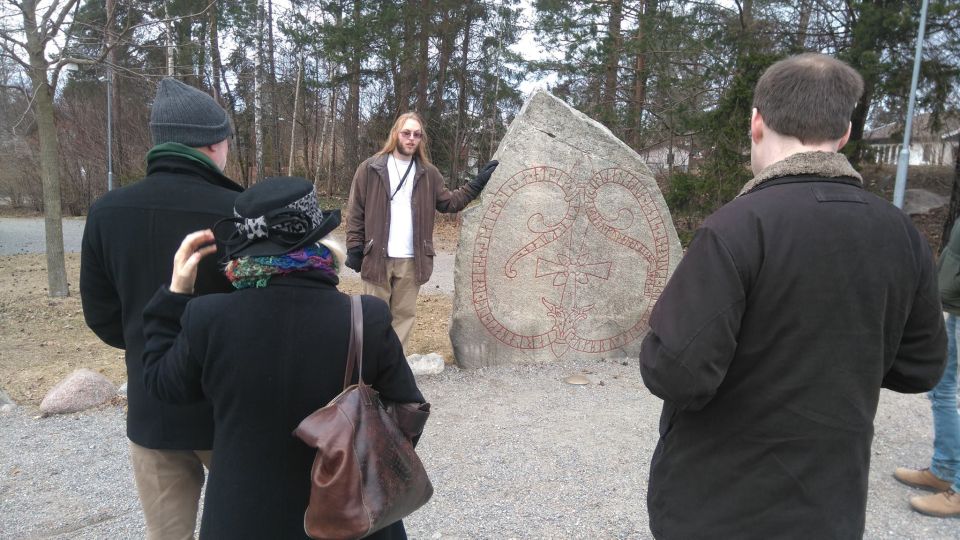
- Broby bro grave field + Estrid’s identification gives the Viking Age a real human face, not just names on rocks.
- Jarlabanki’s Causeway is a concrete, 11th-century engineering story, with a long view of the 150-meter bridge.
- A Viking council site helps you understand how power and decision-making worked in daily life.
- Sigtuna’s guided walk (about 45 minutes) balances “learn” with time to wander near the bay and old houses.
- English live guide with room for questions, and guides like Olof, Gabriel, Eric, Calle, and Quentin bring different teaching styles.
Pickup in Stockholm and the real 6-hour rhythm
This tour is built around one simple idea: get you out of the city quickly, then make the most of daylight in the countryside. Pickup happens from centrally located hotels or Stockholm Central Station, with timing that can run about 0–60 minutes before departure.
You ride out in a minivan, and the day is designed to feel like a guided walk-and-talk, not a bus tour full of staring out a window. One schedule example starts around 9:40, and the overall duration is about 6 hours, with hotel drop-off back in the city afterward.
The practical upside is you do a lot of historical ground without committing to a full day. The tradeoff is you’ll have to accept a “see a lot” pace, especially if you plan on taking photos at every stop.
You can also read our reviews of more guided tours in Stockholm


Broby bro and the pagan grave field that holds over 1000 years
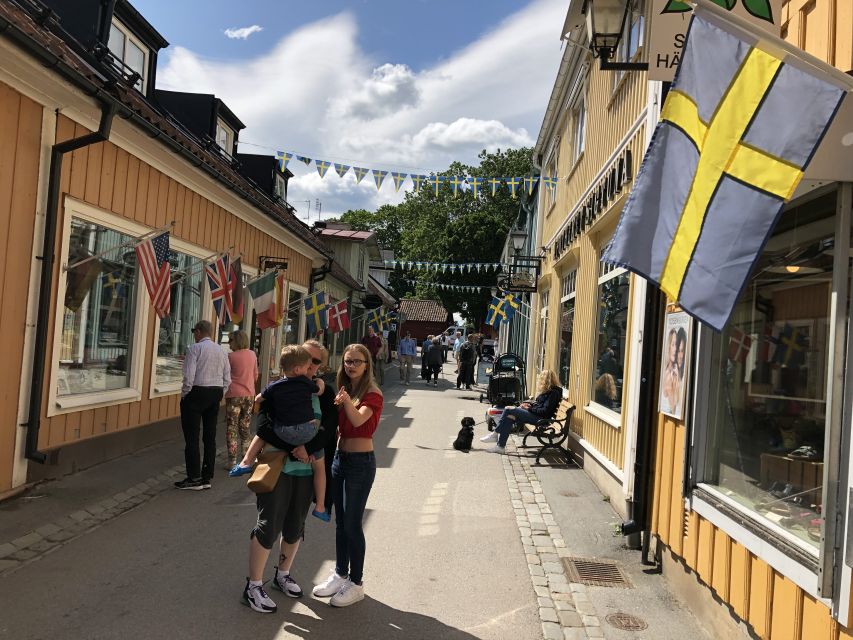
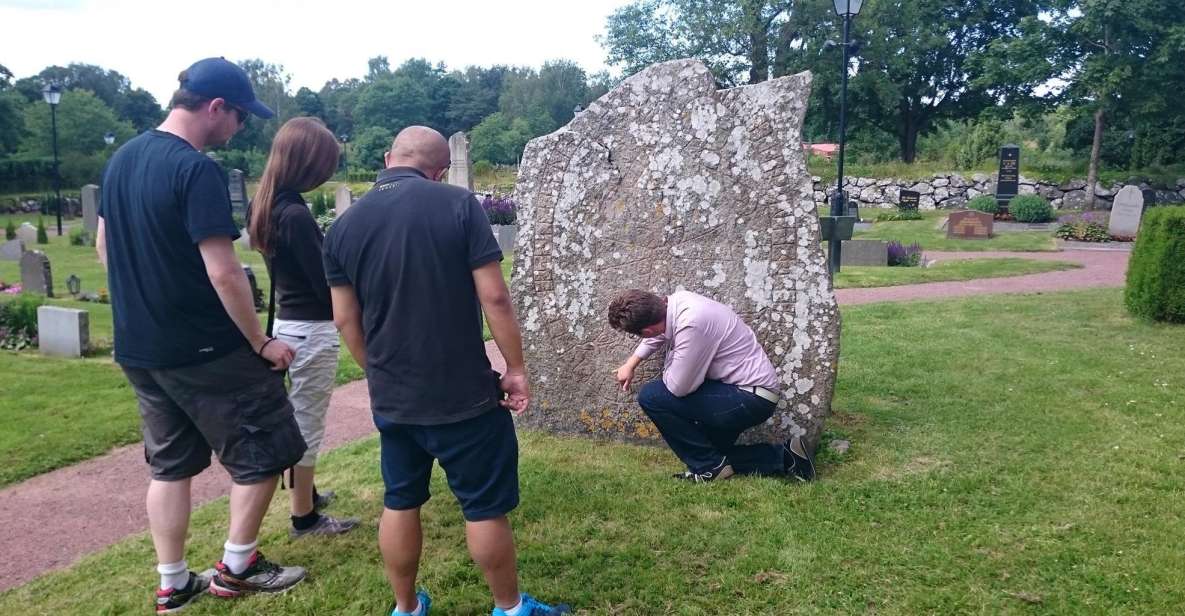
Broby bro is the kind of place that changes how Viking history feels. This Viking and Iron Age grave field has burials that stretch back more than 1000 years, and you’re not just looking at a monument behind glass.
During your time there, your guide takes you through burial traditions and mythology connected to the pagan world. You’ll also get a walk through the burial area, which helps you picture how beliefs were tied to land, graves, and memory.
There’s also a strong lesson in method here: Viking-age sites are often about interpretation, not just facts. You’ll hear how people were buried and how that reflects what mattered to the community.
Estrid’s story: how a 1995 skeleton became a named person
The most memorable part of Broby bro is often the story of Estrid. In 1995, a skeleton was found in a Christian part of the grave field, and the woman was identified as Estrid when researchers matched the remains and context.
That detail matters because it turns a “Vikings wore X and believed Y” lesson into a timeline with a person inside it. It’s also a good reminder that Sweden’s transition between pagan and Christian eras wasn’t a single switch.
If you like history with a paper trail, this is the stop where you’ll feel it. If you prefer legends, you’ll still get mythology, but grounded in how real sites were used and revisited.
Jarlabanki’s Causeway: a long 11th-century bridge story
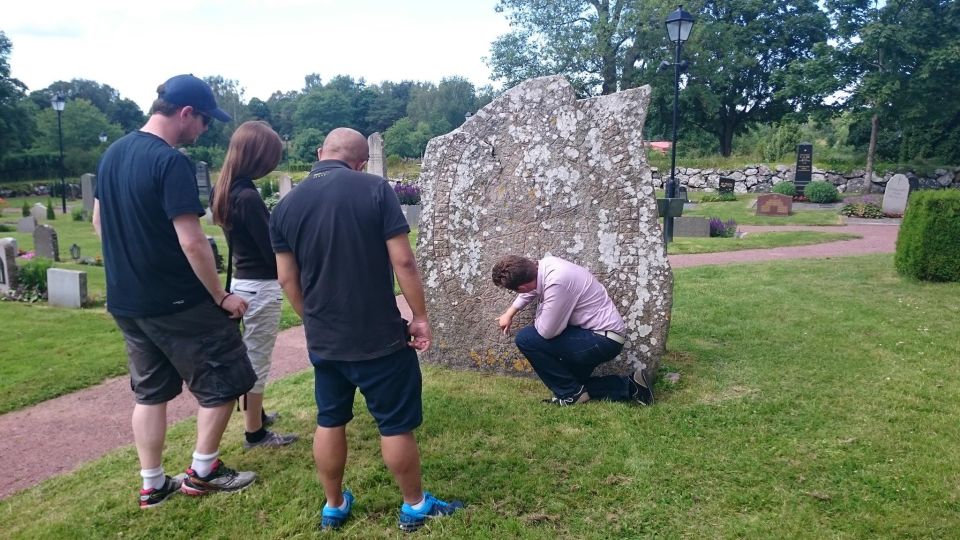
Next comes Jarlabanki’s Causeway, a Viking-age bridge from the 11th century built by Earl Jarlabanki. The site gives you something modern tourists often miss: Viking engineering wasn’t only about ships and raids, it was also about connections.
You’ll take in the view of the causeway, which stretches about 150 meters long. Then your guide connects that physical structure to the bigger idea of roads and communication in the era.
It’s the kind of stop that rewards paying attention to spacing and terrain. When you can visualize how people moved between places, Viking society makes more sense beyond battle scenes.
If you’re the type who likes questions, this is also where many guides shine. Names like Gabriel and Eric have been noted for making explanations feel interactive rather than rushed.
A Viking council site: where decisions shaped daily life
The tour includes a Viking council preserved in its original location for about 1000 years. That phrase matters, because being able to stand where people gathered changes the discussion.
Your guide uses the council site to explain Viking culture, society, and mentality. Instead of treating Vikings as one-note warriors, you’ll get an angle on how they ruled and how group decisions shaped life.
This stop is also a nice mental break from the heavier burial story. It shifts you from belief about the afterlife to social structure in the living world.
Practical tip: if you’re serious about photos, plan to step slightly sideways once your guide finishes a sentence or two. One review detail to watch for is that guides sometimes stand directly in front of a rune or building while talking, which can block shots right when the information is landing.
You can also read our reviews of more tours and experiences in Stockholm






Sigtuna: Sweden’s oldest still-existing town and its museum streets
After the countryside stops, you’ll head to Sigtuna, a small town of around 8,000 residents and the oldest still existing town in Sweden. Even if you only have about 45 minutes for the town walk, Sigtuna is packed with time markers you can physically see.
You’ll enjoy a guided walk through town and take in views toward Sigtuna Bay. The route also passes the main streets lined with 18th-century wooden houses, which are the kind of scenery that makes you understand why Swedish towns became magnets for trade and settlement.
You’ll also see 12th-century church ruins, which add a quiet contrast to the Viking-age stops. The way these time layers overlap is a big part of why Sigtuna feels different from a theme-park version of Scandinavia.
Many guides on this route are known for being open to questions, and that fits Sigtuna well. If you ask about what you’re seeing—bay, houses, church ruins—you’ll get the kind of answers that make the town walk feel like a guided narrative.
And yes, there’s a museum element too. The Sigtuna Museum is mentioned as a place with historical gems both on the streets and inside, so you’ll get a taste of how the town preserves its past.
How the guides can change everything: Olof, Gabriel, Eric, Calle, Quentin
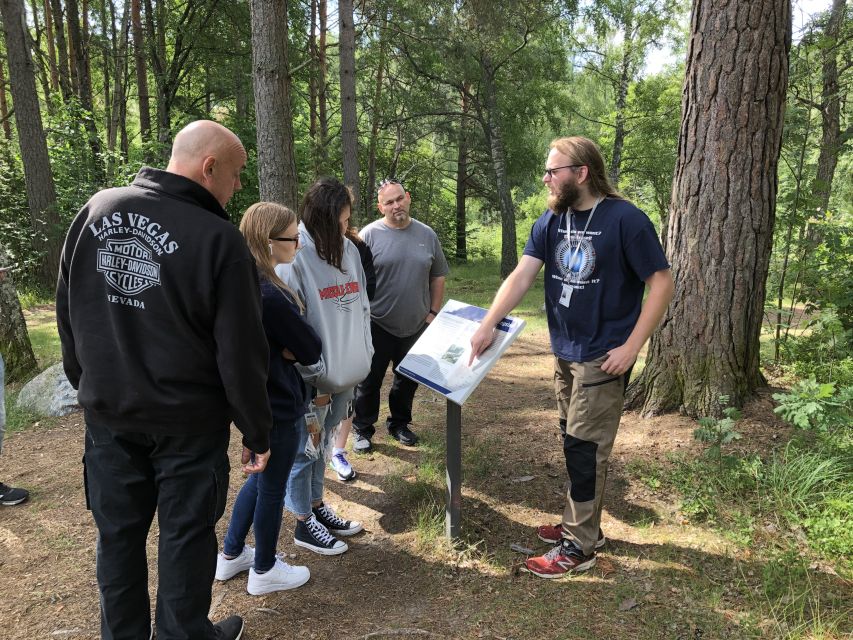
The tour quality lives and dies with the guide, and this experience tends to attract guides who care about teaching. In English, you may meet people like Olof, Gabriel, Eric, Calle, Bianca (with Calle), Quentin, Charlotte, Nadia, and also guide pairings such as Gustav and Angelina or Jonathan and Lena-Marie.
What I like about this kind of guide roster is the teaching styles don’t all feel the same. Some focus on storytelling momentum. Others emphasize question time. Either way, the common thread is that you’re not stuck with a one-direction lecture.
In one example, a guide recommended a good lunch place and helped the timing feel smooth. In another, the guide adjusted the plan around bad weather so the main learning still happened. That adaptability is worth something when Sweden weather decides to change its mind.
If you get a guide who stands in front of key carvings while speaking, treat it as a camera challenge, not a dealbreaker. Step a bit aside, keep your lens ready, and you’ll catch the site when the guide starts moving to the next stop.
Shoes, layers, and how much walking you actually do
This isn’t a marathon. There isn’t a big amount of walking, but you should expect some lightly rugged terrain and paths that aren’t always flat.
Wear comfortable shoes you can trust on uneven ground. In winter, conditions around Stockholm can be harsh, with temperatures often around 0°C/32°F, so bring layers and dress for cold weather rather than just for sunshine.
In terms of effort level, the tour is best for people comfortable with short walks at each stop rather than long hikes.
Also, the tour isn’t suitable for people under age 6 or over age 90, so if you’re planning as a multi-generational trip, check everyone’s comfort with this format.
Food reality check: lunch is on you
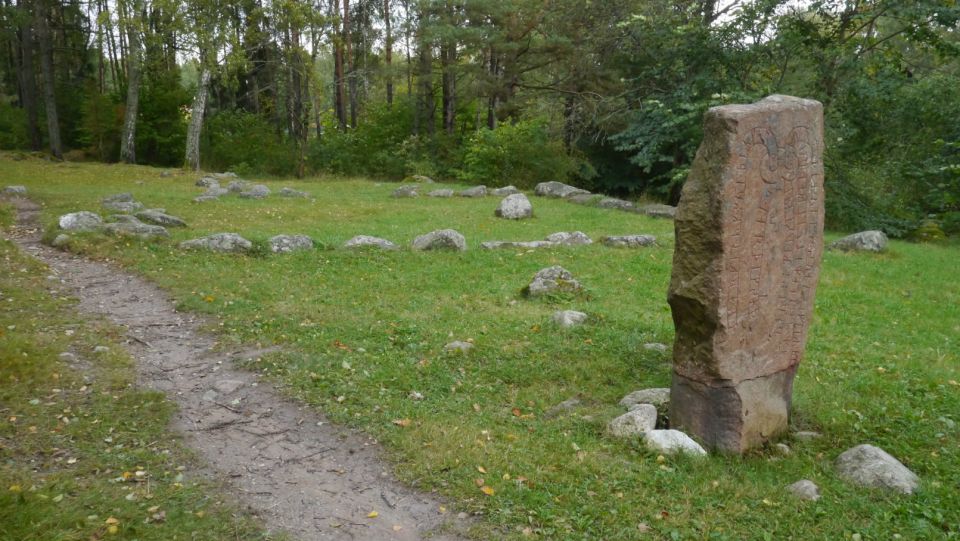
Lunch is not included, so you’ll want to plan how you’ll handle it. The tour notes that there’s a restaurant with vegetarian dishes, which is useful if that affects your choices.
If you’re trying to get full value from the day, don’t treat lunch as an afterthought. You’ll likely want to eat something that keeps you going until you’re back in Stockholm, since the afternoon still includes additional historical stops.
A practical approach is to arrive hungry but not rushed. When you pause for lunch, use the time to ask your guide what they recommend based on where you are and what you’ve already seen. The best lunch advice often comes from the person who knows how your day is unfolding.
Cost and value: is $193 for 6 hours fair?
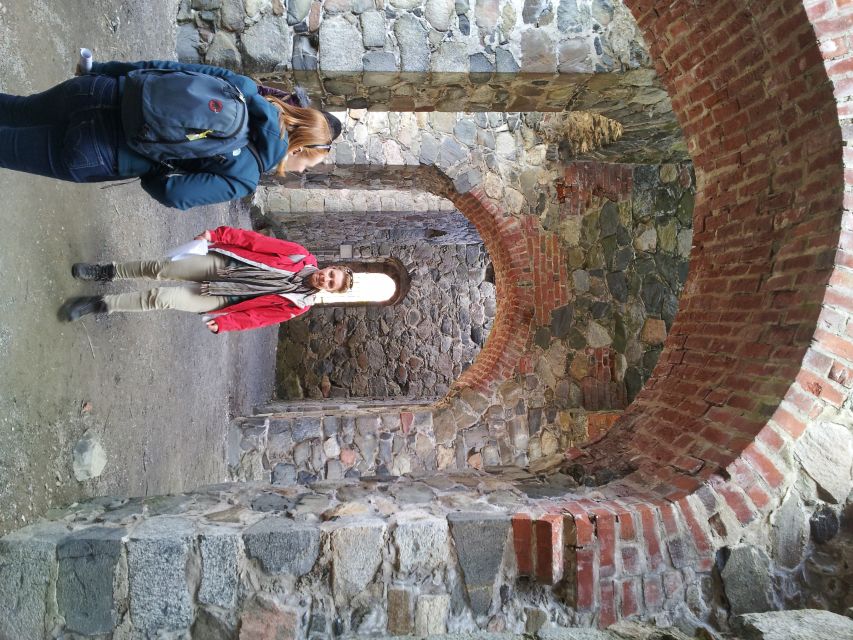
At about $193 per person for roughly 6 hours, the value comes from what’s included: hotel or harbor pickup and drop-off, transportation during the activity, and a driver/guide.
That package matters in Stockholm. Getting out to countryside sites takes time, and public transit isn’t always the smoothest way to hit multiple specific locations in one half-day. Paying for a single guided route saves you planning work and keeps the historical pacing tight.
What isn’t included is lunch, so you’re realistically budgeting a little extra on top. But if you like structure and you want guaranteed access to guided interpretation at real Viking-age locations, the price starts to make sense.
If you were doing this independently, you’d likely spend time figuring out logistics and still have to source your own explanations. Here, the guide does the connecting for you: burial practices at Broby bro, engineering at Jarlabanki’s Causeway, governance at the council site, and town development at Sigtuna.
Who should book this Viking culture tour
This tour is a strong fit if you want Viking history outside Stockholm City without spending a whole day on the road. It also works well if you like your history grounded in places you can walk to and see yourself.
You’ll enjoy it most if you:
- like guided interpretation at specific sites, not just “drive-by” viewing
- want a Viking story that includes belief, society, and daily structure
- appreciate a short walking day with some uneven terrain
- are traveling with limited time in Stockholm but still want authentic countryside context
It’s less ideal if you dislike guided speaking in close quarters or you need lots of downtime. The pace is built to cover multiple stops, and it’s not designed as a relaxed stroll through one museum.
Should you book it? My straight take
I’d book this tour if you want a focused Viking-age day that feels tied to real ground: grave fields at Broby bro, the 11th-century causeway, a preserved council site, and then Sigtuna for that satisfying town-walk payoff. The included transfer and guided structure are doing real work for you, especially when you factor in the cost of time and transport on your own.
I’d pause before booking if your priority is maximum freedom at sites or if you’re counting on perfect photo angles at every stop. A bit of photo-blocking can happen depending on where your guide stands during explanations, and the schedule doesn’t stretch for long wandering.
If you’re set on learning plus seeing, this is a solid value half-day. If you want a slow, independent history day, you might prefer a different format.
FAQ
How long is the Viking culture guided tour with transfer?
The duration is 6 hours.
What does the price include?
It includes hotel or harbor pickup and drop-off, transportation during the activity, and a driver/guide.
Is lunch included?
Lunch is not included. The tour information notes that a restaurant has vegetarian dishes.
Where will I be picked up in Stockholm?
Pickup is available from centrally located hotels or from Stockholm Central Station.
What language is the live guide?
The tour includes a live English tour guide.
How much walking should I expect?
There is not a big amount of walking, but there is some lightly rugged terrain.
What should I bring for the tour?
Bring comfortable shoes.
Is the tour suitable for kids or older adults?
It is not suitable for persons under age 6 and over age 90.
Can I cancel for a full refund?
Yes. Free cancellation is available up to 24 hours in advance for a full refund.
Is there a pay-later option?
Yes. You can reserve now and pay later.