REVIEW · STOCKHOLM
Stockholm: Old Town Guided Walking Tour (English / Deutsch)
Book on GetYourGuide →Operated by Stockholm Summer Tours · Bookable on GetYourGuide
Gamla Stan is small, but the stories are not. This 2-hour guided walk threads together medieval landmarks and the odd, human details that make Stockholm feel like a real place, not a postcard. I especially like how the guide uses historic pictures at every stop to bring scenes to life, and I love the focus on specific questions (from the narrowest alley to the Stockholm Blood Bath) that you can’t easily pick up on your own.
One possible drawback: this is a walking tour on mostly outdoor cobblestones, so it’s not a good fit if you need frequent long breaks or want fully step-free access.
In This Review
- Key highlights you’ll notice fast
- Why this Gamla Stan walk is such a practical way to start
- Birger Jarls Torg: the meeting point that instantly sets the mood
- Riddarholmen and the churches: seeing Stockholm’s spiritual edge
- The narrow-alley lesson: Mårten Trotzigs Gränd changes how you see the town
- Stortorget and the Nobel Prize Museum: from medieval squares to modern icons
- Iron Boy and the Royal zone: history with faces, not just walls
- Ending near Gustav III’s Obelisk, with fika and next-step ideas
- What you’ll learn (and why it feels different from a standard “sights” tour)
- Duration, walking style, and what to bring
- Price and value: why $29 feels fair for what you get
- Who this tour suits best, and who should skip it
- Should you book Stockholm: Old Town Guided Walking Tour?
- FAQ
- What is the duration of the Stockholm Old Town Guided Walking Tour?
- How much does the tour cost?
- Where do I meet the guide?
- What is the nearest subway station?
- What languages are available?
- What is included in the price?
- Are entrance fees included for sights?
- What should I bring or wear?
- Is this tour wheelchair accessible?
- Are unaccompanied minors allowed?
Key highlights you’ll notice fast
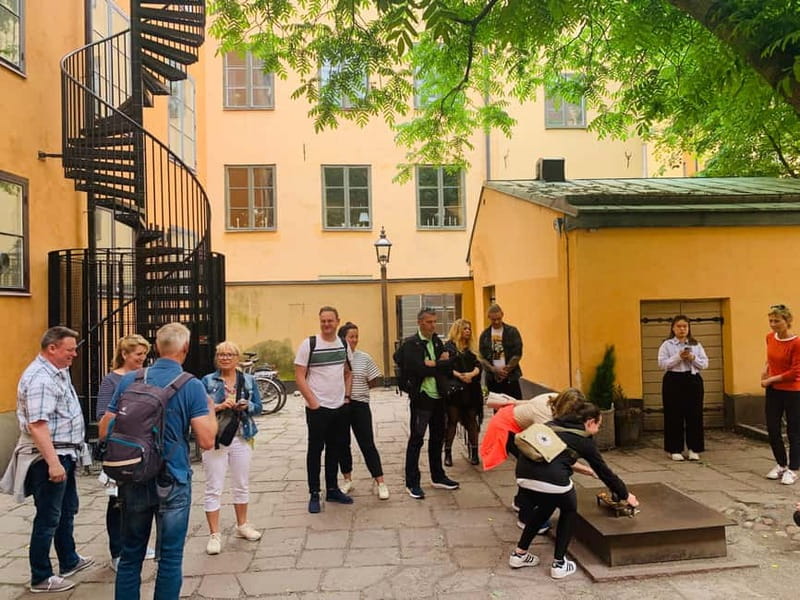
- Historic pictures at every stop that turn statues and streets into scenes
- A mini fika at the end, so the tour has a tasty payoff
- Gamla Stan topics that go beyond plaques (Blood Bath, ghetto, Vikings)
- Narrow alley time, including Mårten Trotzigs Gränd
- Royal area views from street level, not just one big “look-and-go”
- A WhatsApp message with your guide’s local recommendations after the tour
Why this Gamla Stan walk is such a practical way to start
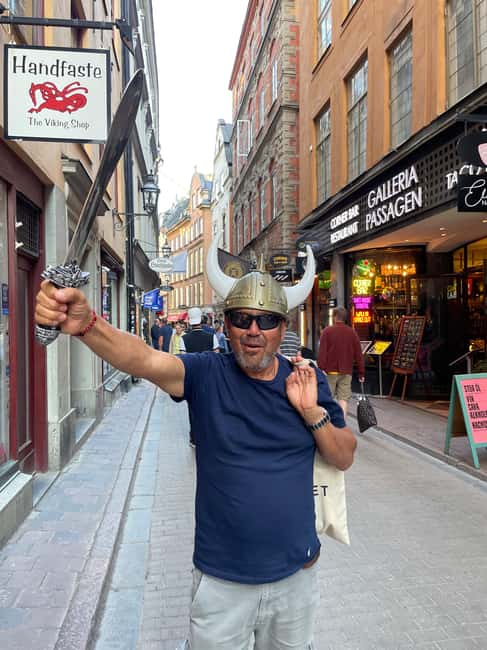
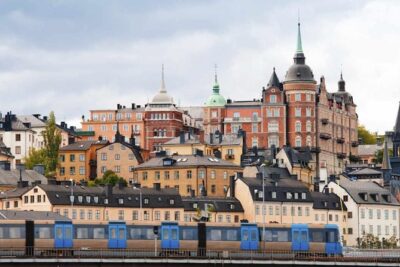
Gamla Stan can feel like a maze at first. The streets twist, the buildings look similar until you notice details, and suddenly you’re guessing which tower you’re near. This tour gives you a kind of medieval “street map” in your head. You’ll learn not just where things are, but why they mattered and who lived close by.
The best part is that it’s not only about famous monuments. The guide is set up to answer questions that help you understand daily life in old Stockholm: where power was concentrated, where ordinary people spent time, and how foreign connections shaped the city over centuries. That matters because Stockholm’s old town isn’t frozen in time; it’s still part of the living city.
You’ll also get a good rhythm: short photo stops, short walks, and enough time between sights to actually register what you’re seeing. The pace is relaxed, based on how people describe the experience, with guides making time for photos.
You can also read our reviews of more walking tours in Stockholm


Birger Jarls Torg: the meeting point that instantly sets the mood
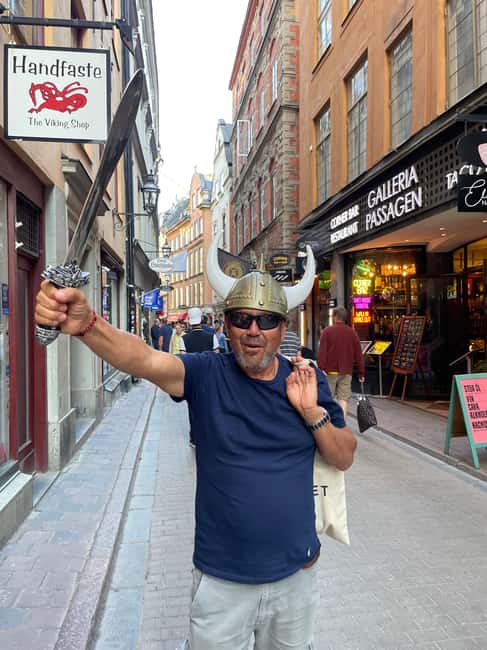
The tour starts at Birger Jarls Torg (Riddarholmen), right by the Birger Jarl statue. That location helps because it anchors you on the edge of the old town’s water-and-stone geography. From the start, you get oriented fast, which makes the rest of the walk feel less like wandering.
Your guide wears a visible vest, which is helpful in a place where streets converge in every direction. The nearest subway stop is Gamla Stan (green and red lines), which makes it easy to plug into your day even if you’re coming from other neighborhoods.
Small-group touring is part of the value here. You’re not fighting for attention, and that matters when the guide is pointing out small details like street names, architectural clues, and what certain statues are signaling.
Riddarholmen and the churches: seeing Stockholm’s spiritual edge
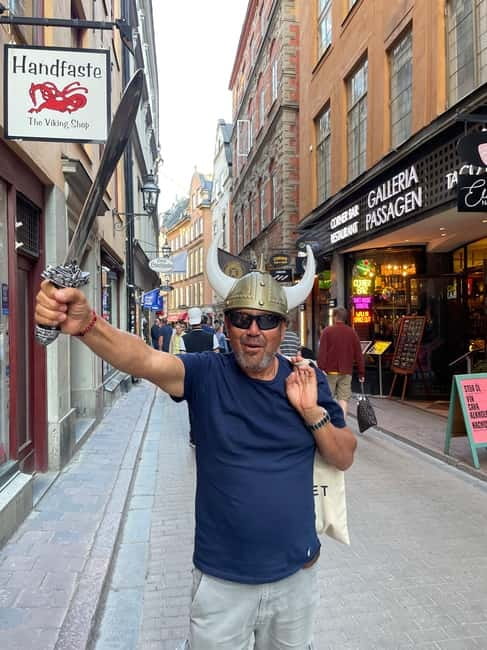
One of the early stops heads to Riddarholmen for a photo stop and a short walk. This area gives you that classic Stockholm mix of church silhouettes and waterside atmosphere. It’s also a good way to understand how “important places” were distributed, not just concentrated in one square.
Then you move through the church corridor themes, including German Church, Stockholm. This matters because Stockholm’s medieval identity wasn’t purely local. It was shaped by trade networks and neighboring cultures, and the tour uses that context to explain why certain communities and influences showed up where they did.
If you like tours where the guide connects architecture to people, you’ll enjoy this section. The stories aren’t random facts; they’re built to answer the big question of who held influence, who practiced faith, and how foreign trade and settlement played out on the ground.
The narrow-alley lesson: Mårten Trotzigs Gränd changes how you see the town
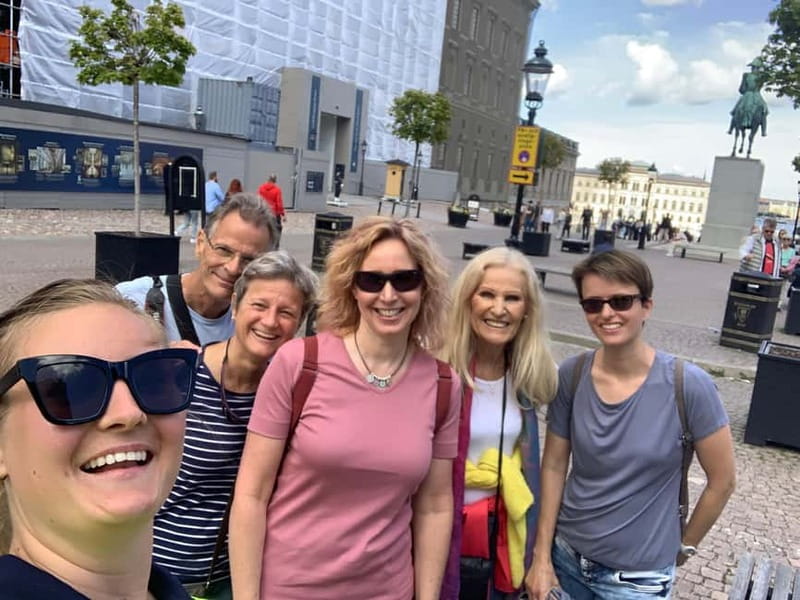
After a few street segments, the tour gives you time for Mårten Trotzigs Gränd, often highlighted as the narrowest alley. This isn’t just a photo opportunity. A tight alley like this changes how you imagine old daily life—visibility, movement, how heat and weather felt, and why street patterns mattered for defense and community flow.
This part of the walk is one of the most memorable because it’s tangible. You’re not only learning; you’re physically experiencing what the city plan looked like when it had to work for medieval needs.
You’ll also pass by several named alleys and streets in the same “tight-and-twist” style (with repeated photo stops). That repetition is a feature, not filler. It helps you notice how Gamla Stan’s character stays consistent even as the names change.
Stortorget and the Nobel Prize Museum: from medieval squares to modern icons
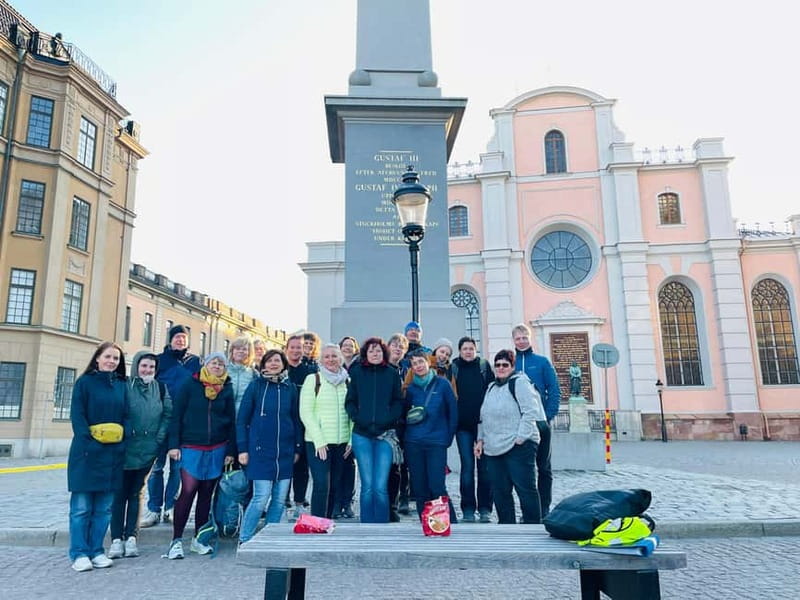
Next comes Stortorget, one of the key town-square stops. Town squares are where power and public life overlap, so it’s a smart place to pause and understand the city’s social rhythm. It’s also a location where the tour’s big historical themes can land: trade, guild life, public order, and what happened when conflict hit the streets.
Then you’ll see the Nobel Prize Museum area. It’s a modern landmark in an old-town setting, and that contrast is useful. It quietly reminds you that Stockholm’s identity didn’t end in medieval times. The same streets can host different eras of meaning.
You don’t go inside for any attractions on this tour. The tour keeps things outside, which makes your timing easy. You get sightlines and context without paying entrance fees mid-walk.
You can also read our reviews of more guided tours in Stockholm





Iron Boy and the Royal zone: history with faces, not just walls
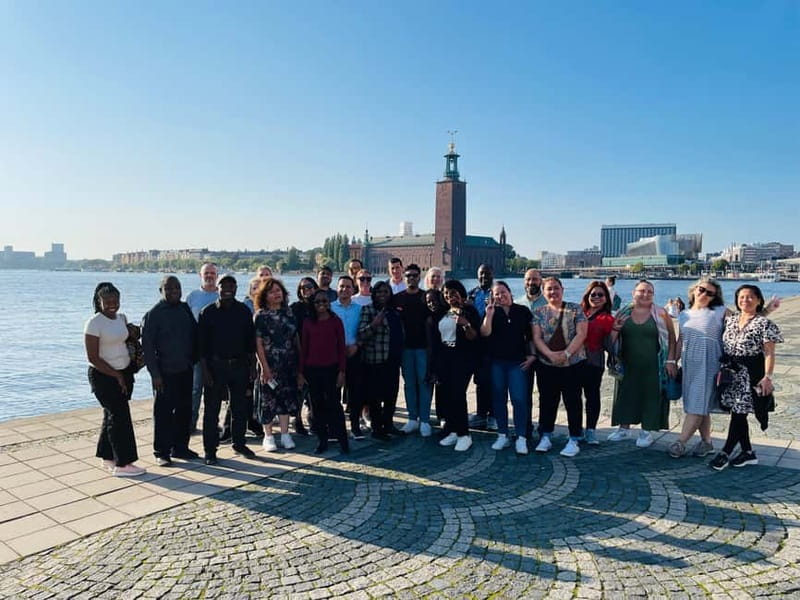
A standout stop is the Iron Boy (Boy who watching the moon). It sounds like a quirky detour until you realize public art like this is Stockholm’s way of giving personality to the space. It’s also a nice break from the heavier political-story beats you’ll hear near the Royal area.
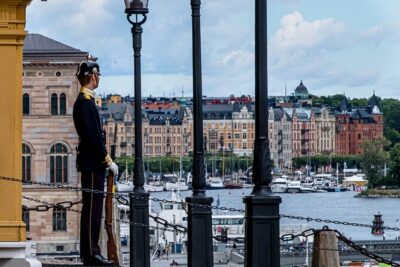
Then it’s on to Royal Palace, Stockholm for a photo stop, followed by Stockholm Cathedral. This is where the tour helps you connect monarchy and religion to the surrounding streets you’ve been walking through. You’ll get context for why those buildings matter and how they helped define the city’s identity.
At this point, you’ll also be listening for the tour’s recurring themes: foreign connections, internal tensions, and how power shaped daily life. The guide promises to cover topics like why Stockholm stayed close to neighbors and whether rivalry with Denmark has deep roots. If you enjoy story-driven tours, these are the kinds of historical threads that make the final stretch stick in your mind.
Ending near Gustav III’s Obelisk, with fika and next-step ideas
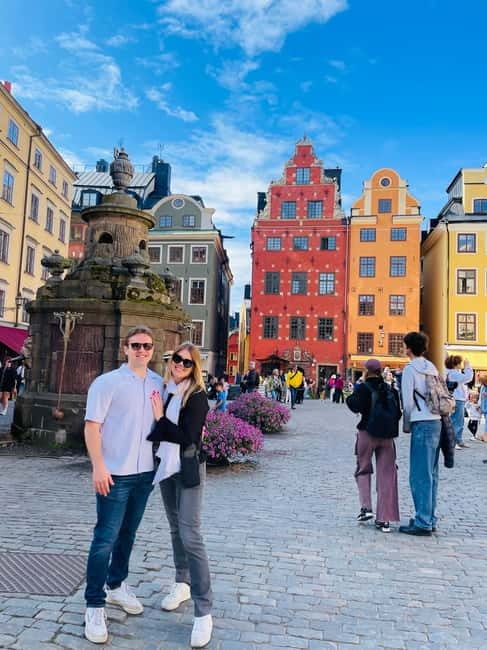
The tour wraps up at Gustav III:s Obelisk (and the activity details also indicate the tour ends back at the meeting point). Since those can sound contradictory, I’d treat your confirmation details as the final word. Either way, you’ll finish in a central old-town location where you can keep exploring.
Before you head out, there’s a mini fika—a Swedish sweet snack. It’s not a full meal, but it’s a friendly close to the story-heavy walk. It also gives you a moment to breathe before you tackle the next part of your Stockholm day.
You’ll also receive a WhatsApp message after the tour with your guide’s local recommendations: restaurants, fika spots, viewpoints, budget-friendly options, and archipelago island ideas. This is practical value. You get direction for where to go next without guessing.
What you’ll learn (and why it feels different from a standard “sights” tour)
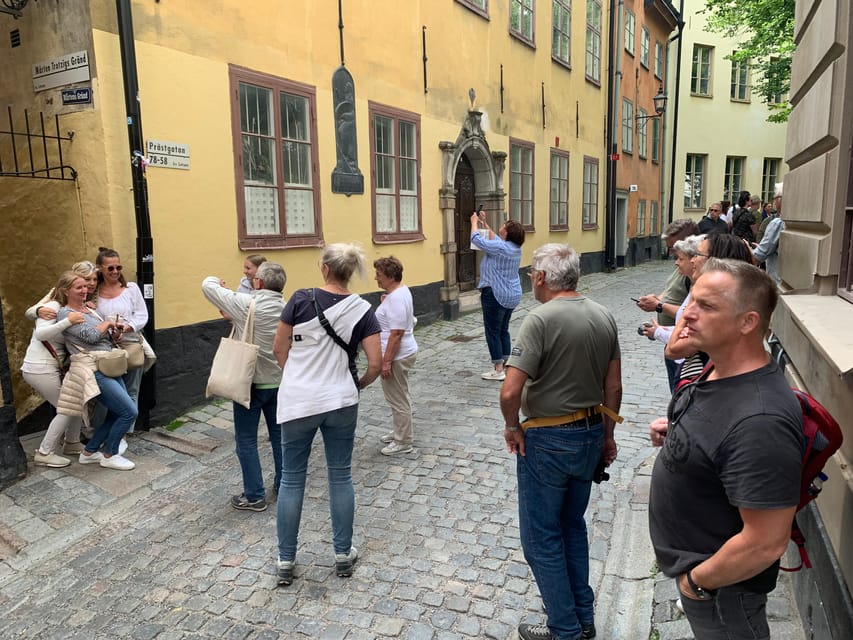
The guide’s question list is the clue to what this tour delivers. You’ll hear answers to things like:
- Where the oldest building is
- Where the most narrow alley is
- Whether people still live in Gamla Stan
- What life was like and who lived there
- Whether Gamla Stan was a German colony during Hanseatic League times
- What really happened during the Stockholm Blood Bath
- Where the executioner lived and stories connected to Hell Street and the ghetto
- Whether Vikings lived in Stockholm
- Why a French officer became Swedish king in the early 1800s
- If there’s still rivalry with Denmark
That list matters because it pushes beyond dates and names. It’s about how the city worked, who benefited, and how conflict and trade shaped neighborhoods. If you’ve ever left a tour thinking, Okay, I saw buildings, but I still don’t understand the place, this format is aimed at fixing that.
Also, the guides reported in the experience descriptions are doing more than reciting facts. One guide named Sophie is noted for using visual aids to help you visualize pre-modern life. Another guide named Andre is described as very friendly and even helping people get great family photos. That kind of energy makes a difference on a short 2-hour walk.
Duration, walking style, and what to bring
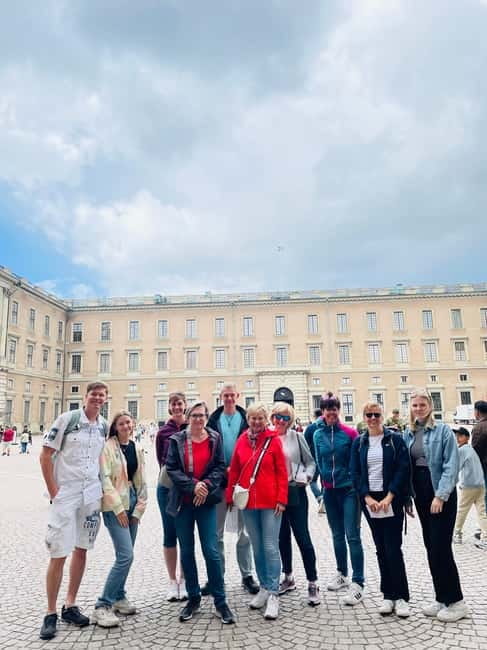
The tour is 2 hours, and you can choose a starting time based on availability. It’s designed around a sequence of outdoor photo stops and short walks, which helps if you want structure without committing to a long day.
What to bring is straightforward:
- Comfortable shoes (important on historic streets)
- Weather-appropriate clothing (Scandinavian weather can change quickly)
- A charged smartphone (handy for photos and for reading any follow-up recommendations)
Not allowed rules are also worth noting: no intoxication and no unaccompanied minors. And it’s not suitable for wheelchair users.
Price and value: why $29 feels fair for what you get
At $29 per person for a 2-hour guided walk, you’re paying for more than just “someone to point.” You’re getting:
- A local, experienced guide
- Historic pictures used at stops
- A mini fika
- A post-tour WhatsApp list of recommendations
- Outdoor-only sightseeing, with no entrance fees to the sights since you’re viewing from outside
That last point is big. In old towns, entrance fees can sneak up fast if you keep adding museums and churches. Here, you avoid that risk while still hitting a lineup of major sites like the Royal Palace area, Stockholm Cathedral, and key squares.
In other words, you’re buying orientation plus story context. If that’s what you need early in your trip, this is good value.
Who this tour suits best, and who should skip it
This tour is a strong match if you want to:
- Get oriented in Gamla Stan quickly
- Learn how medieval Stockholm worked socially and politically
- See major landmarks like the Royal Palace and Stockholm Cathedral without paying multiple entrance fees
- Appreciate storytelling with pictures and clear answers to specific historical questions
- End with a small cultural treat and actionable next-step tips for the rest of the city
You might skip it if:
- You need step-free routes or wheelchair accessibility
- You hate walking on uneven outdoor streets
- You prefer only museum-style visits with indoor time
If you want an even more active day, the operator suggests pairing with a bike tour that covers more of Stockholm.
Should you book Stockholm: Old Town Guided Walking Tour?
If it’s your first time in Stockholm, I’d book this. It’s a clean way to understand Gamla Stan’s layout and story threads in just 2 hours, and the format is built around making facts feel connected. The historic pictures and the specific “how did this work” questions are exactly what turn a cluster of streets into a place with meaning.
One small caution: plan for weather and comfortable footwear. If your legs don’t like cobblestones, you’ll feel it faster than you would on an indoor museum day.
Overall, this tour is for you if you like history that explains daily life, trade links, and power struggles, not just shiny monuments. And the fika plus the WhatsApp recommendations are the kind of practical extras that make the money feel well spent.
FAQ
What is the duration of the Stockholm Old Town Guided Walking Tour?
The tour lasts about 2 hours.
How much does the tour cost?
The price is $29 per person.
Where do I meet the guide?
Meet at Birger Jarls Torg (Riddarholmen), right by the Birger Jarl statue. The guide wears a visible vest.
What is the nearest subway station?
The nearest subway station is Gamla Stan (green and red line).
What languages are available?
The tour is offered in English and German, and it can also be booked in Spanish and Swedish depending on availability.
What is included in the price?
You get a local, experienced guide, historic pictures at every stop, a mini fika, and your guide’s list of local recommendations.
Are entrance fees included for sights?
No. The tour passes by sights from the outside, so there are no entrance fees included.
What should I bring or wear?
Wear comfortable shoes and dress for the weather. Bring a charged smartphone for photos and follow-up info.
Is this tour wheelchair accessible?
No, it is not suitable for wheelchair users.
Are unaccompanied minors allowed?
No. Unaccompanied minors are not allowed.