REVIEW · STOCKHOLM
Stockholm Troll Hunt: Self-Guided Old Town Adventure
Book on Viator →Operated by Questo · Bookable on Viator
A troll hunt sounds like a game plan. This self-guided, fully virtual quest turns Gamla Stan landmarks into a 12-step story you work through at your own pace. I like that it’s a private experience for your group, and I also like the built-in flexibility to pause and resume anytime. The main drawback to plan for is setup time and occasional translation quality issues, so give yourself a cushion before you start.
For about $7.21 per person, you’re buying a short, history-flavored walk that ends right in the Old Town’s heart. It’s designed for families and small groups, and it’s offered in English. One more practical note: the route spans multiple sites along the Old Town streets, so comfortable shoes matter even if the puzzles are phone-based.
In This Review
- Key things to know before you hunt trolls in Gamla Stan
- The big idea: a virtual clue walk through real Old Town stops
- How the quest timing really feels on the ground
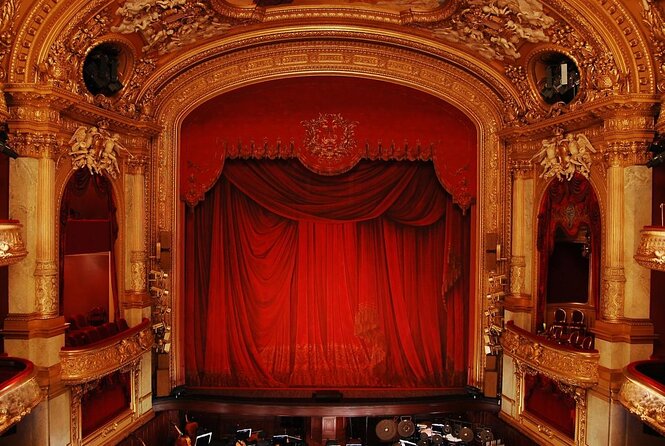
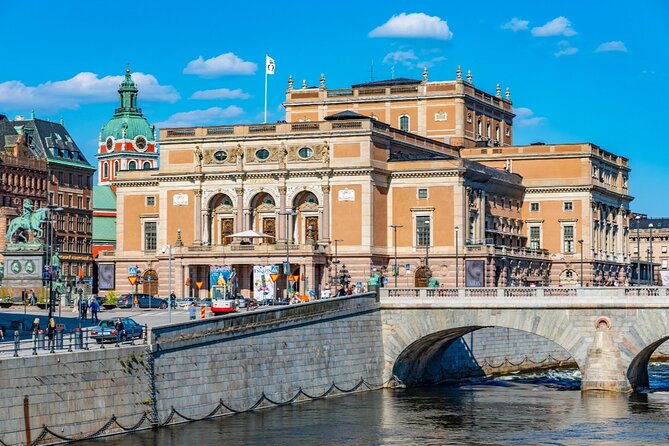
- Start at the Royal Swedish Opera: where your hunt begins
- Stop 2: the first parliament story tied to Arboga (1435)
- Stop 3: the 18th-century palace that became a European stir
- Stop 4: Royal Armoury and the story behind ceremonial weapons
- Stop 5: Storkyrkan (Stockholm Cathedral) and Birger Jarl’s legend
- Stop 6: the Liss Eriksson sculpture behind the Finnish Church
- Stop 7: Sten Sture the Elder and Saint George in the Brunkeberg story
- Stop 8: Den Gyldene Freden, the Golden Peace (opened 1722)
- Stop 9: Järntorget, trade center energy from around 1300
- Stop 10: the school and library near Storkyrkoskolan
- Stop 11: Sankta Gertrud Church and the German neighborhood link
- Stop 12: the palace of the purse, Swedish Academy, and the Nobel Museum
- Who this self-guided Troll Hunt suits best
- Quick practical tips so you don’t lose time
- Should you book the Stockholm Troll Hunt?
- FAQ
- Is there a live, physical guide?
- How do I access the Stockholm Troll Hunt?
- What’s the duration?
- Is it private?
- Is it available in English?
- What places do you pass on the route?
- Can I pause and resume during the quest?
- Is there free cancellation?
- FAQ
- Are service animals allowed?
- Do most people have a chance to participate?
- Where does the quest start and end?
Key things to know before you hunt trolls in Gamla Stan
- Private, phone-based quest: only your group plays; no physical guide walks with you
- 12 interactive puzzle challenges tied to local legends and specific landmarks
- Start at the Royal Swedish Opera and finish at Stortorget 7
- Pause and resume anytime, which makes timing easier if you snack, wander, or take photos
- English is available, but one low-rating report flagged translation clarity problems
- Setup can take longer than expected, so plan to install before you’re on the street
The big idea: a virtual clue walk through real Old Town stops
This isn’t a guided history lecture. It’s a quest. You follow a storyline inspired by legends and local history, and each stop asks you to look around and answer a challenge before you move on. That format is why it works: you’re not just seeing places, you’re hunting for the detail that connects the location to the next piece of the story.
The route is short by city-walking standards—about 50 minutes to 1 hour 15 minutes—and it’s built for doing in one go, with enough flexibility to pause when life happens. If you have kids, this kind of “find the answer” structure keeps attention better than most traditional sightseeing.
Value-wise, $7.21 per person is in the “cheap enough to try” range. You’re not paying for a live guide’s time. You’re paying for the content, the puzzle structure, and the mobile access code that unlocks the experience.
You can also read our reviews of more guided tours in Stockholm


How the quest timing really feels on the ground
You’ll follow a sequence of 12 stops, from Royal Swedish Opera (Kungliga Operan, Gustav Adolfs torg 2) to Stortorget 7. The content is delivered through your mobile app using a code, with interactive challenges at each point.
Two things make timing work in your favor:
- You can pause and resume, so you can step aside for a photo or a bathroom break without losing the whole experience.
- It’s sized for a single Old Town loop. You’re not committing to an all-afternoon walking tour.
Two things to watch:
- If installation/setup eats time, your playing window can shrink. One unhappy report said setup took over an hour, and then they didn’t have enough time to finish.
- Translation clarity can vary. Another low-rating note mentioned parts were hard to understand, which is exactly the kind of thing that can slow you down.
My practical advice: install and get your code ready before you reach the first stop. Even if the experience is self-paced, the street scene moves fast, and you’ll enjoy it more with a few minutes of breathing room.
Start at the Royal Swedish Opera: where your hunt begins
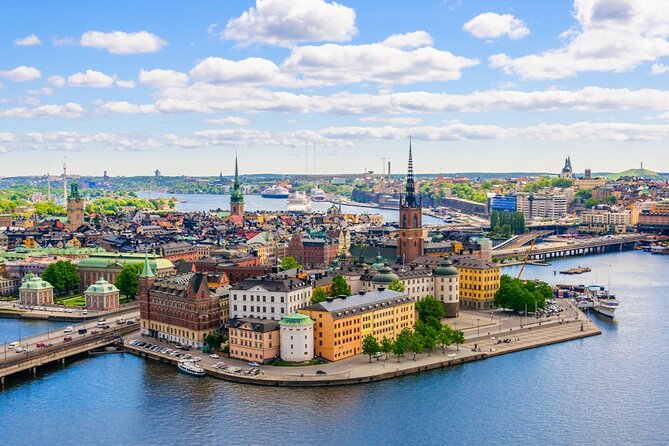
You begin at the Royal Swedish Opera, Sweden’s national theatre for opera and ballet. The building has been in that national role since January 18, 1773, when the first performance took place. A couple of years earlier, in 1771, King Gustav III dismissed the French opera troupe that had been performing in Stockholm for around 20 years. His goal was to form a Swedish ensemble that could stage Swedish operas.
In the first challenge here, you’re meant to look around and find the answer that advances you to the next location. That early moment matters because it sets the rhythm: you’re training your eyes to spot the details the quest wants.
Why this start is smart: it’s a landmark with strong dates and a clear story hook, so even if you’re not an opera person, you get a concrete anchor fast. And it’s a good “orientation point” for Gamla Stan walking.
Potential drawback: if you start late or with your app not ready, the opening stretch can feel like you’re standing around before the story even begins. Solve that by getting everything working at the start line.
Stop 2: the first parliament story tied to Arboga (1435)
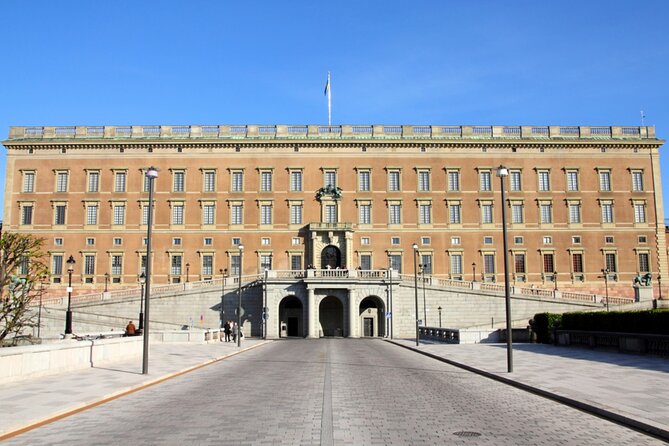
Next comes a political-history stop, anchored by the idea of the first parliament meeting commonly viewed as taking place in Arboga in 1435. After early meetings, Swedish parliament became represented through the Four Estates—nobility, clergy, burghers, and peasants.
Your task again is active: look around for the answer to the challenge that moves you forward. This approach turns what could be dry facts into a puzzle-you-earn. You’re not memorizing dates; you’re connecting a location detail to a bigger historical idea.
Value for you: even in a short 50–75 minute walk, you’ll pick up how Sweden’s political system evolved, and you’ll remember it because it’s tied to a specific moment on the street.
Small caution: political facts can be easy to skim past. If you tend to rush, slow down just enough to read the story text on your phone before you search for the answer.
Stop 3: the 18th-century palace that became a European stir
Then you face a palace-style stop described like this: when the palace was first built in the 18th century, it created a stir across Europe, and today it’s considered an emblematic building of the Baroque era. The quest doesn’t ask you to take a history test. It asks you to look around and find the answer that advances the storyline.
This is the sort of stop that feels rewarding even if you’re not deeply into architecture. Baroque buildings often come with dramatic silhouettes and strong design. The quest makes you pay attention to those visual cues instead of just passing by.
Possible drawback: because the challenge is text-and-look-based, if you’re moving quickly through the area, you might miss what the puzzle is pointing you toward. For the best experience, treat each stop like a tiny scavenger hunt, not a photo stop.
You can also read our reviews of more tours and experiences in Stockholm





Stop 4: Royal Armoury and the story behind ceremonial weapons
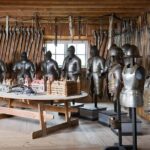
The Royal Armoury is the next clue stop. Here the focus is on the oldest artefacts: sets of royal state and ceremonial weapons stored in the old Three Crowns Palace during the 16th century. The quest also highlights a chilling personal detail: in the 1620s, Gustavus Adolphus wanted his blood-spattered clothes saved as a perpetual memoria.
Again, your phone challenge pushes you to look around and extract the answer that moves you ahead. That’s a smart way to keep the story grounded in place. Instead of reading about royal artifacts in the abstract, you’re linking the idea to what’s near you right then.
Why it’s worth your time: it adds texture to Swedish history by mixing power, ceremony, and a very human detail. Even if the weapons themselves aren’t the point of the puzzle at that exact moment, the story makes the stop memorable.
Stop 5: Storkyrkan (Stockholm Cathedral) and Birger Jarl’s legend

Storkyrkan—officially Church of St. Nicholas—is described as the oldest church in Gamla Stan. It was first mentioned in 1279, and tradition says it was originally built by Birger Jarl, the founder of the city.
This stop is especially good for families because it gives you a clear origin-story. You’re not guessing why the place matters; the quest frames it with age and identity.
Your role stays the same: look around for the answer to the challenge that advances to the next stop. The active “find it” format works well here because the church area is visually rich, so you have plenty of cues to work with.
One practical note: churches can attract tourists and slow you down. If you want a smoother experience, keep your phone at the ready so you can answer quickly and move on.
Stop 6: the Liss Eriksson sculpture behind the Finnish Church
Now you get a real-world “where is it?” moment. This sculpture was created in 1954 by Swedish artist Liss Eriksson, but it wasn’t inaugurated until 1967. It sits behind the Finnish Church, only a few meters off the Stockholm Palace, but it can be hard to find due to a secluded location.
That description is basically the puzzle in disguise: the quest is training you to slow down and search the edges, not just the obvious front-and-center views.
Why I like this stop type: it turns navigation into a game. Old Town sightseeing can feel like you’re always walking past the same postcard angles. This kind of challenge nudges you off the main line.
Potential drawback: if you’re prone to impatience, secluded locations can feel annoying. The trick is to give the area a few minutes before deciding you’re lost. The quest is telling you it’s easy to miss, so don’t rush.
Stop 7: Sten Sture the Elder and Saint George in the Brunkeberg story
Another dramatic story stop: a statue commissioned by Sten Sture the Elder after his victory over the Danish army in the Battle of Brunkeberg (1471). During the battle, Sten Sture’s army placed itself under the protection of Saint George. The sculpture isn’t signed by Sten Sture, and it’s widely attributed to the workshop of Bernt Notke.
Here your challenge is once again about looking around and finding the answer linked to the story. The best part of this stop is that it explains the symbolism behind the statue, not just the fact that it exists.
For you, that means the artwork becomes more than decoration. You’re seeing how a late medieval victory gets translated into religious and cultural meaning.
Stop 8: Den Gyldene Freden, the Golden Peace (opened 1722)
Then the quest shifts into a place that feels alive even today: Den Gyldene Freden, translated as The Golden Peace. It opened in 1722 and has been delighting Stockholmers for almost 300 years, including members of the Royal Academy. The quest notes it has not moved from its original location, giving it an air of lasting importance and wonder.
This is the stop where your walk gets a little emotional payoff. You’re moving from royal power, church age, and battle commemoration into a long-running public space people actually remember and return to.
Practical angle: it’s a natural place to pause—if you’re doing this with kids or you want a breather, you’ll likely want to linger. If you do, just remember you’re still chasing the next puzzle answers.
Stop 9: Järntorget, trade center energy from around 1300
Next is Järntorget, described as the second oldest square in Stockholm, slightly younger than Stortorget. It dates back to around 1300 and served for centuries as the city’s most important trade center. The description emphasizes how the square stayed crowded, mixing scents and noise as goods moved from shore to shore and even up and down the attics of nearby buildings.
Your mission stays the same: look around, find the answer, and keep advancing the storyline.
Why this works: you get a sense of how Old Town commerce shaped daily life. Even if you can’t picture medieval trading in detail, the idea is clear: this was a hub, not a decorative square.
A consideration: squares can be lively with traffic even now. If you’re hunting a visual clue, keep your attention on the puzzle cues rather than getting pulled into modern street noise.
Stop 10: the school and library near Storkyrkoskolan
After the square, the quest points you toward an elongated open space that may be called a street by some people’s taste and definitions. Along it you’ll find the public library and the major school Storkyrkoskolan (School of the Great Church).
This stop might feel less dramatic than armor or palaces, but it’s a smart change of pace. It reminds you that Gamla Stan isn’t only about monuments; it’s also about institutions that keep a city functioning.
If you enjoy thoughtful details, this is a good one. The quest again has you look around for the answer, which means you’re encouraged to observe the built environment rather than just moving from one “big stop” to the next.
Stop 11: Sankta Gertrud Church and the German neighborhood link
Now you reach Sankta Gertrud, an area described in relation to the streets Tyska Brinken, Kindstugatan, Svartmangatan, and Prästgatan. The church is named for standing in the center of a neighborhood in the Middle Ages dominated by Germans.
The church is officially dedicated to Saint Gertrude, abbess of the Benedictine monastery of Nivelles in present-day Belgium, and described as a patron for people on the road.
This is another place where the quest’s legend-and-history style pays off. You’re not just seeing stone. You’re learning how communities formed and how religious dedication tied into life and travel.
Practical thought: churches are easy to pass by quickly if you’re focused on the next puzzle. Slow down enough to read the story text before hunting for the challenge answer.
Stop 12: the palace of the purse, Swedish Academy, and the Nobel Museum
The final stop brings you to a prominent building tied to scholarship and major prizes: the palace of the purse. It was built between 1773 and 1776 by Erik Palmsted in the French rococo style. Today it’s the seat of the Swedish Academy and the Nobel Museum. The fountain in the square was built by the same architect.
As with every stop, you’ll look around to find the answer to advance the quest. Finishing here is satisfying because it changes the vibe from medieval and early modern stories into something that feels still current.
The route’s ending point being Stortorget makes sense too. Stortorget is the classic Old Town square, so you wrap up in a place that’s naturally suited for finishing, snacks, and wandering.
Who this self-guided Troll Hunt suits best
This works best if you like:
- short walking loops with a clear goal
- interactive tasks that turn history into something you do, not just something you read
- family-friendly sightseeing that doesn’t require patience for a long lecture
It may not be the best fit if:
- you hate phone setup or want a guaranteed start-at-the-minute experience
- you rely heavily on perfect translations and you’re sensitive to confusing wording
- you prefer guided commentary with live follow-up questions
It can be great for a rainy-day mindset too, since you’re outside walking but you control the pauses. Just keep in mind the route includes multiple outdoor points.
Quick practical tips so you don’t lose time
- Start with your app and code ready before you step off the opening landmark.
- Do the quest in one pass if you can, then treat Stortorget and the surrounding streets as your reward zone at the end.
- If something feels off at a stop (translation unclear, puzzle not obvious), don’t spiral—back up, read the clue text again, and look around slowly.
Those tweaks matter because one low star report specifically complained that setup took too long and reduced the time to play. You can avoid that exact scenario by giving yourself a little buffer.
Should you book the Stockholm Troll Hunt?
If you want a fun, self-guided way to see Gamla Stan landmarks and you’re comfortable solving simple visual questions on your phone, this is a good value pick. The price is low enough to feel low-risk, the structure is clear with 12 interactive challenges, and the route ties into places with specific, memorable historical facts like the Royal Swedish Opera (1773), Storkyrkan (first mentioned 1279), Den Gyldene Freden (opened 1722), and the French rococo palace built 1773–1776.
I’d skip it if you’re expecting a smooth, no-friction start like a classic guided tour. One complaint about complicated setup and translation clarity is worth listening to. If you can’t manage app setup stress, you’ll probably enjoy a guided option more.
FAQ
Is there a live, physical guide?
No. The experience is fully virtual and self-guided, with no physical tour guide included.
How do I access the Stockholm Troll Hunt?
You get a mobile access code for the quest.
What’s the duration?
It runs about 50 minutes to 1 hour 15 minutes, approximately.
Is it private?
Yes. It’s a private tour/activity, so only your group participates.
Is it available in English?
Yes, it’s offered in English.
What places do you pass on the route?
You start at the Royal Swedish Opera and end at Stortorget 7, with multiple puzzle stops across Old Town, including Storkyrkan and Den Gyldene Freden.
Can I pause and resume during the quest?
Yes. The experience is flexible, and you can pause and resume anytime.
Is there free cancellation?
Yes. Free cancellation is available, with full refund if you cancel at least 24 hours in advance.
FAQ
Are service animals allowed?
Yes, service animals are allowed.
Do most people have a chance to participate?
The experience states that most travelers can participate.
Where does the quest start and end?
Start: Royal Swedish Opera (Kungliga Operan, Gustav Adolfs torg 2, 111 52 Stockholm). End: Stortorget 7, 111 29 Stockholm.