
REVIEW · STOCKHOLM
City Sightseeing Stockholm Hop-On Hop-Off Bus
Book on Viator →Operated by City Sightseeing Ltd - Europe · Bookable on Viator
Stockholm’s best move is to start by riding. This hop-on hop-off bus gives you a fast, flexible circuit past the city’s Viking past and modern skyline, with helpful audio as you go. It’s a great way to get your bearings early and then zoom in on what you actually want to see.
I especially like the audio guide setup: 11 languages, free headphones, and stops placed near big-name sights. I also like how the route is built for real schedules, with a 24- or 72-hour ticket so you’re not forced into one rushed loop.
The main consideration: the audio and bus timing aren’t always perfect in real life. You might find the narration feels brief or not perfectly synced to the view outside, and some stops can get busy enough that you’ll want extra patience around late afternoon.
In This Review
- Key things to know before you ride
- Stockholm on rails: what this hop-on loop is really good at
- Price and time: how to get value from $40.85
- Riding comfort: Wi-Fi, accessibility, and the practical details that matter
- Stop-by-stop: turning the route into a smart Stockholm plan
- Stop 1: Karl XII:s torg by the Royal Opera (Stromgatan)
- Stop 2: Lovely Cruises / The Royal Palace
- Stop 3: Stockholm Slussen kajen (Old Town)
- Stop 4: Kungsträdgårdsgatan 13 at Kungsträdgarden
- Stop 5: Styrmansgatan / Strandvagen
- Stop 6: Djurgårdsvägen 13 (The Vasa Museum / Nordiska Museum)
- Stop 7: ABBA The Museum / Grona Lund Tivoli (plus nearby access)
- Stop 8: Djurgårdsslätten 78 (Skansen)
- Stop 9: Liljevalchs / Gröna Lund (ABBA The Museum area again)
- Stop 10: Nordiska museet / Vasamuseet (Vasa Museum / Nordiska Museum)
- Stop 11: Karlaplan
- Stop 12: Stureplan (Entertainment District)
- Stop 13: Hötorget (Kungsgatan / Hotorget Market)
- Stop 14: Hangövägen 29 (Ice Bar)
- Stop 15: Stadshuset (City Hall)
- Stops 16–18: Cruise terminals (Frihamnsgatan and Stadsgarden) on docking days
- Audio guide reality check: how to make it work for you
- Who this bus tour fits best (and who should skip it)
- Should you book this hop-on hop-off bus?
- FAQ
- How long is the bus loop?
- What ticket options are available?
- Is there audio on board, and in how many languages?
- Where do you start and when is the last departure?
- How often do the buses run?
- Can I use a mobile ticket?
- Are there any free extras on the bus?
Key things to know before you ride
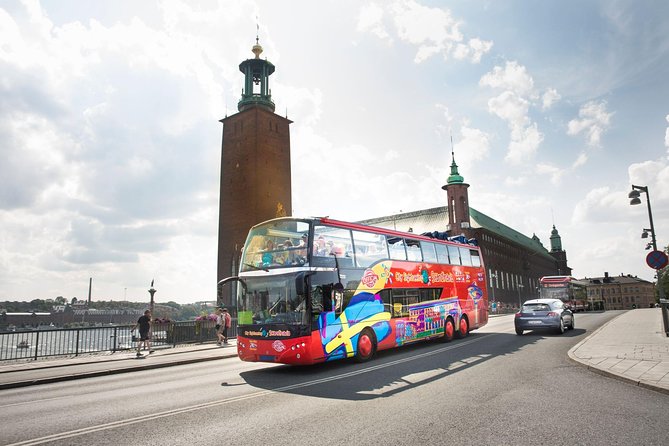
- 24- or 72-hour flexibility: Stay on for the whole loop, or hop off and return later.
- Audio in 11 languages + free headphones: Helpful on first visits, especially for big landmarks.
- Wi-Fi aboard and wheelchair access: Practical comfort while you’re sightseeing.
- Stops that map well to Stockholm’s zones: Old Town, Djurgården museums, and the City Hall area.
- Short core loop, longer on cruise days: About 60 minutes normally, roughly 90–120 with cruise terminals.
Stockholm on rails: what this hop-on loop is really good at

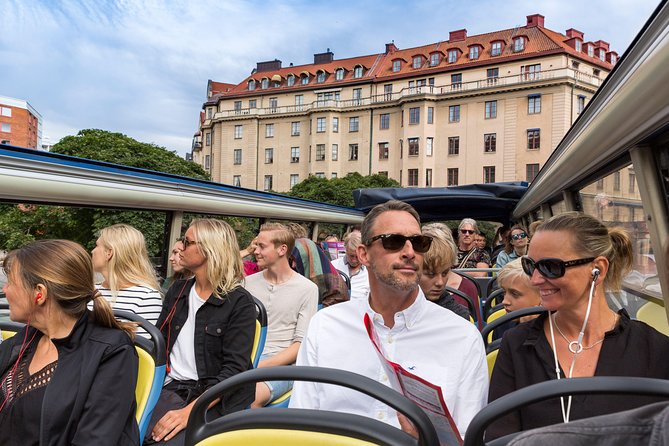
This bus is built for one job: helping you see a lot of Stockholm without doing a lot of planning. You sit upstairs, glance left and right, and let the audio frame what you’re looking at—then you decide what’s worth your walking time.
Stockholm is compact, but it’s also broken into neighborhoods with different vibes. The loop helps you connect those dots quickly: the medieval mood of Gamla Stan, the royal center, the museum island energy around Djurgården, and the modern city streets around Stureplan and Hötorget.
If you’re visiting for a day, or you’re jet-lagged and want a low-effort start, this is one of the simplest “first step” activities in the city. It doesn’t replace museums or walking tours, but it makes those later visits easier because you’ll recognize what’s where.
You can also read our reviews of more city tours in Stockholm



Price and time: how to get value from $40.85
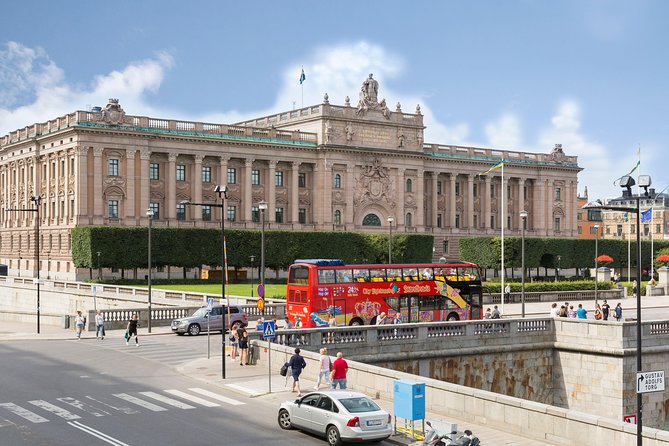
At about $40.85 per person (for the tour as listed), you’re paying for flexibility and convenience, not for a deep guided tour. The win is that you can use the bus like a moving map: ride, hop off to explore, then hop back on when you’re ready.
Plan around the time reality of hop-on hop-off. The full circuit time is about 60 minutes for the standard route. If the bus also stops at cruise terminals, the ride can run 90–120 minutes, but that only applies on cruise docking days—and you can ask staff on site for the exact situation.
Buses run about every 30 minutes, with the first departure at 10:00am and last departure at 5:00pm from Stop 1. That matters because Stockholm can wear you down with walking, stairs, and weather changes. If you’re hopping on and off all afternoon, you’ll want to start early enough that you’re not stuck waiting late.
Riding comfort: Wi-Fi, accessibility, and the practical details that matter
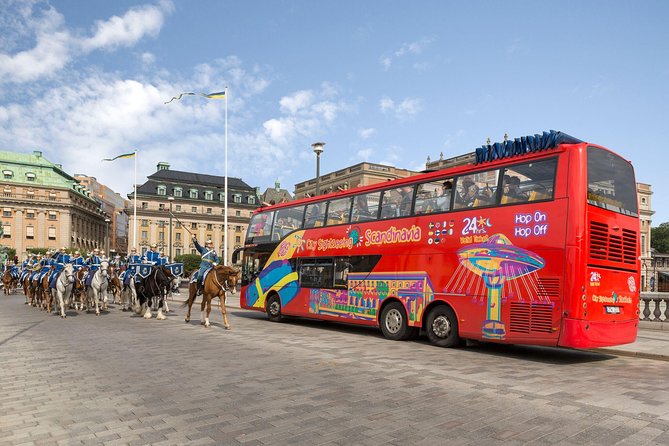
This is a double-decker bus (red and green), and you’ll find it designed for comfort during short bursts of sightseeing. It’s wheelchair accessible, and there’s free Wi-Fi onboard—nice when you’re checking opening hours or saving spots for later.
You can use a mobile ticket or a printed paper voucher, and both are accepted at any stop along the route. That’s helpful if you’re not near the first stop or you decide you want to board at a place you already explored on foot.
Two small notes worth keeping in mind: free headphones are included for the audio, but sound can vary in the real world (so bring patience). Also, the audio can feel like it’s giving you the gist rather than a long lecture, so don’t expect it to function like a private guide.
Stop-by-stop: turning the route into a smart Stockholm plan
Here’s how I’d use the route to build an easy itinerary. Instead of trying to “see everything,” pick one or two areas to explore longer, and use the bus to reposition.
Stop 1: Karl XII:s torg by the Royal Opera (Stromgatan)
Start here if you want a clean, early view of the central city. This area gives you a sense of where the royal and waterfront zones begin, and it’s a good launching point if you’re trying to map your day.
From this side, you’ll also get your first big skyline moments—useful for deciding whether you want more photos from the upper deck later.





Stop 2: Lovely Cruises / The Royal Palace
Next up is the Royal Palace area, which is one of Stockholm’s easiest “yes, I want to stop” sights. Even if you don’t go inside, the bus gives you a strong sense of scale and the formal city layout around the palace grounds.
If you like contrasts—golden-state architecture against modern streets—this is where it starts. Consider hopping off briefly to orient yourself before committing to a longer museum stop later.
Stop 3: Stockholm Slussen kajen (Old Town)
This is where you start caring about the bus like it’s more than transit. The Old Town (Gamla Stan) stop puts you close to the atmosphere people travel for: narrow streets, classic postcard corners, and the feeling of walking through centuries.
I’d treat this as a “walk half a block, then decide” zone. If the weather’s good, you’ll probably end up spending longer on foot than you planned.
Stop 4: Kungsträdgårdsgatan 13 at Kungsträdgarden
Kungsträdgården is one of those central spots where Stockholm feels relaxed even in busy city life. The park-adjacent area is a good break between sightseeing anchors.
If you’re trying to time a lunch stop or you want a moment that isn’t a museum line, this kind of location is gold. Hop off, stretch your legs, then use the bus to keep moving.
Stop 5: Styrmansgatan / Strandvagen
This stretch is all about city views and waterfront energy. Strandvägen is famous for a reason—wide streets, water nearby, and that distinct Stockholm light bouncing off the harbor.
You’ll get decent photo angles from the upper deck, but don’t assume the narration will match your exact view at every second. Keep your eyes outside; use the audio as context, not a metronome for photos.
Stop 6: Djurgårdsvägen 13 (The Vasa Museum / Nordiska Museum)
Now you’re heading into the museum-forward side of town: Vasa Museum and the Nordiska Museum area around Djurgården. This is a strong “big decision stop.” If you only have time for one major museum, this zone is often the one that makes the day feel complete.
Vasa Museum is the headline name on many lists, and the bus stop here means you don’t have to cross half the city to get to it. If you’re museum-heavy, consider doing one major interior attraction here, then return to the bus later for the next neighborhood.
Stop 7: ABBA The Museum / Grona Lund Tivoli (plus nearby access)
After Vasa, the energy shifts. ABBA The Museum is a totally different mood: pop-culture fun instead of shipwreck history. If you’re traveling with kids, it’s also an easy win without needing to plan a separate day.
This also connects you with the Gröna Lund (Tivoli) area. Even if you don’t buy tickets to rides or shows, the bus stop placement makes it simple to decide on the spot whether you want more amusement-park time.
Stop 8: Djurgårdsslätten 78 (Skansen)
Skansen brings Sweden’s “living culture” concept into focus. It’s a place where you can understand how different regions and traditions fit together, without needing a car or complicated transit plans.
If you’re trying to balance indoor museums with outdoor wandering, Skansen is often a good match. It also helps break up a day that could otherwise feel like back-to-back exhibits.
Stop 9: Liljevalchs / Gröna Lund (ABBA The Museum area again)
This stop is useful because it gives you flexibility around the same broader Djurgården cluster. You can hop off where you want to be, then later reboard without the stress of guessing the best pedestrian route.
I like these “adjacent stop” setups because they make it easier to adjust when you realize you spent longer than expected at ABBA or another nearby spot.
Stop 10: Nordiska museet / Vasamuseet (Vasa Museum / Nordiska Museum)
This is effectively your re-entry point to the Vasa / Nordic Museum area from another angle. If you missed your timing earlier, this helps you recover without turning the day into an emergency plan.
If you’re the type who starts strong and then slows down, a nearby return stop is exactly what you want.
Stop 11: Karlaplan
Karlaplan is more neighborhood-feel than tourist-icon, which is part of its value. It’s a useful repositioning stop if you want to move from Djurgården back toward the busier central streets.
This is also where Stockholm can feel more like a city you’re living in, which helps after all the landmark staring.
Stop 12: Stureplan (Entertainment District)
This is where modern Stockholm is louder and more social. Stureplan is an area you’ll recognize from nightlife lists and city chatter—so even if you don’t go out, it’s a good orientation point.
If you’re trying to plan an evening meal, hopping off here gives you time to scout nearby options without losing your bus window.
Stop 13: Hötorget (Kungsgatan / Hotorget Market)
The Hotorget market area is a practical stop if you want snack-and-stroll energy. Markets are one of the easiest ways to connect with local rhythm, especially in a city where much of the best exploring is done on foot.
If your day has been museum-heavy, this kind of stop helps you reset. Grab something simple, then reboard when you’re ready.
Stop 14: Hangövägen 29 (Ice Bar)
This stop is built for a quirky Stockholm moment. An Ice Bar is memorable in a way that most photos can’t fully capture, and the bus drop makes it easier to fit in without adding extra transit.
I’d treat this as a short, fun add-on rather than the anchor of your entire day, since you’ll want time for regular sightseeing too.
Stop 15: Stadshuset (City Hall)
City Hall is another major anchor. Even if you’re not doing a formal tour inside, it’s the kind of stop that signals you’re now in the “go big” civic core of the city.
This stop is also a good one to use if you want a sense of Stockholm’s public spaces. You’ll likely see architecture that feels both dramatic and civic.
Stops 16–18: Cruise terminals (Frihamnsgatan and Stadsgarden) on docking days
If you’re arriving by cruise, this is one of the strongest reasons to consider this hop-on loop. The route can include specific cruise terminal drops like Frihamnen Cruise Terminal (634 and 638) and the Stadsgarden Cruise Terminal.
The payoff is huge: you don’t need to fight transit from the port to get into the city loop. The tradeoff is timing. On cruise days, the total route time can stretch to 90–120 minutes, depending on docking.
Audio guide reality check: how to make it work for you
The audio guide is a major included feature, with commentary available in 11 languages. That’s exactly what you want on a first visit, when you’re trying to understand why certain areas matter.
Just keep expectations grounded. Some experiences can feel like the narration is thin or doesn’t match what you’re passing at that moment. If you’re the type who likes taking photos while listening, pause the audio in your head and just watch the street scene—then restart when you’re ready.
Also, if headphones seem patchy at your seat, you might have to swap them. Don’t let that ruin the day—this tour still works as a visual route even if you catch less narration than you hoped.
Who this bus tour fits best (and who should skip it)
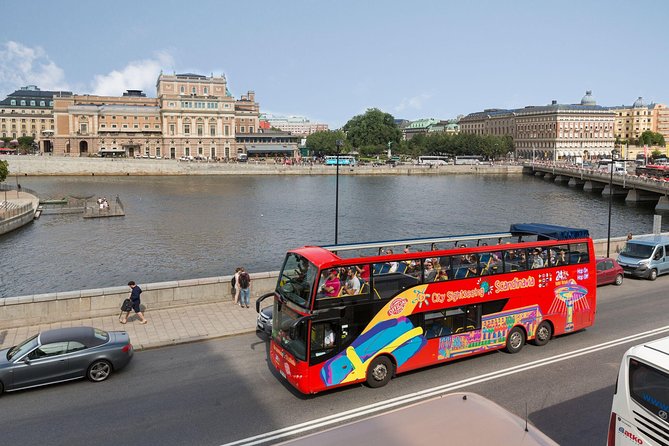
This works best if you’re:
- On a short schedule and want a fast orientation
- Visiting as a first-time Stockholm trip
- Trying to cover both Old Town and Djurgården without overplanning
- Traveling with mixed ages, where one person wants museums and another wants quick wins
It may be less ideal if you:
- Want a long, deeply detailed guided lecture (this isn’t that)
- Are extremely sensitive to audio sync and bus timing
- Plan to rely on the last departures without buffer time
Should you book this hop-on hop-off bus?
If you want the most efficient start to Stockholm—and you like the idea of using a bus as a practical map—I think this is a solid booking. It has the right included perks: free headphones, audio in 11 languages, wheelchair access, and onboard Wi-Fi, plus stops that actually line up with the big clusters you’ll likely care about.
Book it if your goal is simple: get your bearings fast, then explore on your own schedule. If you’re the kind of traveler who already has a precise plan and doesn’t want to compromise time, you might do better with point-to-point transit plus museum tickets. But if you want flexibility and minimal friction, this is the easy button for Stockholm.
FAQ
How long is the bus loop?
The tour duration is about 60 minutes for the standard route. If it includes cruise terminal stops, the duration can be around 90–120 minutes on cruise days.
What ticket options are available?
You can choose between a 24-hour or 72-hour ticket.
Is there audio on board, and in how many languages?
Yes. There is an audio guide on board in 11 languages, and you receive free headphones.
Where do you start and when is the last departure?
The first departure from Stop 1 is at 10:00am, and the last departure from Stop 1 is at 5:00pm.
How often do the buses run?
Buses run about every 30 minutes.
Can I use a mobile ticket?
Yes. Both mobile and printed paper vouchers are accepted, and you can redeem them at any stop along the route.
Are there any free extras on the bus?
The buses have free Wi-Fi and are wheelchair accessible. Children up to 6 years old travel for free when accompanied by a paying adult.