REVIEW · STOCKHOLM
The Story of Stockholm and Sweden in Three Chapters, a Small Group Walking Tour
Book on Viator →Operated by Stockholm DriveAndGuide · Bookable on Viator
Stockholm makes sense fast when it’s told as a story. This three-chapter walking tour links places like Riddarholmen, the Royal Palace, and Stortorget into one clear sweep of Sweden’s past.
What I like most is the mix of big themes and pinpoint stops. Admission is included along the way, so you can keep moving instead of hunting tickets. And the group stays small, capped at 10 travelers, which makes questions easier and the pace more human.
One thing to consider: this is a walking tour with about two hours on your feet and a moderate fitness level expected. If you want long indoor museum time, you’ll probably wish there were more stops to linger.
In This Review
- Key points to know before you go
- A Stockholm Story You Can Follow on Foot
- Starting at Gamla Stan Metro: Where Chapter One Begins
- Riddarholmen and Birger Jarl: The Founder Story Lands Outside the Church
- Riddarhuset and Gustav Vasa: Chapter Two Starts With Revolution
- Vasabron and the Warrior Kings: From Baltic Power to Imperial Pressure
- Riksdagshuset and Parliament History: How Power Was Divided
- The Royal Palace Area: Karl XII’s Eastward Pointing and Gustav III’s Arts
- Carl XIV Johan and the 200 Years of Peace Story in Old Town
- Stortorget Finish: Nobel Prize Area and Guard Change Timing
- Price and Time: Is $61.28 Worth It?
- Who This Tour Fits Best
- Should You Book This Stockholm Three-Chapter Tour?
- FAQ
- How long is The Story of Stockholm and Sweden in Three Chapters?
- How big is the group?
- Is the tour offered in English?
- Is admission included?
- Where does the tour start and end?
- Can I cancel for a full refund?
Key points to know before you go
- Three chapters, one storyline that ties ice-age origins to modern Sweden
- No ticket-line pressure because admission is part of the experience
- Small group size (10 max) for a more personal pace
- Major names and turning points: Birger Jarl, Gustav Vasa, Karl XII, and Carl XIV Johan
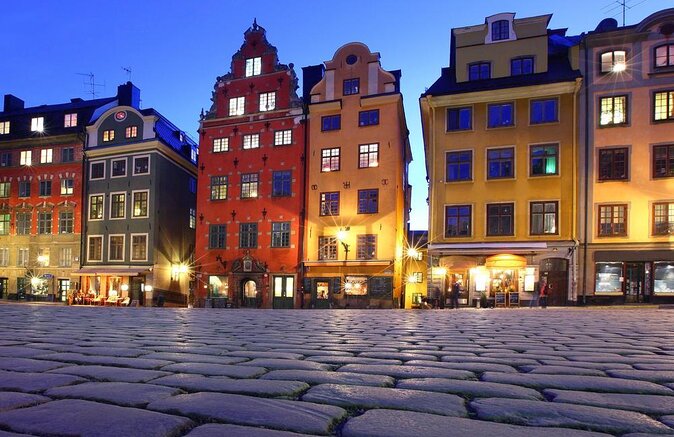
- A smart finish near Stortorget for the Nobel Prize Museum area and guard change timing
- English tour with a mobile ticket, easy to manage while walking
A Stockholm Story You Can Follow on Foot
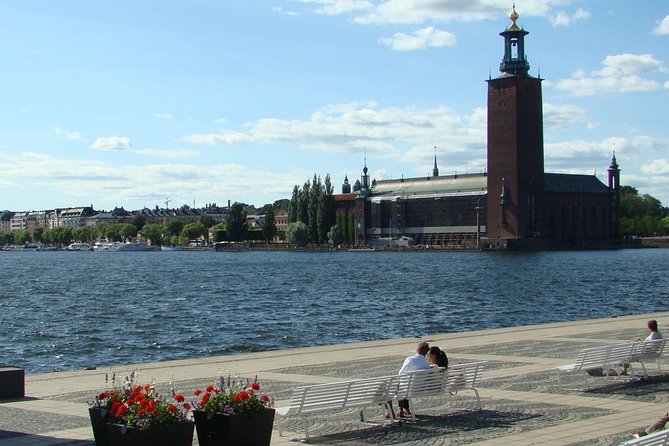
If Stockholm feels like a puzzle of islands, palaces, churches, and statues, this tour is built to put the pieces in order. You won’t just hear dates and facts. You’ll get a guided narrative that moves through Sweden’s rise, its internal power shifts, and its later focus on diplomacy and civic life.
The format is simple: you walk, you stop, you listen, you look. Then you repeat at the next landmark where the story changes gears. That’s the key to why this works well for first-timers and repeat visitors. You can spot famous buildings, but you also learn what they meant at the moment they were built and when leaders used them.
It’s also practical. The tour runs about two hours, starts at 10:00 am, and stays capped at 10 people. You’ll get a mobile ticket in English, and admission is included for the parts where it matters. Translation: fewer slowdowns, more real sightseeing.
You can also read our reviews of more walking tours in Stockholm
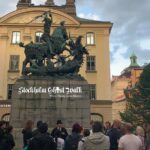
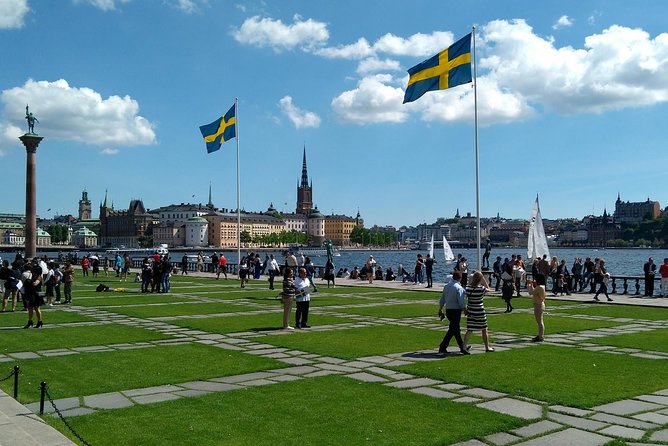
Starting at Gamla Stan Metro: Where Chapter One Begins
The tour kicks off at Gamla Stan Metro station, inside/under ground, in front of the Pressbyrån kiosk. That location is handy because it puts you in the thick of Stockholm’s old center right away, without a bunch of pre-walk logistics.
From there, you begin Chapter One at a historical marker connected to Riddarholmen. You’ll hear the “before the city” story: Sweden’s earliest context, stretching from the ice age to the earliest settlements on the islands. It’s not just trivia. It helps you understand why Stockholm developed where it did—water routes, narrow crossings, and the natural geography that shaped movement and power.
Then you get a taste of the palace area, including open parts of the palace during the walk. Expect mostly viewpoints and short segments rather than an all-day palace visit. Still, that mix of broad origin story plus quick looks at significant architecture helps your brain hold onto the location.
If you’re someone who likes to understand a place in plain terms, you’ll appreciate how the guide sets up each chapter before you reach the famous figures.
Riddarholmen and Birger Jarl: The Founder Story Lands Outside the Church
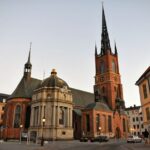
Next you step from the marker into Riddarholmen itself. Outside Riddarholmen Church, you’ll meet the presumed founder of Stockholm: Birger Jarl, or at least a statue representing him. The tour connects that name to a key documentary milestone too.
You’ll hear that Stockholm was first mentioned in a written text in 1252, and that the preserved document ties back to the actions around Birger Jarl. This is one of those moments where a “founder” figure stops being abstract. You can look around and think: this area wasn’t just pretty. It was political, strategic, and early enough to leave traces in records.
Time here is brief, about 10 minutes, so don’t expect a long pause for close-up details. But you will get the orientation you need to keep following the chain of events—especially once the story shifts from origins to how power was organized.
Riddarhuset and Gustav Vasa: Chapter Two Starts With Revolution
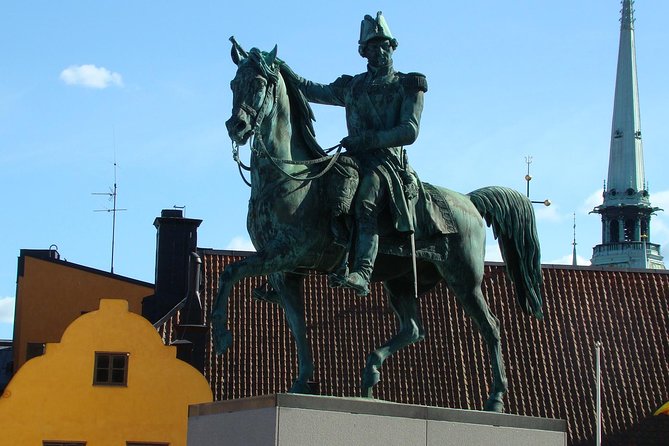
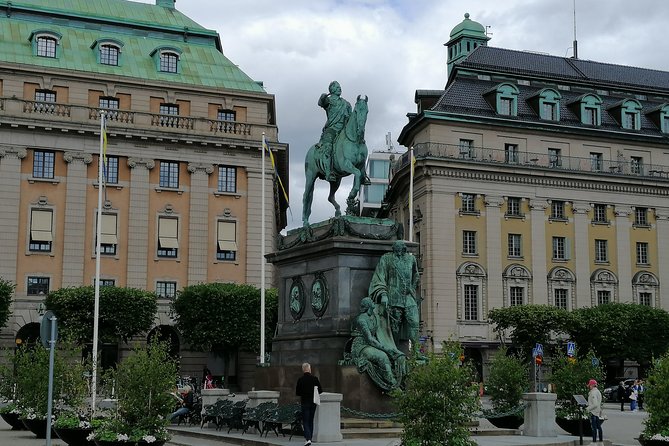
At Riddarhuset, the House of Nobility, you shift into Chapter Two. Outside this building, you’ll look at a statue of Gustav Vasa, often called the father of Sweden in the way the story is told here.
This is where the tour’s narrative really sharpens. You’ll hear about the moment Sweden gains a stronger sense of sovereignty and direction: Gustav Vasa marched into Stockholm in 1523, and from then Sweden’s path is presented as never being occupied by foreign powers.
Then comes a darker, dramatic point: the bloodbath of Stockholm, where 80 to 100 noblemen (as described on the tour) were killed after the political conflict was set in motion. The guide frames it as part of the struggle tied to a neighboring force taking control of Sweden. In that context, Gustav’s uprising becomes more than a rebellion slogan—it’s explained as a response to what was happening to the country’s ruling class.
You also get the religious turning point. The tour says Gustav changed Sweden’s religion from Catholicism to Lutheran Protestantism. Even if you already know Sweden became Protestant, this stop helps you understand the why: leadership changes, alliances shift, and beliefs often follow the power on the ground.
Expect another quick look: about 10 minutes here, mostly outside and focused on the statue and what it represents.
Vasabron and the Warrior Kings: From Baltic Power to Imperial Pressure
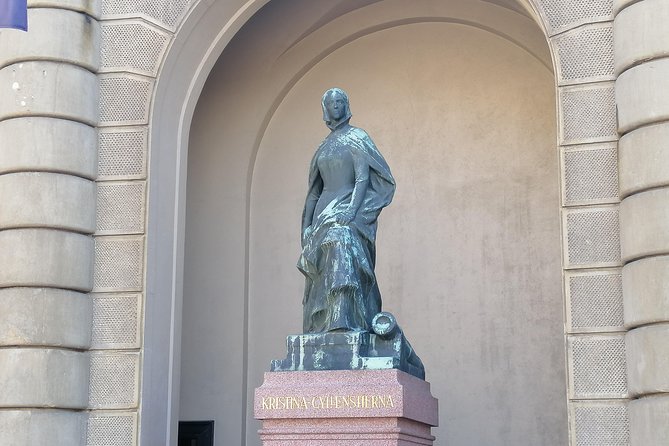
From Riddarhuset you move toward Vasabron, and the story continues into the era of heirs and heiresses. The guide connects the family line of leaders to how Sweden’s influence expanded and how the Baltic became central to Swedish power.
Here you’ll meet Gustav II Adolf, described as the greatest of the warrior kings. The tour points out how, during his reign, the Baltic Sea became almost an inland sea, surrounded by Swedish possessions. That’s a bold line, and it’s exactly the kind of memorable framing that helps the place click in your mind.
It also gives context for why later conflicts mattered. If Sweden’s power is tied to controlling water routes, then wars and treaties aren’t just political theater—they affect trade, shipping, and everyday life.
This stop is another short one (around 10 minutes), but it does its job: it bridges Chapter Two’s origin-and-reform story to what happens as Sweden keeps pushing beyond its borders.


Riksdagshuset and Parliament History: How Power Was Divided
Next you reach the Parliament Building (Riksdagshuset), where the tour explains how the political system took shape over time.
You’ll hear that the predecessor to the parliament was the Riksdag of the Estates, where the nobility, clergy, burghers, and peasants met separately to discuss issues before meeting with the king. The guide emphasizes that these groups didn’t have the same role, and decision-making worked through a hierarchy rather than equal voting.
A key date shows up: until the institution was dissolved in 1866, it was the highest authority next to the king. After 1866, a parliament with two chambers was introduced, still without equal voting rights for all citizens. Then the tour lands on 1921, with the first elections with general suffrage, framed as the result of a long political struggle led by liberals and socialists.
Even if you’re not a political-history person, this stop is useful because it explains how Sweden’s civic life developed into what you see today. It’s not just a building. It’s the story behind why the country’s institutions evolved when they did.
Again, this is an outside stop focused on understanding, with about 10 minutes allocated.
The Royal Palace Area: Karl XII’s Eastward Pointing and Gustav III’s Arts
The tour continues to the north side of the Royal Palace, at Lejonbacken. This begins Chapter Three, which shifts from earlier power struggles into the collision of competing ambitions across Northern Europe.
You’ll hear about Peter the Great of Russia as the force that ended Swedish dreams of being a great power in Northern Europe. Then the tour turns to Karl XII, described as the last of the warrior kings, pointing east (toward where his and the Caroleans’ early victories happened). But the story doesn’t end with the early wins. It ends with defeat: Poltava 1709.
This stop is also a useful reality check. It’s easy to think Swedish history is one straight line of success. Chapter Three is where you see a more complicated pattern—ambition, setbacks, and then adaptation.
After the military story, the tour brings in the Enlightenment. You’ll hear that Sweden’s growing interest in arts and science mattered, and you’ll meet Gustav III, described here as an enlightened despot with a strong interest in theatre and arts contributions.
So you get two kinds of power in one place: swords and stages.
Carl XIV Johan and the 200 Years of Peace Story in Old Town
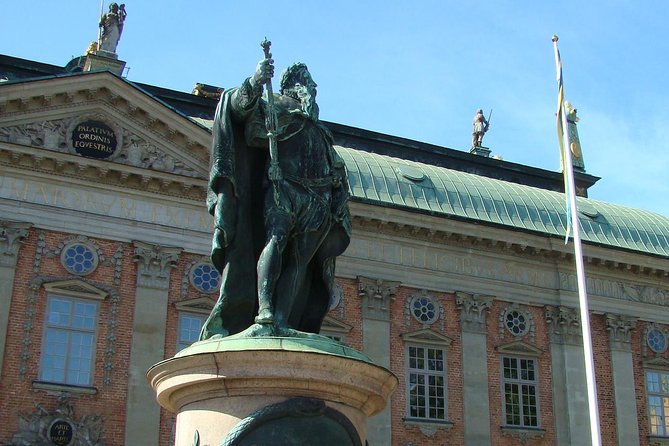
Below the statue of Carl XIV Johan, the tour moves through the next part of Swedish identity. This is where the narrative turns from battlefield and institutions to diplomacy, infrastructure, education, and long-term stability.
You’ll hear that Carl XIV Johan, the first of the Bernadottes, came from France in the early 1800s to help Sweden win back what it lost to the Russians. But instead of focusing on immediate conquest, the guide frames his reign as diplomacy plus building: infrastructure and education.
Then you get a more modern-feeling point: in 2014, Sweden celebrated 200 years of peace. The tour ties the later welfare state to the industrial revolution, natural resources, Swedish inventions, and entrepreneurs who kept building through the 20th and 21st centuries.
Even if these are broad strokes, they’re valuable. They help you connect what you see in Stockholm now—design, innovation, civic life—to the longer chain of choices made over centuries.
This stop gives you about 20 minutes, which is longer than the earlier ones. It’s likely designed for you to take in Old Town rhythm and reset your attention before the finale.
Stortorget Finish: Nobel Prize Area and Guard Change Timing
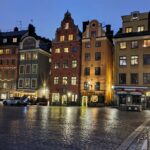
The tour ends at Stortorget, near where the Nobel Prize Museum is located. The guide explains how the Swedish Royal Academies designate the winners of Nobel Prizes across major fields of science and art. Even if you don’t go inside, that connection gives extra meaning to why this square is such a focal point.
Then comes a practical bonus. The tour finishes close to the Royal Palace in time to catch the changing of the guards. This is one of those Stockholm experiences that’s easy to miss if your timing is off, so finishing here helps.
The tour notes that during the summer months, the parade can march or ride with the Music Corps through up to the Outer Courtyard. Even outside those details, you still get the benefit of walking into a prime viewing window.
The final stop takes about 10 minutes, but the value is in how it lines up your day.
Price and Time: Is $61.28 Worth It?
At $61.28 per person for about two hours, this isn’t a budget “quick hit” tour. But it also isn’t expensive for what you get.
Here’s why it can feel like good value:
- You’re paying for guided interpretation across multiple major landmarks, not just one neighborhood
- Admission is included along the way, which cuts down on annoying small costs and lost time
- The group stays under 10, so you’re not stuck in a cattle line
- The itinerary is built to create continuity: Chapter One, Chapter Two, Chapter Three
If your goal is understanding—how Sweden went from early settlements to institutions, and then to the modern welfare-state mindset—this format gives you a lot per hour. If your goal is slow museum touring or deep indoor time, you might prefer pairing it with one or two self-guided museum stops afterward, since this walk is designed to keep moving.
Also, if you’re juggling a schedule, some people have used a shorter version to fit their day. If you’re time-limited, it’s worth checking whether you can choose a shorter duration.
Who This Tour Fits Best
This works especially well if you:
- Want a guided way to understand Swedish history without drowning in details
- Like walking tours with clear stops and easy pacing
- Are visiting for the first time and need orientation in Stockholm Old Town
- Enjoy learning how names and events connect to buildings you can actually see
It may be less ideal if you:
- Hate walking for about two hours, even at a moderate pace
- Want lots of time inside buildings beyond what’s described as open parts
- Prefer a very free-form, no-structure tour style
Should You Book This Stockholm Three-Chapter Tour?
I’d book it if you want Stockholm to make sense quickly. The story structure is the selling point: you’re not just collecting landmarks, you’re learning how Sweden’s key turning points connect—founder-era Stockholm, the reform and nobility conflicts, the rise and setbacks of power, and the later shift toward diplomacy, education, and peace.
It’s also a smart pick for a first day or early in your visit. You leave with a mental map you can reuse when you walk around on your own.
If you’re the type who will keep walking after the tour ends, finishing near Stortorget and the Royal Palace changing of the guards makes the timing feel extra useful.
FAQ
How long is The Story of Stockholm and Sweden in Three Chapters?
It runs for about 2 hours.
How big is the group?
The tour is capped at a maximum of 10 travelers.
Is the tour offered in English?
Yes, it is offered in English.
Is admission included?
Yes. The tour includes admission along the way, and the stops listed show admission ticket free.
Where does the tour start and end?
It starts at Munkbrogatan 8, 111 27 Stockholm, Sweden (near Gamla Stan Metro station, in front of the Pressbyrån kiosk) and ends at Stortorget, 111 29 Stockholm, Sweden.
Can I cancel for a full refund?
Yes. You can cancel up to 24 hours in advance for a full refund. If you cancel less than 24 hours before the start time, you won’t get your money back.