REVIEW · STOCKHOLM
Stockholm Old Town and the Viking Museum, a Small Group Walking Tour
Book on Viator →Operated by Stockholm DriveAndGuide · Bookable on Viator
Stockholm’s past walks right beside you. This small-group Old Town + Viking Museum tour turns key sites into a clear story, from early settlement dates to kings, religion, and politics, then finishes with hands-on museum time. I like that it includes Viking Museum entry so you skip ticket-line hassle, and I also love how the guide strings landmarks together instead of dropping a random list of statues.
One consideration: the pace is active and history is front-and-center. If you just want a casual stroll with minimal dates, this may feel like a fast-moving lecture with great views.
The tour runs about 3 hours and caps at 10 people, which keeps it personal. In the best-case scenario, you get a guide who can flex to your curiosity. In other words, you’ll ask a question and actually get an answer, not a shrug.
In This Review
- Key Highlights You’ll Notice Right Away
- Gamla Stan to Djurgården in One Tight Morning
- Riddarholmen: Lake Mälaren Views and Stockholm’s Earliest Written Echo
- Riddarhuset and Gustav Vasa: Statues That Explain Serious Change
- Vasabron and the Vasa Legacy on One Bridge
- Riksdagshuset: How Sweden Argued Its Way Toward a Parliament
- Royal Palace at Lejonbacken: Karl XII Points East, Peter Points Back
- Jarnpojken and Stortorget: Small Statues, Big Cultural Institutions
- Stockholm Old Town as a Civilization Thread: Bernadottes to Welfare State
- The Included Ferry to Djurgården and the Viking Museum Payoff
- Price and Value: Is $118.96 Worth It?
- Who This Tour Fits Best (and Who Might Skip It)
- Before You Go: Comfort, Walking Pace, and Practical Tips
- Should You Book Stockholm Old Town and the Viking Museum?
- FAQ
- How long is the tour?
- What’s the price per person?
- How many people are in the group?
- What language is the tour offered in?
- Is entry to the Viking Museum included?
- Does the tour include a ferry ride?
- Where does the tour start and end?
- What time does the tour begin?
- Does the tour require physical fitness?
- Can I cancel for a full refund?
Key Highlights You’ll Notice Right Away
- No ticket-line friction for the Viking Museum since your entry is included
- A story-driven walk through Gamla Stan, not a disconnected photo stop
- Riddarholmen viewpoints over Lake Mälaren and the City Hall area
- Real political turning points explained through statues and buildings, from Gustav Vasa to the Riksdag
- A short included ferry ride to Djurgården that breaks up the walk
- You can stay inside the Viking Museum after the guided part, if you want more time
Gamla Stan to Djurgården in One Tight Morning
You start at the Gamla Stan Metro station area (inside/under the ground) in front of the Pressbyrån kiosk, then you move across classic Old Town geography toward Djurgården and the ferry connection. The tour begins at 10:00 am, runs about 3 hours, and is offered in English with a maximum group size of 10. You’ll use a mobile ticket, which is handy in a city where you may end up hopping between transit and walking.
What makes this format work is the logic of it. Instead of doing Old Town first and the museum later as two separate trips, the tour stitches them together: you learn how Stockholm’s power grew, then you see how the Viking era fits into the broader Nordic story. It’s also practical that you end at the Viking Museum at Djurgårdsstrand 15, where you’re already in position to extend your afternoon on Djurgården.
If you’re coming from elsewhere in Stockholm, this is also a comfort: it’s near public transportation, and the beginning is at a Metro hub.
You can also read our reviews of more walking tours in Stockholm
Riddarholmen: Lake Mälaren Views and Stockholm’s Earliest Written Echo
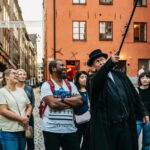
The tour kicks off at a historical marker by Riddarholmen, and you immediately get the big-picture vibe: Stockholm wasn’t always the tidy city layout you see today. Your guide talks about early history, moving from the ice age through the first settlements on the islands, then narrows in on how Stockholm formed around waterways.
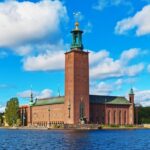
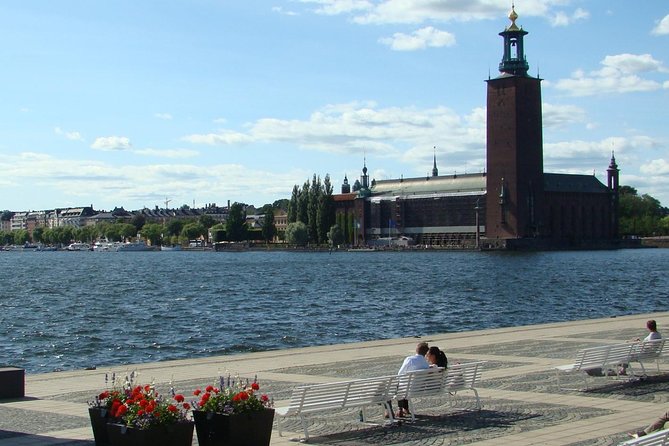
From Riddarholmen, you get a particularly useful orientation: the view across Lake Mälaren toward the City Hall area helps you understand why Stockholm grew where it did. You’re not just looking; you’re building the mental map for the rest of the walk.
Right outside Riddarholmen Church, you meet the story linked to the presumed founder figure—Birger Jarl (or at least his statue). Then you land on a milestone: 1252 is the first time the word Stockholm shows up in a written text that has survived to today. That kind of detail matters because it anchors the tour. You’re not only admiring buildings; you’re tracking when the name and the state begin to take form.
Riddarhuset and Gustav Vasa: Statues That Explain Serious Change
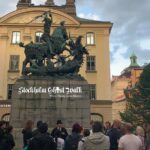
Next you stop near Riddarhuset, the House of Nobility. Here the guide focuses on the statue of Gustav Vasa, often described as the father of Sweden in this context. This is the part of the tour where the history gets sharply political.
You’ll hear how, after Gustav Vasa marched into Stockholm in 1523, Sweden becomes a sovereign state that, as the story goes, was never occupied by foreign powers in the same way earlier decades were. The tour also brings up the bloodbath of Stockholm, tied to the killing of a cluster of noblemen after the uprising Gustav Vasa led against a southern neighbor that controlled Sweden.
Then you connect politics to faith. The guide explains Gustav’s role in changing Sweden’s religion from Catholicism to Lutheran Protestantism. Even if you’re not a history nut, this connection is one of the most useful things on the tour: it shows you that reform wasn’t just about ideas. It affected power, institutions, and daily life.
Vasabron and the Vasa Legacy on One Bridge
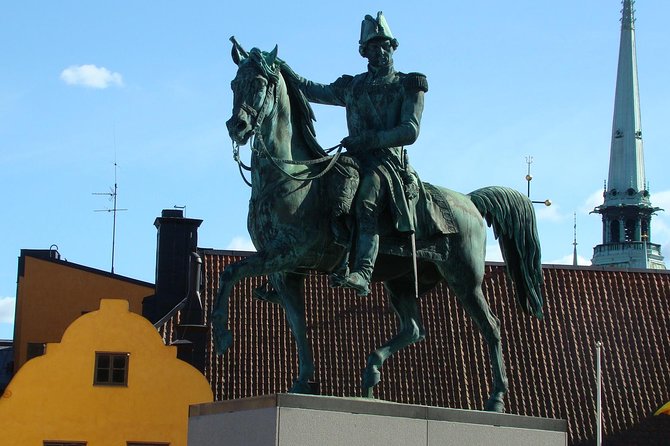
At Vasabron, the tour keeps following the family line. Gustav Vasa’s heirs are discussed, and attention shifts to Gustav II Adolf, described here as one of the standout warrior kings. This is where you start hearing how Sweden’s ambitions played out on the Baltic Sea.
The guide ties his reign to the idea that the Baltic became almost like an inland sea surrounded by Swedish possessions. Then you land on an especially concrete detail: the Vasa ship was built during his time. That’s a good moment to remember you’re walking past places where decisions, money, and ambitions turned into real-world outcomes—ships, wars, and long-term consequences.
Riksdagshuset: How Sweden Argued Its Way Toward a Parliament
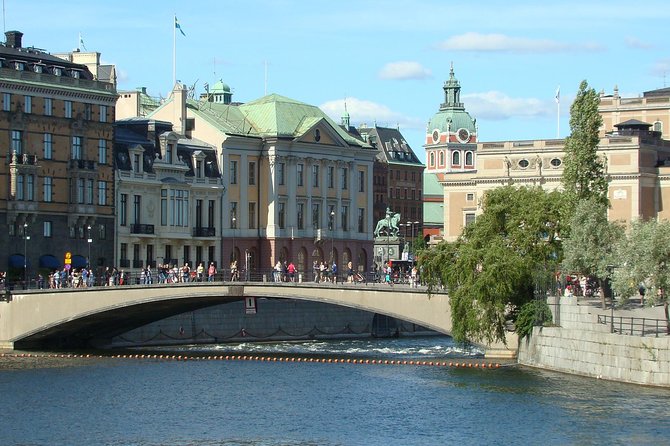
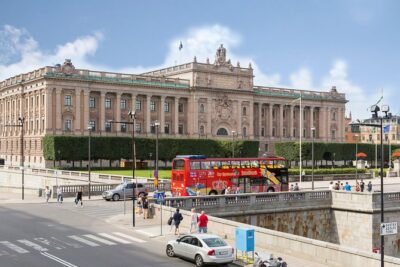
Moving toward the Parliament Building (Riksdagshuset), you get one of the tour’s strongest themes: how institutions evolved, slowly, and often with conflict.
The guide explains that before the modern parliament, there was the Riksdag of the Estates (Ståndsriksdagen), where the nobility, clergy, burghers, and peasants met separately before meeting the king at the palace. Until 1866, this system stood as the highest authority next to the king.
Then you hear how 1866 introduced a parliament with two chambers, still not giving equal voting rights to all citizens. The story continues to 1921, when the first elections with general suffrage happened, after a long struggle led by liberals and socialists.
You’ll feel this stop working best if you like cause-and-effect. It’s not just dates; it’s a reminder that politics changes through structures, not slogans.
You can also read our reviews of more museum experiences in Stockholm






Royal Palace at Lejonbacken: Karl XII Points East, Peter Points Back
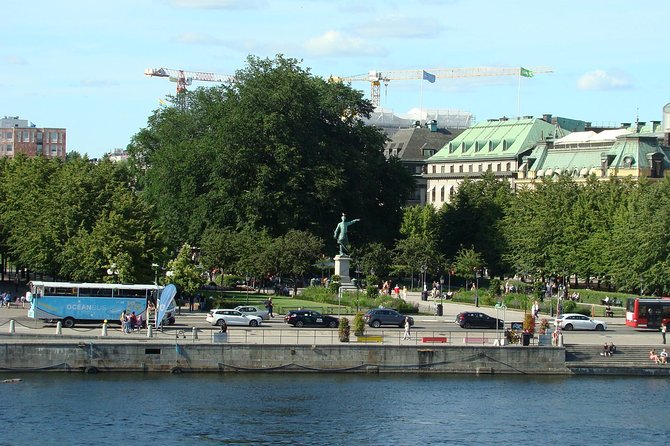
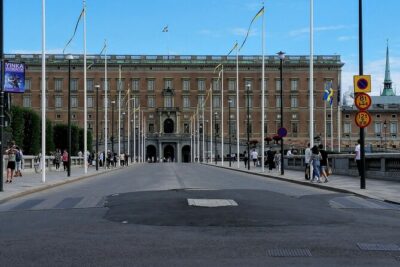
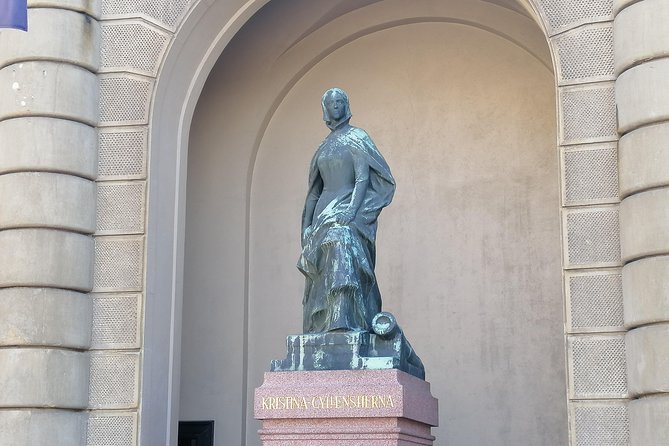
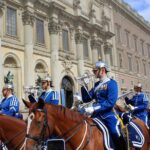
The walk brings you to Lejonbacken on the north side of the Royal Palace. This is another “statues as story” moment, with the guide pointing you toward the figure of Karl XII, sometimes described here as the last of the warrior kings. His statue points east, and the guide connects that direction to where his army had early victories—then to how everything shifted.
You’ll hear about Peter the Great ending Sweden’s dreams of becoming a major power in Northern Europe. The story is tied to defeat at Poltava in 1709, giving you a clear endpoint for the warrior-king era.
After that, the tour transitions into the Age of Enlightenment and Sweden’s growing interest in arts and science. Gustav III, described here as an enlightened despot with theater interests, is credited with contributions in those fields. The practical takeaway for you: this stop helps you see that Sweden’s national narrative isn’t only wars. It’s also culture and ideas—at least in the way the monarchy promoted them.
Jarnpojken and Stortorget: Small Statues, Big Cultural Institutions
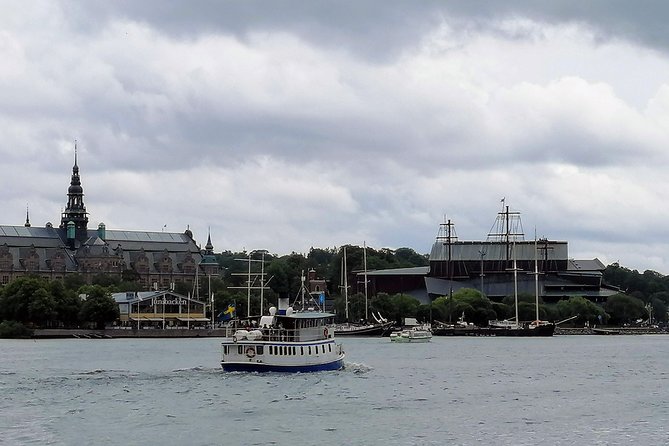
Two quick stops here are exactly the kind of “blink and you miss it” moments that great guides prevent.
First is Jarnpojken, identified as the smallest and nicest statue in Sweden (that phrasing is part of the charm). It’s a short stop, but it breaks up the heavier political storyline.
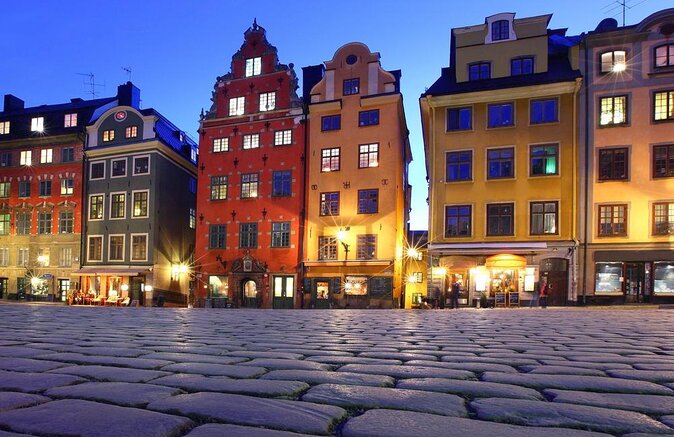
Then you reach Stortorget, where the Nobel Prize Museum is located. The guide explains that the Swedish Royal Academies designate winners of prestigious Nobel Prizes across science and art. Even if you don’t spend time inside the museum during the tour, this stop gives you context. When you visit later, it won’t feel like a name-brand stop; it’ll feel like part of a national system for recognizing achievements.
Stockholm Old Town as a Civilization Thread: Bernadottes to Welfare State
Back in Stockholm Old Town, the guide continues the storyline with Carl XIV Johan, the first Bernadotte king mentioned here. You learn that he was brought to Sweden from France at the beginning of the 19th century to help win back what Sweden lost to the Russians. The tour frames his approach as diplomacy-focused rather than purely military.
Then you connect leadership to public life: infrastructure, education, and long-term planning. A neat detail tied to modern memory appears as well: in 2014, Sweden celebrated 200 years of peace. The guide links the industrial revolution, natural resources, inventions, and entrepreneurship to the foundation of a welfare state that developed through the 20th and 21st centuries.
What I like about this part is that it gives you a thread you can carry when you walk on your own after the tour. You’ll start recognizing how different eras shaped what you see today.
The Included Ferry to Djurgården and the Viking Museum Payoff
A smart move happens when the tour reaches Skeppsbron 26. From there, you take the ferry Djurgårdsfärjan to Djurgården. It’s only about 10 minutes, but it matters. It breaks the walking and gives you a little watery breathing room—plus it transitions you from Old Town’s political centers to the museum island world.
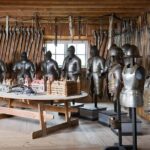
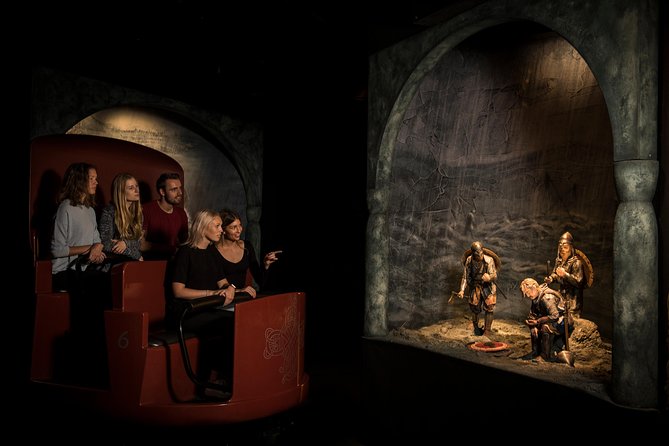
Then comes the core “payoff” stop: the Viking Museum, with entry included. Your guide introduces the museum and points out attractions during the guided portion. This museum is described as small-scale rather than a massive warehouse of artifacts, and the tour explains why that matters: it combines exciting storytelling with historical facts. You’re also told the museum is the result of cooperation between professionals in performing arts and Sweden’s respected historical scientists.
That blend can make a real difference for you if you’ve ever visited a museum where you felt the exhibits were either too dry or too theatrical. Here, the goal is to connect evidence to experience. You’re also not locked into leaving right after the guided portion. The tour ends at the museum, and you’re welcome to stay inside afterward.
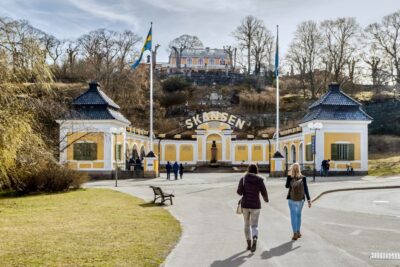
If you have extra time, Djurgården is already lined up with options. You might pair the Viking Museum with other nearby attractions on the island such as the ABBA Museum, the Vasa Museum, Gröna Lund, or Skansen, but that part is for your afternoon plan.
Price and Value: Is $118.96 Worth It?
At $118.96 per person for about 3 hours, this isn’t a bargain-basement walking tour. But I think it’s priced like a tour that gives you real value in two ways.
First, the Viking Museum admission is included. If you’ve ever tried to squeeze museum time into a tight schedule, you know included entry saves time and reduces friction. Second, you get guided context across multiple landmark stops, ending with museum orientation so you don’t walk in cold.
The small group cap at 10 travelers is another value lever. You’re more likely to get a personal answer to questions, and you’re not stuck behind a sea of heads while the guide tries to be heard. Also, this is booked fairly far ahead on average (around 104 days), which usually means the time slots that work best for schedules can disappear.
If you want a “see everything” day, this is probably not your one tour. If you want an efficient, guided spine through Stockholm’s older layers and then a museum that makes the Viking era make sense, it can be a strong choice.
Who This Tour Fits Best (and Who Might Skip It)
This tour fits best if you:
- enjoy walking between major stops while learning how the country formed
- want your museum visit to start with context, not guesswork
- like small groups and a guide who can explain in clear English
It may be less ideal if you:
- prefer minimal history and maximum free time to wander
- get tired with lots of rulers, dates, and political shifts in one morning
- want a full, self-paced museum deep dive without any guided orientation
The good news: the Viking Museum part doesn’t end abruptly. You can stay after the tour finishes, so you can slow down if you want.
Before You Go: Comfort, Walking Pace, and Practical Tips
The tour is marked for travelers with moderate physical fitness. The key practical truth is that you’re walking for much of the experience, starting at a Metro station area and then moving toward Old Town viewpoints and across to Djurgården. Plan for time on your feet and don’t treat this as a sit-and-watch tour.
Because it’s in central Stockholm and begins at a transit hub (Gamla Stan Metro station, Pressbyrån kiosk), you can usually fit it smoothly into a sightseeing plan. Starting at 10:00 am also helps. You get the morning’s energy before crowds and before museums get more chaotic later.
Finally, based on what stood out from the tour experience with guide Bengt Nykvist, you’ll likely enjoy this most if you go in with curiosity. He’s described as friendly and congenial, and the tours really do work when you ask follow-up questions.
Should You Book Stockholm Old Town and the Viking Museum?
Yes, I’d book it if you want a focused morning that turns Stockholm into a readable story. The small group, the included Viking Museum entry, and the fact that the guide links Old Town landmarks to the Viking-era museum experience are the big reasons.
I’d hesitate only if you’re history-saturated already or if you’d rather spend your time entirely self-guided in museums. In that case, you might do Old Town on your own and pick a separate museum visit when you can linger longer.
If you do book, I’d plan your afternoon with Djurgården in mind. Ending at the Viking Museum is a gift: you can keep exploring right where the tour leaves you.
FAQ
How long is the tour?
It’s approximately 3 hours.
What’s the price per person?
The price is $118.96 per person.
How many people are in the group?
The tour has a maximum of 10 travelers.
What language is the tour offered in?
It’s offered in English.
Is entry to the Viking Museum included?
Yes. Admission to the Viking Museum is included.
Does the tour include a ferry ride?
Yes. You take the Djurgårdsfärjan ferry from Skeppsbron to Djurgården, and it’s included.
Where does the tour start and end?
It starts at the Gamla Stan Metro station area (near the Pressbyrån kiosk). The tour ends at the Viking Museum, Djurgårdsstrand 15.
What time does the tour begin?
The start time is 10:00 am.
Does the tour require physical fitness?
It’s recommended for travelers with moderate physical fitness.
Can I cancel for a full refund?
You can cancel for a full refund if you cancel at least 24 hours before the experience’s start time.