REVIEW · STOCKHOLM
Walking Tour of Stockholm’s City Center
Book on Viator →Operated by NORDIC FREEDOM TOURS · Bookable on Viator
Stockholm’s power buildings in two hours. This 2-hour city-center walking tour is a fast way to understand how modern Sweden ticks, from official government spaces to major stages and prime shopping streets. You’ll cover a tight loop of standout exteriors—no museum marathons—while an English-speaking guide keeps the story moving.
I like two things a lot. First, the route is built for orientation: you get a clear sense of where big sites sit and how the center connects, from Centralplan to Dramaten. Second, the guide experience seems to be the star—people praised guides like Stefan, Karl, Amon, Sophia, and Cim for being friendly, on time, and full of real-world context (not just dates).
One drawback to keep in mind: it’s a public walk with a limited group size (max 27), and some stretches can feel tiring or hard to hear if street noise and equipment aren’t cooperating. If you’re sensitive to volume, plan to stand closer to the guide when possible.
In This Review
- Key highlights to notice before you go
- A fast, focused walk through Stockholm’s decision-makers and stages
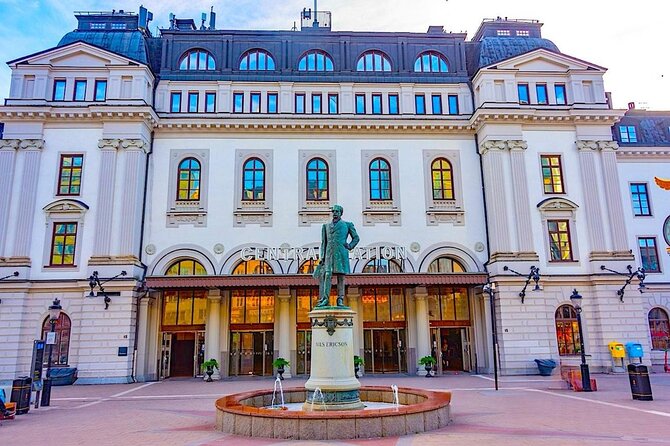
- Stop 1: Statue of Nils Ericson, right outside the station
- Stop 2: Stockholm City Hall and the Nobel connection
- Stop 3: Drottninggatan, Sweden’s pedestrian shopping street
- Stop 4: Riksdagshuset (Parliament House) on Helgeandsholmen
- Stop 5: Gustav II Adolf Statue in Gustav Adolfs Torg
- Stop 6: Royal Swedish Opera, a cultural anchor
- Stop 7: S:t Jacobs Kyrka near Kungsträdgården
- Stop 8: Berzelii Park, a green pause in the center
- Stop 9: The Royal Stables and Sweden’s equestrian tradition
- Stop 10–12: Kungsträdgården, Karl XII statue, and Dramaten
- Public group reality: small, but not private
- What the guides do best (and where the experience can wobble)
- How much time you really have (and how far it feels)
- Price and value: why $3.55 can be a smart choice
- Who should book this tour
- Should you book?
- FAQ
- How long is the walking tour of Stockholm City Center?
- Where does the tour start and end?
- Is this tour private?
- Is there an indoor visit as part of the tour?
- Are admission fees included?
- Do I need a mobile ticket?
- Are there English-speaking guides?
- What’s the price per person?
- Is tipping included in the price?
- Can I cancel for a full refund?
- Are service animals allowed?
Key highlights to notice before you go
- Low price, big coverage: $3.55 for a guided 2-hour walk through major central landmarks.
- Mostly outdoors: the tour does not include indoor visits, so you’re seeing exteriors and streetscapes rather than ticketed interiors.
- Real city flow: you’ll walk through pedestrian shopping areas like Drottninggatan, not just “look-at-a-building” stops.
- Government to culture in one loop: City Hall, Parliament, statues, opera buildings, and theaters are all on the same day map.
- Guides matter: the experience quality can hinge on how clearly the guide shares stories (some mentions about hearing/mic and iPad visibility).
- End near Dramaten: you finish close to the Royal Dramatic Theatre, a handy launch point for the rest of your day.
A fast, focused walk through Stockholm’s decision-makers and stages
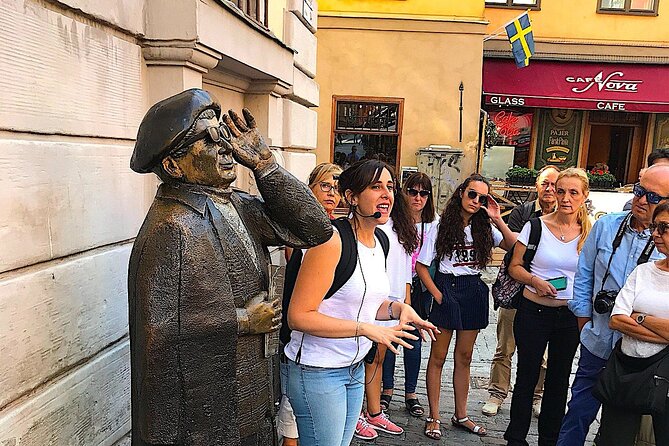
This tour is built for your first days in Stockholm. You’re not going deep into one museum. Instead, you’re getting the city’s “big picture” using the places locals actually point to—official buildings, public squares, and the cultural institutions that make the center feel alive.
Starting outside Central Station (Centralplan 15), you’ll move through a sequence of sites that teach you how Stockholm blends infrastructure, politics, and arts without separating them into different worlds. It’s the kind of walk that helps you later read the city like a map: you’ll recognize areas, and you’ll know which streets connect to what.
At $3.55, the value is the headline. Even allowing for the fact that tipping isn’t included, it’s still a bargain for an English-guided route that covers a lot of famous central locations in about two hours. The tour’s also run as a public group, so you’ll be sharing the route with other people, and the pace is meant to work for a mixed crowd.
You can also read our reviews of more walking tours in Stockholm
Stop 1: Statue of Nils Ericson, right outside the station
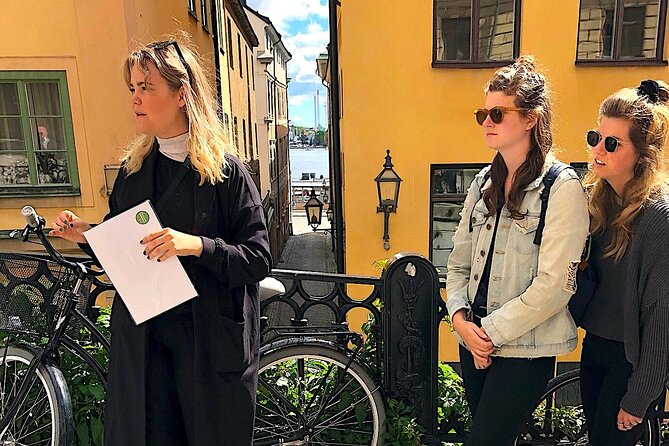
You kick things off near the Stockholm Central Station area, with the bronze Statue of Nils Ericson. This engineer is tied to Sweden’s modern railways and canal modernization, so the statue isn’t just art—it’s a clue. It points you toward how Sweden built itself: through transport, connections, and practical engineering.
Why it’s a smart first stop: you’re grounded at a transportation hub before the tour starts “talking city.” If you’re arriving by train, this is a nice mental reset. You’re orienting while you wait for the tour story to begin.
Stop 2: Stockholm City Hall and the Nobel connection
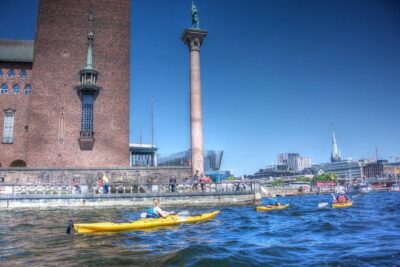
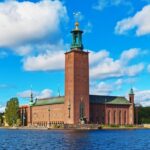
Next up is Stockholm City Hall, with its classic red brick and the golden Three Crowns spire. The building was completed in 1923, and it’s famous for hosting the Nobel Prize banquet and other official events.
Even if you’re not going inside, this stop pays off because you can see the design idea: the tower and the spire make it an easy landmark when you’re scanning the city later. The tour also connects the building to interior features like mosaics (Blue Hall and Golden Hall are mentioned as notable interiors), which helps you understand what you’d be missing even though the tour stays outdoors.
Practical note: this is a popular central site. Expect the walk to be lively around it, and do your best to listen for the guide’s timing cues. One review complained about a long stretch early on; if you feel the early walking segment dragging, hang in there—the City Hall area is where the tour starts feeling more “serious Stockholm.”
Stop 3: Drottninggatan, Sweden’s pedestrian shopping street
Then you step onto Drottninggatan, a pedestrian shopping street that runs between Gamla Stan and Observatorielunden. This is a great contrast stop: you’re shifting from civic architecture to everyday movement—cafes, boutiques, and a street rhythm that’s familiar for locals.
Why I think this matters: you get a sense of how the city center functions day-to-day. It’s one thing to look at institutions; it’s another to watch how people actually use space. Drottninggatan gives you that lived-in feel without needing an indoor stop.
If you care about shopping streets, this is also your cue for later. You’ll know where to return after the tour, once your bearings are set.
Stop 4: Riksdagshuset (Parliament House) on Helgeandsholmen
From shopping energy to democracy in stone: the Parliament Building (Riksdagshuset) sits on Helgeandsholmen Island. It’s a neo-Gothic landmark, built from 1897 to 1905, designed by Aron Johansson.
This stop is about scale and symbolism. The building feels monumental, and the guide’s story typically ties it to Sweden’s democratic values—especially through references to richly decorated interior spaces. In this tour, indoor visits aren’t part of the package, and the admission for this stop is listed as not included. So think of it as an exterior orientation stop: you’ll see the façade, then move on.
If you’re the type who loves architecture but hates wasting time on lines, this is a good balance. You get the main sight, and you keep walking.
You can also read our reviews of more city tours in Stockholm






Stop 5: Gustav II Adolf Statue in Gustav Adolfs Torg
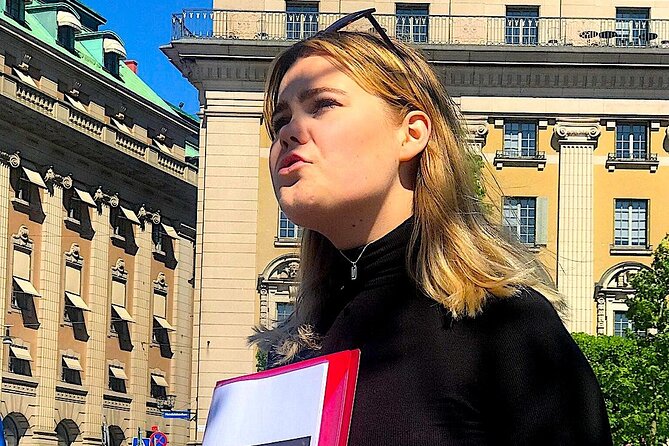
At Gustav Adolfs Torg, you’ll find the statue of Gustav II Adolf, Sweden’s “Lion of the North.” It was unveiled in 1796, and it’s tied to the Thirty Years’ War and modern warfare.
This stop works well because it gives you something concrete to remember: a named plaza with a clear focal point. Statues can blur together in a city—but this one is attached to a major central square you can recognize again later.
If you like historical context, you’ll likely enjoy how the guide connects military legacy to the city’s public spaces.
Stop 6: Royal Swedish Opera, a cultural anchor
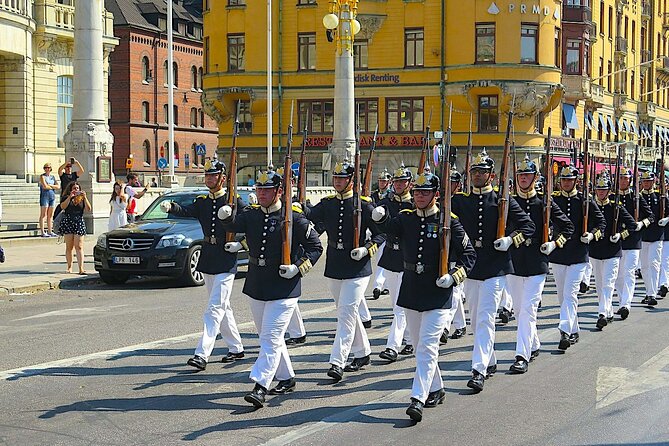
You then reach the Royal Swedish Opera, described as Sweden’s premier opera stage. The institution dates back to 1773, and the current building was inaugurated in 1898 after replacing an earlier structure.
This building is architectural in a “theater people notice it” way: it’s described as neo-classical with French Baroque influences. Admission here is listed as not included, and the tour doesn’t do indoor visits, so you’ll be looking at the building from outside while learning what makes it important.
Still, the exterior matters. Opera houses are often designed to be visually dominant in a city center. Here, the stop helps you connect culture to geography: you’re not just hearing that Stockholm has great performing arts. You’re seeing where that world sits.
Stop 7: S:t Jacobs Kyrka near Kungsträdgården
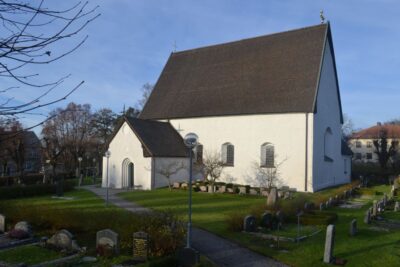
Next is Sankt Jacobs Kyrka (Saint James’s Church), a historic Lutheran church close to Kungsträdgården and Kungsträdgården Opera areas. The church is known for its red façade and a blend of Gothic and Renaissance architecture.
It’s dedicated to Saint James, with roots dating back to the 1600s. The tour also highlights interior highlights like the organ, but again: no indoor visits are part of this walking format. So you’ll admire the exterior and get the cultural context.
This is a nice reset stop if the earlier civic and military topics started to feel heavy. Churches in central Stockholm often sit quietly in a way that makes the city feel layered rather than only “modern.”
Stop 8: Berzelii Park, a green pause in the center
After the church, you reach Berzelii Park, established in 1853. It’s named after the chemist Jöns Jacob Berzelius, and it’s an urban oasis right in the central area.
You’ll learn about the Berzelius monument (unveiled in 1858) and the park’s connection to the Norrmalm district. This stop is valuable because it breaks the walk. It gives you a chance to slow down, look at statues and greenery, and absorb what you’ve already learned without feeling like you’re sprinting from one landmark to the next.
If you’re traveling in warm weather, this also helps. One thing I’d watch: on sunny days, it can be bright enough that a guide’s iPad explanations are harder to follow. If that comes up, try to position yourself so you’re not looking at glare.
Stop 9: The Royal Stables and Sweden’s equestrian tradition
You’ll then visit the Royal Stables (H.M. Konungens Hovstall). This site preserves Sweden’s royal equestrian traditions and is located near Östermalm.
The description focuses on royal carriages, ceremonial harnesses, and horses used for state occasions. Visitors can explore guided tours of the stables and carriage museum—but this specific walking tour frames it as a stop with general access. Admission for this stop is listed as free, but remember the tour overall does not include indoor visits.
Still, the stables are a good “Sweden beyond the obvious” stop. You’re seeing how tradition stays present in the city center, not hidden away in some far-off museum complex.
Stop 10–12: Kungsträdgården, Karl XII statue, and Dramaten
The last third of the tour shifts into culture again, with a cluster of sites around Kungsträdgården and the theater district.
- Kungsträdgården Opera: You’ll hear that this opera building was established in the 18th century and is known for architecture and acoustical excellence, plus a long list of major performances.
- Karl XII statue in Kungsträdgården: Karl XII’s Square is named after Charles XII. The statue was erected in 1868 and the square was set up in 1854—useful details if you like city history you can anchor in place.
- Royal Dramatic Theatre (Kungliga Dramatiska Teatern): This is Sweden’s premier spoken drama stage, established in 1788, with the current Art Nouveau building completed in 1908.
The tour ends near the Royal Dramatic Theatre, so you finish in a very logical place for continuing your day: coffee, dinner, and more exploring around Nybroplan.
If you want one last reason to like this ending: it feels like a grand finale. The walk transitions from formal symbols (parliament and monuments) into the places where stories are performed out loud.
Public group reality: small, but not private
This is not a private tour. It’s a public group with a maximum of 27 travelers. In practice, that usually means you get enough space to hear, but you’ll still be sharing sidewalks and stepping aside for photos.
Two practical tips for better hearing and better photos:
- Stand where you can see the guide clearly. Some stops rely on visuals, and there were mentions of iPad pictures being hard to see in sunlight.
- Keep one ear on the guide and one on traffic. Central Stockholm sidewalks are active, and the group moves quickly from point to point.
Also, service animals are allowed, and the tour is near public transportation—handy for first-timers who might want to hop off early or link up with other plans.
What the guides do best (and where the experience can wobble)
The biggest strength here is the guide storytelling style. People specifically praised guides including Stefan, Karl, Amon, Sophia, and Cim for being professional, friendly, and for answering questions.
There are also a couple of practical issues worth taking seriously:
- Hearing can be tricky on busy streets. One review noted difficulty hearing at times, possibly related to a mic issue.
- Visual aids can be imperfect. If your guide uses an iPad for pictures, bright sun can make the screen hard to read.
You can’t control equipment, but you can control your position. If sound is inconsistent, move closer during the key explanations, then step back for photos.
How much time you really have (and how far it feels)
The tour is listed at about 2 hours. Stop durations range from short “look-and-learn” moments (around 5 minutes) to longer context blocks (up to 15 minutes at places like Parliament’s area and Berzelii Park).
One review said the walk from Central Station to City Hall felt long and not as interesting as later segments. Another review suggested it’s a little tiring for people with physical issues. So the honest takeaway is this: it’s short on paper, but it’s still a walk. If mobility is a concern, consider going slower, bring good shoes, and plan a quieter afternoon after.
Price and value: why $3.55 can be a smart choice
At $3.55 per person, this tour is priced to feel almost suspiciously affordable for Sweden. The value comes from two things you can actually use:
- You’re getting orientation plus real-world context across central landmarks.
- You’re spending less time deciding where to go first, because the tour lays down a logical route.
Tipping isn’t included, and since this is typically a guide-run walking format, it’s smart to budget for a tip if you feel the guide went beyond basic facts—especially if the storytelling helped you understand what you were looking at.
Who should book this tour
This fits best if you:
- Want a first-day introduction to central Stockholm without committing to museums
- Like walking tours that connect buildings to how the country works
- Enjoy culture stops as much as government and monuments
- Want an English guide and a structured route with a clear ending near Dramaten
It’s less ideal if you:
- Need frequent indoor breaks (the tour does not include indoor visits)
- Have very limited mobility or get tired quickly
- Struggle to hear in noisy outdoor settings (sound can vary)
Should you book?
If you want a practical, high-value orientation walk through Stockholm’s core—city governance, major theaters, historic church architecture, and central parks—this tour is a strong pick. The low price makes it easy to try early, and the guide quality tends to be the reason people rate it so high.
But go in with open eyes: it’s public, it’s mostly outdoors, and hearing/visual clarity can depend on conditions. If you bring comfortable shoes and position yourself well, you’ll get a lot from those two hours.
FAQ
How long is the walking tour of Stockholm City Center?
It lasts about 2 hours (approx.).
Where does the tour start and end?
It starts at Centralplan 15, 111 20 Stockholm, Sweden, and ends close to the Royal Dramatic Theatre (Dramaten), Nybroplan, 111 47 Stockholm.
Is this tour private?
No. It’s a public tour with other participants, and the group is limited to a maximum of 27 travelers.
Is there an indoor visit as part of the tour?
No. The tour does not include indoor visits, so you’ll mainly view the sites from the outside.
Are admission fees included?
Many stops have free admission listed, but some stops (like the Parliament Building and The Royal Swedish Opera) are marked as not included. Overall, the tour avoids indoor visits.
Do I need a mobile ticket?
Yes. A mobile ticket is included.
Are there English-speaking guides?
Yes. The tour includes an English-speaking guide tailored specifically for your group.
What’s the price per person?
The price is $3.55 per person.
Is tipping included in the price?
No. Tip is not included.
Can I cancel for a full refund?
Yes. You can cancel up to 24 hours in advance for a full refund.
Are service animals allowed?
Yes, service animals are allowed.