REVIEW · STOCKHOLM
3-4h Viking History Short Day Tour from Stockholm
Book on Viator →Operated by Sweden History Tours · Bookable on Viator
Runes outside the city beat museum boxes. This 3 to 4 hour Viking history short day tour takes you from central Stockholm into the Swedish countryside for a tight hit of runestones, assembly places, and one church where religion shifts left fingerprints. You get round-trip transportation plus a small-group guide so you can focus on what the sites mean, not how to get there.
I love the way this tour blends “look at the stone” moments with real storytelling. Stops like the Jarlabanke runestones and the Viking assembly site connect the physical markers to how people lived, argued, and traveled. I also like the small-group format (max 16) because questions land faster and you’re not just herded from one photo spot to the next.
One drawback to consider: the day is short, so each stop is time-limited and you’ll spend a chunk on the road. If you want long stays at fewer places, this format may feel rushed.
In This Review
- Key reasons this Viking tour is worth your time
- Viking day-trip logistics that keep your morning calm
- Broby Viking graveyard: the skeleton story that changes the scale
- Jarlabanke Bridge and the runestone walk you can feel
- Såstaholms allé and Estrid: a Viking woman tied to place
- Arkils tingstad: law, order, and ships by the lake
- Vallentuna church (1190 AD): the pagan-to-Christian pivot
- Timing and pacing: what 3–4 hours really feels like
- Price and value: what you’re paying for
- Who this tour fits best
- Should you book this Viking short day tour?
- FAQ
- How long is the Viking history short day tour?
- What’s included in the price?
- Is there a small group size?
- Does the tour offer pickup for cruise ships?
- Is the tour in English?
- What stops are included during the tour?
- What should I bring since lunch isn’t included?
Key reasons this Viking tour is worth your time
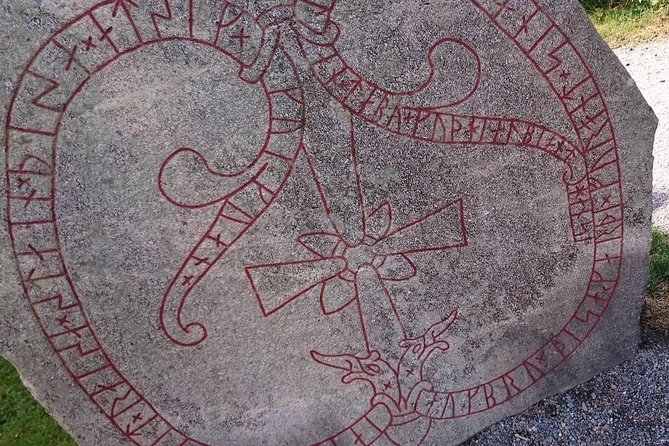
- Runestones with context, including the causeway-style walk that helps you read the setting, not just the symbols
- Countryside pacing that fits limited time, with about 20–30 minutes at each main stop
- A “from pagan to Christian” contrast at Vallentuna church, including a visible runic inscription
- Arkils tingstad by the lake, where you connect law and travel to the landscape
- Pickup designed for cruise days and central hotels, with clear meet-point guidance
- English tour with hands-on guide moments, including Old Norse reading on the stones in some guide styles
Viking day-trip logistics that keep your morning calm
This tour starts at 9:30 am. Plan to be ready a bit earlier because pickup typically begins 30–60 minutes before departure. The good news is you’re not expected to navigate buses, trains, and rural transfers on your own. The guide handles the driving and you handle the questions.
Pickup is set up around Stockholm Central Station within 3 km. If you’re staying in the Old Town area, you may have a short walk to a nearby car-accessible meeting point. If you’re outside the pickup zone, you’ll get simple directions to a more reachable meeting place using public transit.
If you’re on a cruise, this matters a lot. The meet-up instructions are specific by port:
- For ships arriving at S165 or S167 (Stadsgården), you walk a few hundred meters, follow the BLUE/GREEN lines, and meet the guide outside the fenced area with a Viking Tours sign on an A4 paper.
- For F638 (Frihamnen), the guide meets you just outside the terminal sliding doors area.
- For V523 (Värtahamnen), you meet near the tourist bus area by the buses.
- For Nynäshamn, no pickup is included because it’s about 50 km away. You’ll need a meeting point in central Stockholm via train or cruise bus options.
Also grab your mobile ticket before you go. You’ll want your phone usable for the day, especially with cruise timing.
You can also read our reviews of more historical tours in Stockholm

Broby Viking graveyard: the skeleton story that changes the scale
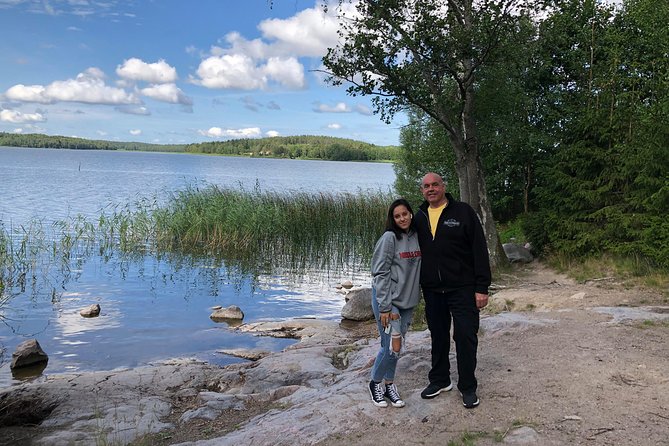
The morning begins with a countryside stop at Broby, described as a Viking graveyard. The standout detail here is that it’s tied to the only identified Viking woman’s skeleton in Sweden. That single fact gives the tour a grounded feeling right away. Instead of thinking Viking history as vague costumes and legends, you see it as real bodies, real burial choices, and real families making decisions that lasted far beyond them.
What to do here is simple: slow down mentally. Look at the burial setting as a place where community memory stuck. And if your guide offers to point out what makes this find unusual, pay attention—it’s the kind of detail that’s hard to pick up by yourself from general tourism signs.
Time can be tight. Even when you only get a short stop, this one sets the emotional tone for the rest of the day.
Jarlabanke Bridge and the runestone walk you can feel
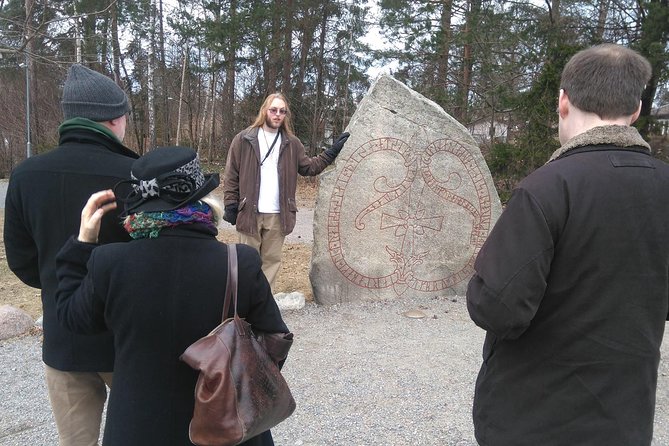
After Broby, you cross the Jarlabanke Bridge, noted as about 495 feet (150 meters) long and built by a powerful Viking leader. This isn’t just an engineering moment. It helps you understand how authority expressed itself in public work and how travel and movement mattered.
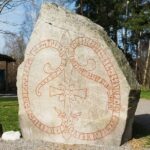
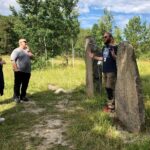
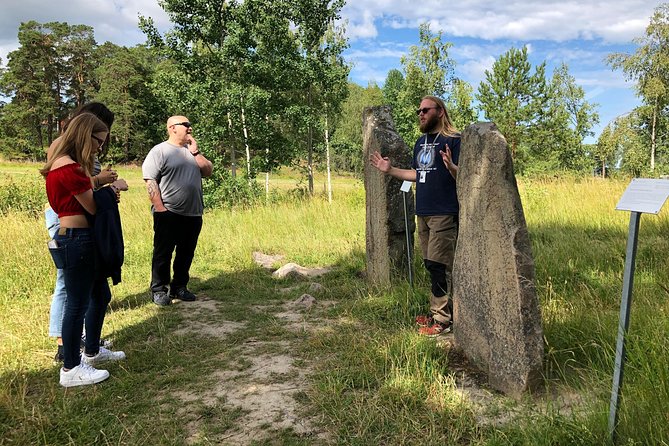
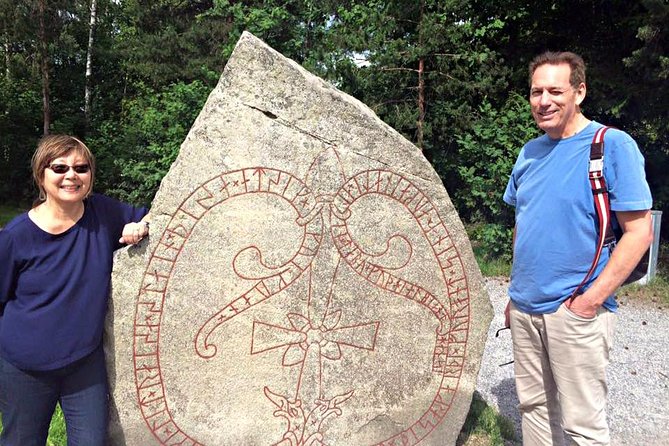
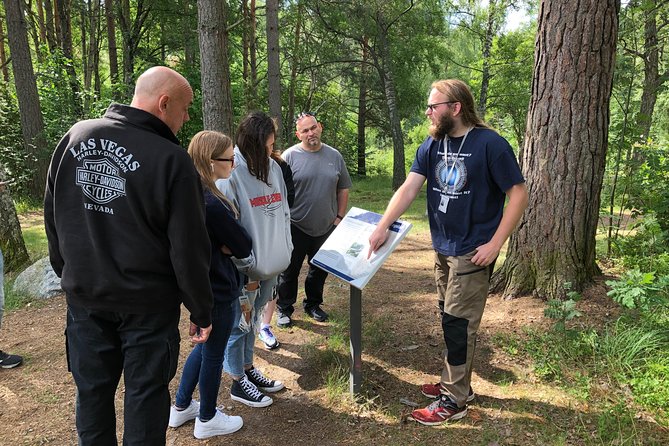
From there, you get a runestone-focused visit at Jarlabanke Runestones. The itinerary calls for a walk along the Viking causeway, which is exactly the right kind of setup for these stones. You’re not standing in a wide-open field wondering what direction to look in. You’re in a space where the route and placement make more sense.
This is also where I’d pay extra attention to how your guide explains the runestones. One guide style highlighted in past tours is reading Old Norse aloud or pointing out the language feel directly on the stones. That changes the experience from sightseeing to interpretation.
One practical note: runestone walks tend to be on uneven outdoor surfaces. Wear shoes you’re comfortable with, and keep your sleeves/hat plan simple.
Såstaholms allé and Estrid: a Viking woman tied to place
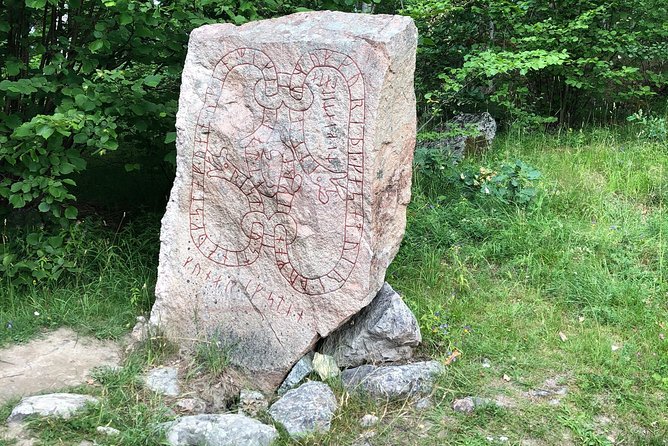
Next up is Såstaholms allé, a stop that focuses on Viking runestones, a Viking burial site, and the chance to walk on the soil the Vikings themselves walked. The tour also brings in a person with real weight: Estrid, described as an influential Viking woman who lived here.
This stop works because it connects three things:
1) written markings (runestones),
2) burial practices (what ends up in the ground), and
3) named influence (Estrid as a human anchor rather than a “Viking era” label).
You’ll probably want to ask questions here, especially if your guide has a habit of linking inscriptions to local power. Even when you only have about 30 minutes, the combination of person + place can make the runes feel less like puzzle pieces and more like communication.
Arkils tingstad: law, order, and ships by the lake
At Arkils tingstad, you visit what’s described as a Viking assembly place—a space where law and order were maintained. In other words, this isn’t just about battle stories. It’s about how communities governed themselves.
Your guide will connect social culture and law to what you’re standing in. Then you get a short nature element: you go down toward the shore of a lake to hear about Viking ships and travel.
That combination is smart. A lot of Viking history tours focus on warriors only. Here, the message is: ships weren’t just transportation—they were how people built networks for trade, politics, and legal gatherings. Seeing the water angle while you’re talking about movement makes it click fast.
Wear a layer for the lakeshore. Even in pleasant weather, it can feel cooler near water.


Vallentuna church (1190 AD): the pagan-to-Christian pivot
The final major stop is Vallentuna, a medieval church dating to 1190 AD. The tour includes time to explore the interior, which is a useful contrast to the outdoor runestone world earlier in the day. Instead of memorial stones in landscape, you shift into a space where religious life took on a new form.
You’ll also be guided to the runic inscription on the wall. That detail matters because it shows how older traditions and newer beliefs overlap. Your guide will talk about how Vikings changed from paganism to Christianity, and the church is a physical stage for that transition.
If you like history that shows change over time, this stop is the payoff. It turns the day from “Vikings were here” into “Vikings’ world changed, and traces remained.”
Timing and pacing: what 3–4 hours really feels like
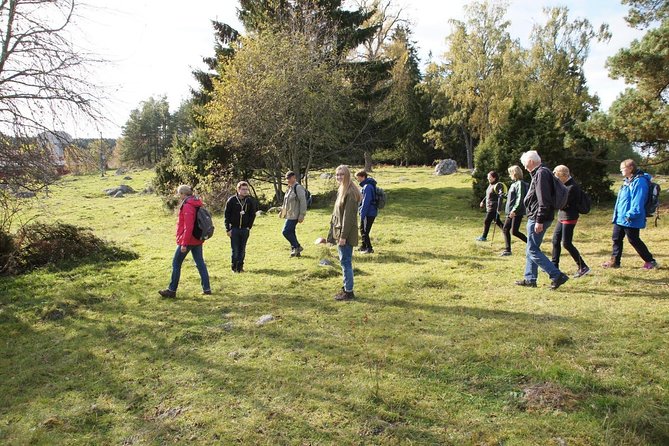
On paper, the itinerary looks tidy: four main stops with about 20 minutes to walk runestones and about 30 minutes at several other sites. In real life, you’ll feel three phases:
- pickup + drive into the countryside,
- short, focused site visits,
- return drive into central Stockholm.
If your schedule is tight (limited days in the city, cruise port day, or you simply don’t want a full-day outing), this is a practical length. But it also means you won’t get deep immersion at any single site. Think of it as a strong orientation plus a few memorable details you can follow up on later.
Bring a snack or plan to buy something after. Lunch is not included, and the day can easily run on empty if you eat too lightly before the 9:30 start.
Price and value: what you’re paying for
At $143.91 per person, this isn’t a throwaway add-on. The value comes from bundling three things together:
- Round-trip transport from central Stockholm and included cruise ports (with the Nynäshamn exception).
- A local driver/guide in English, handling the story, the context, and the timing.
- Access to a set of sites that are hard to string together on your own in a short window.
Admissions listed for the main stops are noted as free in the tour description you’re working from. That doesn’t mean your guide isn’t valuable—it means you’re not paying twice (transport plus site fees). In practice, you’re paying for interpretation, logistics, and getting you to places that make sense as a route.
Two extra notes from past experiences you should keep in mind:
- Small-group tours can still vary with weather and vehicle comfort. One experience mentioned a warm van without open windows during hot weather, so dress in light layers and bring a small water bottle.
- If rain shows up, umbrellas have been available on some tours, so you may not need to panic-buy gear.
Who this tour fits best
This is a great match if you:
- love Viking runestones and want more than a quick photo,
- want history tied to real locations outside Stockholm,
- need a half-day plan that still feels like you went somewhere,
- travel with kids and want safety-seat support (you’ll want to contact in advance if a child is under 5, and past experiences show guides can help with safety seating arrangements).
It’s also a good option if you’re the type who likes asking questions. With a small group, the guide can answer more naturally without rushing you along.
If you’re the type who wants long, slow museum-style time at one site, you may find this itinerary too tight.
Should you book this Viking short day tour?
Book it if you want a high-impact Viking primer from Stockholm. The combination of Broby’s graveyard detail, the runestone walk, Estrid at Såstaholms allé, Arkils tingstad’s law-and-order setting, and the Vallentuna church pivot gives you a complete arc in a short morning.
Skip it (or consider a longer, slower alternative) if you hate drive time or you need lots of minutes at fewer locations. This tour is designed for momentum, not deep staying power.
Also, you can reduce risk because you can cancel up to 24 hours in advance for a full refund. If the weather looks iffy, don’t overthink it—pack a layer, be ready for outdoor paths, and you’ll still get a strong day.
If your goal is to see Viking traces in the Swedish countryside without turning your vacation into a transport project, this is one of the easier ways to do it.
FAQ
How long is the Viking history short day tour?
It runs about 3 to 4 hours total.
What’s included in the price?
The tour includes hotel pickup and drop-off in Central Stockholm (and cruise ports, except Nynäshamn), a local driver/guide, and a small-group tour. Lunch is not included.
Is there a small group size?
Yes. It’s listed as a small-group tour with a maximum of 16 guests in total.
Does the tour offer pickup for cruise ships?
Yes, pickup is included for cruise ports with meeting instructions by ship arrival point. Nynäshamn is the exception where pickup is not included.
Is the tour in English?
Yes, the tour is offered in English.
What stops are included during the tour?
You visit Jarlabanke runestones, Såstaholms allé, Arkils tingstad, and Vallentuna. The morning description also mentions a stop at Broby and crossing Jarlabanke’s bridge.
What should I bring since lunch isn’t included?
Bring a snack or plan to buy food after. Also wear comfortable shoes for outdoor walking at runestone and lakeside areas, and bring layers in case the weather changes.