REVIEW · STOCKHOLM
Viking History Small Group Tour from Stockholm: Half Day Including Sigtuna
Book on Viator →Operated by Sweden History Tours · Bookable on Viator
Viking history can feel like a textbook—until it’s written in stone. This small-group tour strings together rune stones, a Viking grave field, and Sigtuna (founded in AD 970), so you get the story from multiple angles, not just one big stop. I like how the day stays efficient without feeling rushed, and I like the live guide who explains what you’re actually seeing. One heads-up: you do walk a bit, so bring good footwear and don’t expect tons of time to wander freely in Sigtuna.
You’ll start in central Stockholm with hotel pickup (within their stated zone) and a comfortable ride out into the countryside. Expect about 5–6 hours from pickup to drop-off, with a small group capped at 25—often far smaller in practice—so questions don’t get lost in the crowd.
In This Review
- Key highlights you should care about
- A Half-Day Viking History Loop with Sigtuna’s Old-Street Feel
- Pickup and the Small-Group Advantage in Stockholm
- Stop One: Stockholm to Såstaholms and the Shift into Viking Time
- Broby Bro’s Viking Grave Field and the Story of Estrid
- Jarlabanke Runestone Bridge: Reading Power Written in Stone
- Arkils Tingstad: Trying to Picture the Viking Parliament
- Sigtuna, Founded in 970 AD: Sweden’s Oldest City Walk
- How the Timing Works (and Why Lunch Is Your Choice)
- Guides Make It: Carl, Calle, Gabriel, Emma, Erik, and Olof
- What to Bring and When This Viking History Tour Fits Best
- Should You Book This Viking History Small-Group Tour?
- FAQ
- How long is the Viking History Small Group Tour from Stockholm?
- Where does the tour start?
- Is hotel pickup included?
- Is lunch included?
- How big is the group?
- Does the tour offer pickup for cruise passengers?
- What language is the tour in?
- Are there admission fees for the stops?
- What if the weather isn’t good?
- What is the cancellation policy?
Key highlights you should care about
- Real Viking sites: an excavated grave field, rune stone locations, and a Viking parliament place
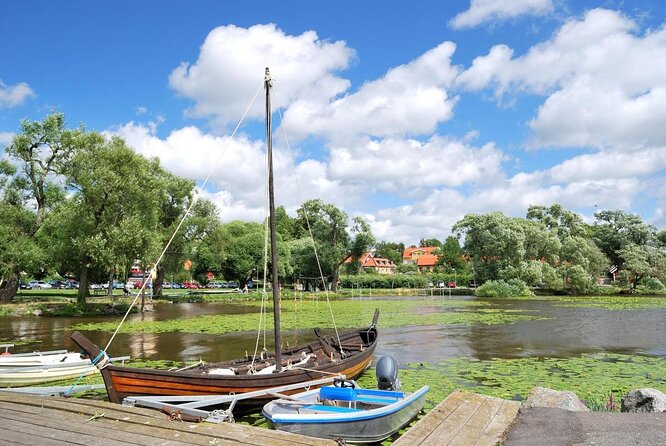
- Sweden’s oldest city, Sigtuna: founded in AD 970, plus a walk past older-era town structure
- Small group feel: max 25 people, with pickup and drop-off that keeps your day simple
- Live storytelling: guides connect what you see to how Vikings lived and led
- Pickup included: hotel pickup for central areas and cruise-guest pickup at specific harbors
- Sigtuna lunch is on you: you get a scheduled stop, but you’ll choose your own meal
A Half-Day Viking History Loop with Sigtuna’s Old-Street Feel
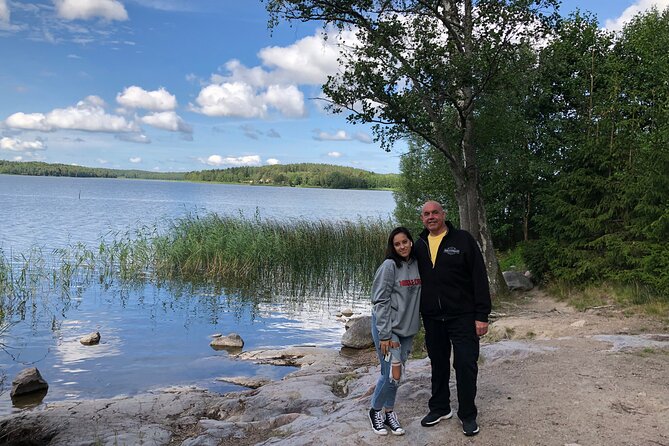
This is the kind of Viking history day that works even if you’re short on time. You’re not stuck in a museum-only loop. Instead, you move between locations where the past is still very “there”—graves, stones, and a place linked to decision-making.
What I like most for your money is the structure. You get multiple stops tied to different parts of Viking life: burial practices, elite power, and governance—then you finish in Sigtuna, a town founded in the late 900s. It’s a simple arc, and it makes the history easier to remember.
The only trade-off is time. Half-day tours mean Sigtuna is a highlight stop, not a deep day. If you want long, slow wandering through shops, churches, and small museums, you may crave more minutes there.
You can also read our reviews of more historical tours in Stockholm



Pickup and the Small-Group Advantage in Stockholm
You start at 9:30am. Pickup normally begins around 9:00–9:30, depending on group size and traffic, and they confirm your exact time close to departure. For hotels within their pickup area near Stockholm central station, they’ll come to you. If you’re in Old Town and a car can’t reach your exact door, they may ask you to walk a few minutes to a reachable pickup point.
From a practical standpoint, this is a big deal. Stockholm is easy to explore on foot, but it’s not easy to guess which countryside sites are quickest by taxi. Having a driver and a plan means you spend your energy looking at the sites—not solving logistics.
Also keep in mind: it’s a maximum of 25 travelers, and the tour is built around a small-group rhythm. In the real world, that tends to mean faster movement between stops and more chances to ask questions.
Stop One: Stockholm to Såstaholms and the Shift into Viking Time
Your morning begins in central Stockholm, then you head north into the countryside. The ride is part of the experience: you’re leaving the modern city behind and moving toward the places where Viking-era life happened.
The first real stop is around 30 minutes of travel time from the start point. You’ll get dropped into the countryside mindset quickly, and that matters because these stops aren’t just “random ruins.” They’re locations tied to specific people and practices.
No admission fees are listed for these stops, and that helps keep the day feeling good value. You’re paying for the guide and the route, not for ticket-hopping.
Broby Bro’s Viking Grave Field and the Story of Estrid
Såstaholms allé is where the day turns emotional—in a good way. You visit Broby Bro, an excavated Viking grave field, and you learn how Vikings buried their dead and what people believed about the afterlife.
This is one of those stops where a guide makes the difference. Without context, it can feel like “some stones and a field.” With context, you start noticing patterns—how burials were arranged, what the choices might have meant, and how status and identity could show up even in death.
You also get the kind of local detail that makes Viking history feel less generic. You’ll hear a story about Estrid, an aristocratic Viking woman connected to the Stockholm region. That’s the type of character-driven history that helps you connect the sites to real lives, not just dates.
Time on-site is about 40 minutes. That’s enough for the basics, but not enough to become a “linger forever” location. If you’re sensitive to schedule pressure, wear shoes you can move in comfortably—there’s a certain amount of walking.
Jarlabanke Runestone Bridge: Reading Power Written in Stone
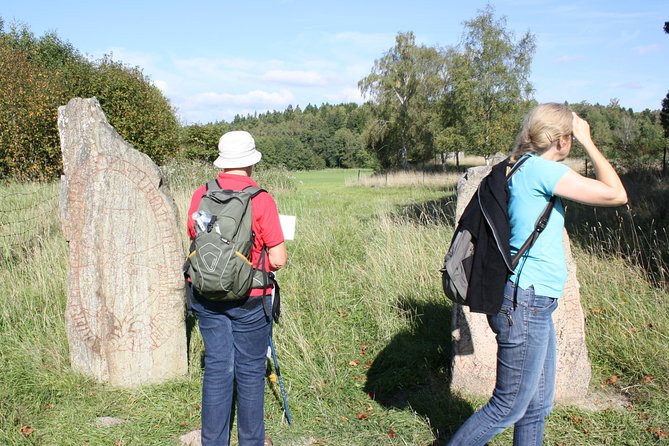
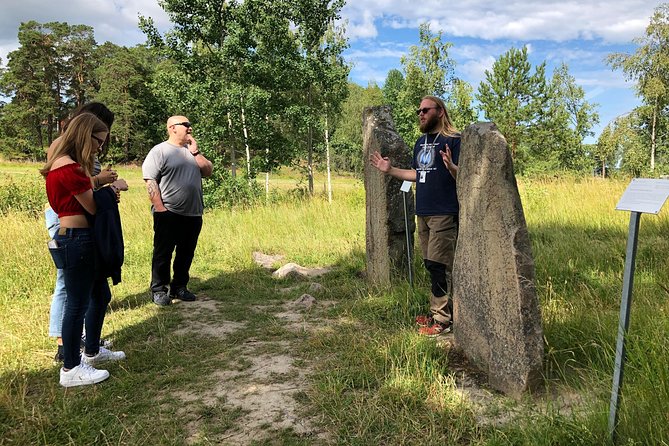
Next comes Jarlabanke Runestones in Täby, at the rune stone bridge. This stop is short—around 20 minutes—but it’s packed with meaning.
The big idea is leadership. You’ll hear the tale of Jarlabanke, described as a powerful Viking lord, and you’ll learn how road and bridge connections could support influence across regions. The guide doesn’t treat the stones as decoration. The emphasis is on function: how physical connections and public markers helped shape social control.
One of the best things about this stop is that it teaches you how to look at runestones. Even if you can’t read the runes yourself, you can understand why people wanted the message to last and why certain individuals were made permanent in stone.
If you like history that feels political and practical, this is one of your favorites.





Arkils Tingstad: Trying to Picture the Viking Parliament
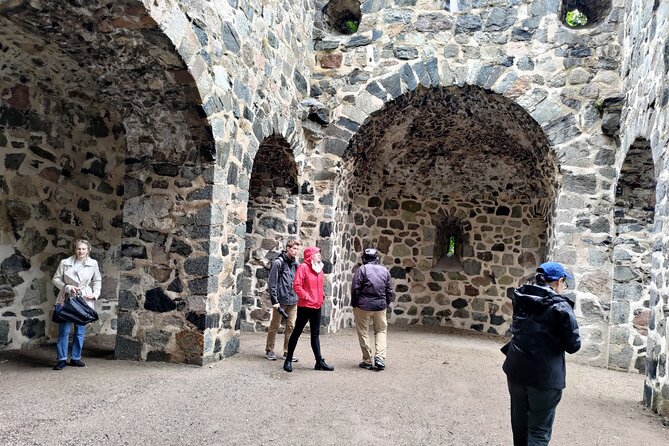
After the rune stone stop, you visit Arkils tingstad, a place tied to Viking assembly and decision-making—a kind of Viking parliament site. The tone shifts here. You’re not focused on burial practices or elite branding. You’re asked to picture the social structure of discussion and authority.
The guide encourages you to imagine the men sitting in the parliament making decisions. That’s not just storytelling for drama. It helps you understand what “ting” meant in Viking society: a meeting place where community matters could be debated and outcomes could be established.
You’ll spend about 40 minutes here. It’s also a good moment to ask questions, because this is where Viking governance can get fuzzy in standard explanations. With a live guide, you can turn vague ideas into something you can picture.
Sigtuna, Founded in 970 AD: Sweden’s Oldest City Walk
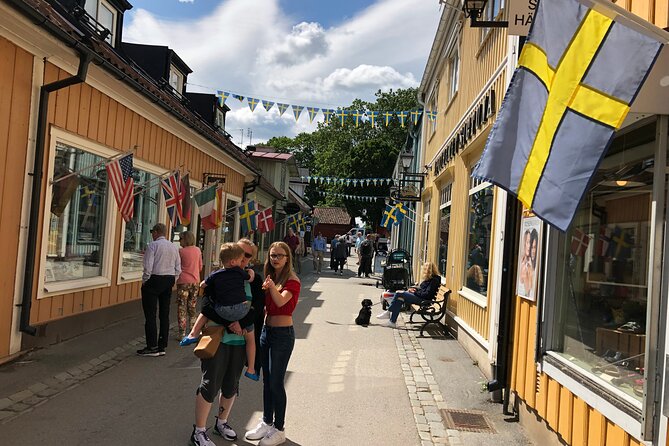
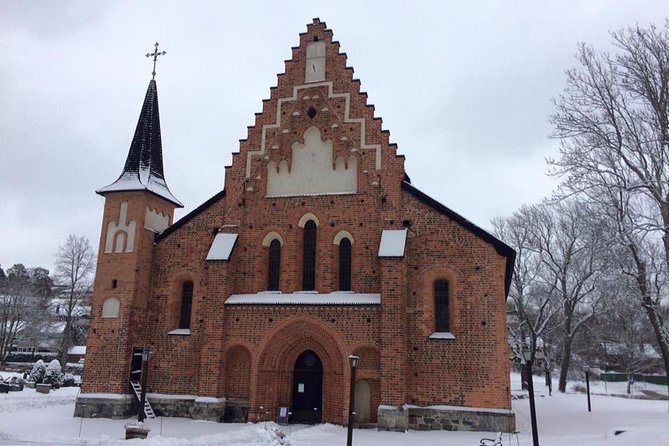
Now for the closer: Sigtuna. The town is described as Sweden’s oldest city, founded in 970 AD by King Erik Segersäll of the Svea Kingdom.
The walk is designed to help you connect Viking-era origins to what’s still visible in the later town structure. You’ll stroll along the main street with prettier 18th century houses, while the guide places Sigtuna’s role in the longer arc of Swedish history into context.
This is where you should expect a “wow, that’s older than I thought” feeling. Many visitors come expecting Viking ruins. Instead, Sigtuna gives you continuity: the Viking starting point and then the town’s later development layering on top.
On the downside, your scheduled time is limited. You’re only there for a short walk segment—about 40 minutes—plus an additional stop later for lunch. If you hoped for a full town exploration, keep your expectations tuned to a half-day format.
How the Timing Works (and Why Lunch Is Your Choice)
The tour runs roughly 5–6 hours total. That’s why Sigtuna is split into parts: you get a walk time block, then you move into a lunch stop.
Lunch is not included. You do get a designated break (about 40 minutes) where the lunch is at your own expense. This is actually a smart setup for many people. Stockholm has plenty of options, but once you’re in Sigtuna, it’s easier to just eat locally without forcing the guide to build in detours.
Practical tip: eat something that won’t slow you down. You’ll have a lot of walking energy still needed after lunch to stay comfortable through the final return.
Also, remember that good weather matters. The experience notes that it requires decent conditions, and if the day is canceled due to poor weather, you’ll be offered an alternative date or a full refund.
Guides Make It: Carl, Calle, Gabriel, Emma, Erik, and Olof
A big reason this tour works is the way the guide turns locations into explanations. The tour uses a live guide, and in past departures there have been guides like Carl, Calle, Gabriel, Emma, Erik, and Olof.
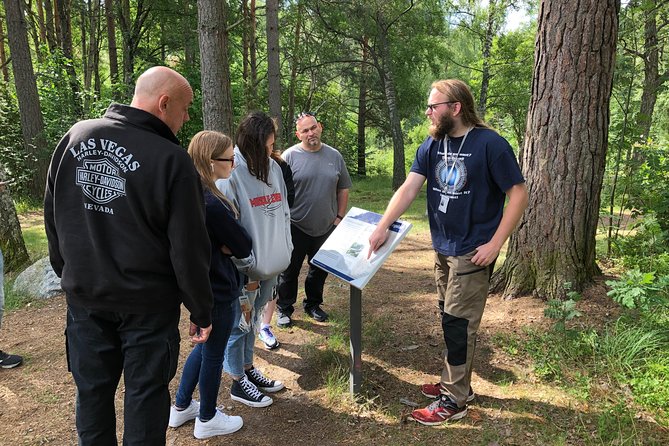
What you can look for in their style is how they connect details: rune stone messages tied to specific people, grave sites tied to practices and beliefs, and governance places tied to how decisions were made. Several guides are described as fun, engaging, and quick to answer questions, which is exactly what you want on a half-day—so you leave with more than just photos.
One fair consideration: a couple of experiences in the broader feedback show that guide personality can affect the mood. One person said they preferred a relaxed atmosphere and didn’t enjoy an overly opinionated or abrupt approach from a guide. That doesn’t mean it’s the norm, but it’s a reminder: if you want a calm, question-friendly pace, keep that preference in mind when you’re booking.
What to Bring and When This Viking History Tour Fits Best
This is a half-day format, so you don’t need a big packing list. You do need the basics that keep you comfortable and ready for short walks and outdoor stops.
Wear good footwear. One review explicitly warned about the walking and recommended appropriate shoes. Layers also help. In Sweden, morning and mid-day can feel different depending on season.
If you’re visiting Stockholm and want one solid outing that connects Vikings to real modern places, this fits well. It’s also a good choice for first-time visitors who want to get out of the city without spending the whole day in transit.
If you’re the type who loves long, slow town exploring, consider pairing Sigtuna with extra time on your own. You can treat this tour as the “Viking origin story” portion, then go back for more browsing later.
Should You Book This Viking History Small-Group Tour?
Book it if you want a high-signal half-day. You’ll see multiple Viking-linked sites—grave field, rune stone locations, a tingstad—and you’ll end with a meaningful walk in Sigtuna. For $193.22 per person, the best value part is that you’re paying for a guided route, a comfortable ride, and pickup/drop-off rather than an assortment of separate admissions and logistics.
Skip or reconsider if your main goal is deep free time in Sigtuna. The time there is scheduled and limited, and lunch is on your own. If you need a long town wander, you might be happier with a full-day option.
If your priority is learning from a live guide in a small-group setting, with easy pickup around central Stockholm and cruise harbor pickup at specific locations, this is a strong, practical choice—especially for the first chapter of Viking history in Sweden.
FAQ
How long is the Viking History Small Group Tour from Stockholm?
The tour runs about 5 to 6 hours, with each stop timed so you can cover several Viking-related sites and then Sigtuna.
Where does the tour start?
It starts at 9:30am. Pickup usually begins around 9:00 or 9:30, depending on your departure time and the day’s conditions.
Is hotel pickup included?
Yes, pickup is offered if your hotel is within their stated pickup zone near Stockholm central station. If you’re staying in Old Town where a car can’t reach your exact spot, you may be asked to walk a few minutes to a different pickup location.
Is lunch included?
No. There is a lunch stop in Sigtuna, but lunch is at your own expense.
How big is the group?
The tour has a maximum of 25 travelers.
Does the tour offer pickup for cruise passengers?
Yes, pickup is offered at specific cruise harbors including Frihamnen, Värtahamnen, and Stadsgården. No pickup is included for Nynäshamn.
What language is the tour in?
The tour is offered in English.
Are there admission fees for the stops?
The stop times shown list admission tickets as free for the included sites in the itinerary you provided.
What if the weather isn’t good?
The experience requires good weather. If it’s canceled due to poor weather, you’ll be offered a different date or a full refund.
What is the cancellation policy?
Free cancellation is available up to 24 hours in advance for a full refund. Less than 24 hours before the start time isn’t refundable.