REVIEW · STOCKHOLM
Full Day Viking Tour with Fika Swedish Coffee Break
Book on Viator →Operated by UrbanTurism OU · Bookable on Viator
Vikings and runes, all in one long day. I really like how this trip links Viking-era sites with the later Christian story in Sweden. I also love the small-group van setup with an audio system, so you’re not stuck straining to hear every stop.
One thing to consider: it’s a 10-hour day with frequent get-in/get-out moments and some walking, so pack for weather and plan your energy.
In This Review
- Key Things I’d Watch For
- A 10-hour Viking sweep from Stockholm that actually has stops with meaning
- Jarlabanke Runestones and Arkils tingstad: the Viking world in plain sight
- Vallentuna church: when pagan roots meet Christian change
- Granby Farm fika and Viking ruins: the break that also adds context
- Sigtuna: earliest capital energy and time to wander at your pace
- Old Uppsala burial mounds: the ritual geography you can feel
- Uppsala Cathedral: a guided look inside Sweden’s religious center
- Comfort and sound on the road: small van, audio system, and frequent exits
- Price and value: what you’re paying for at about $241.36 per person
- Who this Viking day trip fits best (and who might want a different plan)
- Should you book this full-day Viking tour with fika?
- FAQ
- How long is the Viking tour with fika?
- What’s included in the price?
- Is lunch included?
- Does the tour offer pickup in Stockholm?
- What language is the tour in?
- How many people are in the group?
- What kind of transport will I use?
- What if the weather is bad?
Key Things I’d Watch For
- Runic translations in the field at Jarlabanke Runestones, with time to explain what you’re actually seeing
- Arkils tingstad by the lake, where Viking legal life comes to life
- Granby Farm fika plus ruins tied to Viking settlement history
- Sigtuna free time in Sweden’s earliest capital area, including St Olof church ruins
- Old Uppsala burial mounds + Uppsala Cathedral, pairing myth, ritual sites, and a major Church of Sweden landmark
- Small van, audio for each passenger, with optional pickup attempts where schedule allows
A 10-hour Viking sweep from Stockholm that actually has stops with meaning
This is the kind of day trip that aims to make the Viking era feel real, not just decorative. You start in Stockholm, then fan out into the region north of the city for runestones, assembly grounds, old churches, and Uppsala’s major spiritual sites. The guiding focus stays on the Viking period and the transition into Christianity in Sweden.
At about 10 hours, you’re trading “slow sightseeing” for “big coverage.” That can be worth it if you like learning history in context: why these places mattered, what people did there, and how the written runes and the later churches connect.
Also, the sites you visit don’t require paid admission according to the tour info, which helps value. You’re paying for a full-day guide, the transport, and the structure that keeps the day moving without turning into a self-guided scavenger hunt.
You can also read our reviews of more tours and experiences in Stockholm.
Jarlabanke Runestones and Arkils tingstad: the Viking world in plain sight
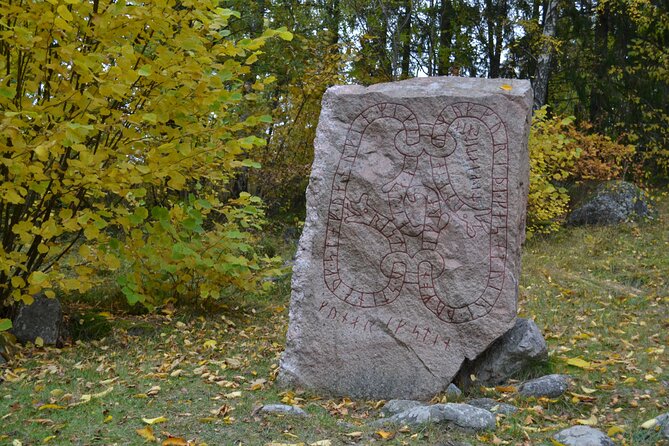
The day kicks off at the Jarlabanke Runestones. These are the kind of stops that can either feel impressive-but-vague or genuinely click—depending on how the guide explains them. Here, you’ll get a rundown of the runic script, what the carved messages say, and what those inscriptions suggest about life in Viking times. Admission is marked as free, so your “ticket value” goes straight into the explanation rather than entry costs.
Then you’ll head to Arkils tingstad, a historic assembly site by a scenic lake. This is where Viking civic life shows up: gatherings, meetings, and court-like proceedings. The tour frames it as part of the Viking legal system, which is a helpful angle because it shifts the focus from warriors and helmets to governance and community decisions. Travel between the first two stops is short—about a 5-minute hop—so you don’t feel like you’re spending the whole day just on the road.
Practical note: these sites are outdoors. If you’re visiting when it’s chilly or rainy, you’ll want layers you can adjust quickly. A little wind off the water can make short waits feel longer.
Vallentuna church: when pagan roots meet Christian change
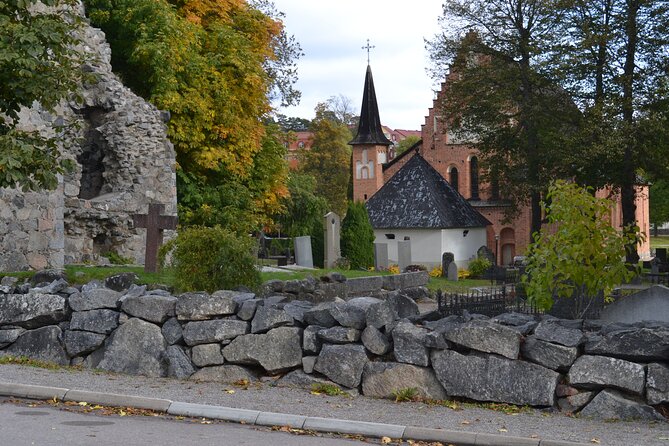
Next up is Vallentuna, where you visit the historic Vallentuna church. The tone here changes a bit. Instead of runes, you get the story of the transformation from pagan life into Christianity, with a brief look at the history of the Church of Sweden.
This stop matters because it fills a gap a lot of Viking tours leave behind. If you only focus on runestones and battle stories, it’s easy to miss how deeply the culture shifted over time. Seeing an older church after the runic and assembly stops helps you connect the dots between the Viking era and the later Scandinavian religious landscape.
Travel time here is short (around 7 minutes from Arkil tingstad), and the stop itself is about 30 minutes. That’s enough time to hear the background and walk around without rushing your way through.
Granby Farm fika and Viking ruins: the break that also adds context
This is where the day gets more human-scale. You head to Granby Farm for a traditional Swedish coffee break—fika—with pastry. The tour info is clear that fika is included here, and that it’s normally the setting for the break.
But the stop isn’t just a coffee moment. You also get to look at ruins of an old Viking settlement, including the detail that the site features the largest runic script in the world (as described in the tour notes). Even if you’ve already seen runestones earlier, this “larger-than-life” runic element can change how you picture carving and writing in everyday Viking life.
Here’s how I’d think about the value: the included fika is already a nice break, and adding a settlement/ruins explanation means you’re not losing learning time while you eat. It’s a smart use of a pause in the schedule.
Sigtuna: earliest capital energy and time to wander at your pace
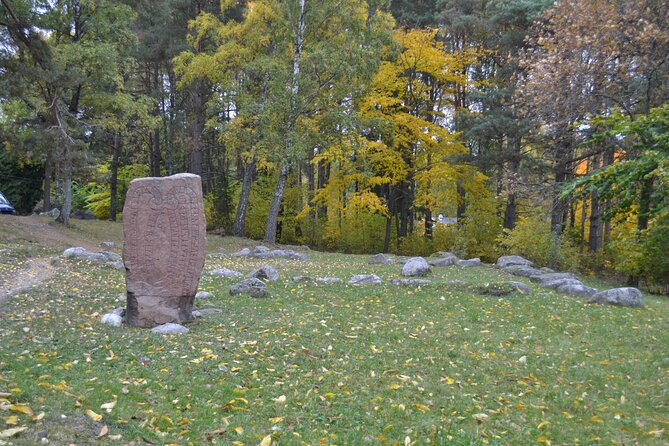
After Granby Farm, you go to Sigtuna, described as the first capital of Sweden with a conserved historic character. This is a great contrast to the stone-and-mound stops earlier in the day. Instead of only looking at objects tied to the Viking past, you also get a town experience—streets, atmosphere, and time to absorb the place.
You’ll receive an introduction to Sigtuna’s history, then you’re given free time (about one hour) to wander. The tour also includes a visit to the ruins of S:t Olof church, which ties the town back into the church-and-identity story you started at Vallentuna.
If you want to get the most out of this part, don’t over-program it. Use the introduction to pick what to focus on, then let the free time do its job—slow looking, quick photos, and checking out the river/waterfront feel that Sigtuna is known for in this region.
You can also read our reviews of more tours and experiences in Stockholm




Old Uppsala burial mounds: the ritual geography you can feel
Then comes The Church of Old Uppsala, with a focus on the burial mounds and the old church site. The tour frames Old Uppsala as a spiritual center for Vikings and one of the early Christian areas, with old kings buried in individual mounds.
This stop is powerful because it gives you “time depth.” You’re not just learning that these were important places—you’re seeing the physical footprint of ritual, power, and belief. If rune stones are about messages in stone, burial mounds are about how people structured meaning in the land.
Expect this to be a slower, more reflective moment compared to the runestone explanations. It’s still guided, but the subject works best when you let it breathe.
Uppsala Cathedral: a guided look inside Sweden’s religious center
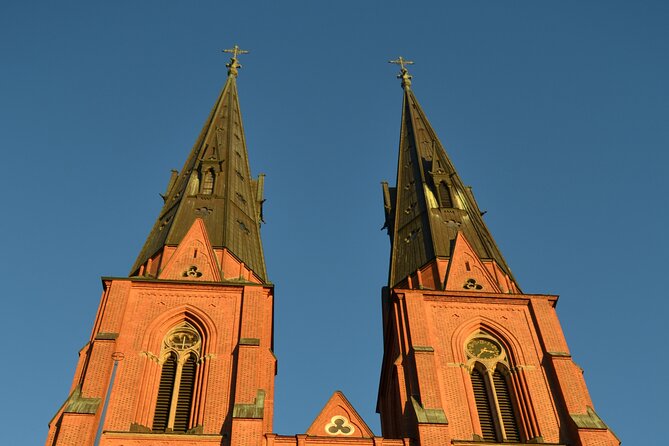
After Old Uppsala, you move into Uppsala Cathedral (Domkyrka), the main church for the Church of Sweden and the seat of the archbishop. Here you get a guided tour of the cathedral plus a brief city tour.
This is a key “so what” ending to the whole day. You start with Viking-era writing and assembly, then you watch religious change through church foundations and the transition story at Vallentuna and Sigtuna. Finally, you land at a major institutional landmark. The arc helps the Viking story feel like a chapter in a longer national transformation, not a standalone costume party.
Comfort and sound on the road: small van, audio system, and frequent exits
Transport runs in a comfortable van/minibus with a maximum of 17 passengers. The tour notes an audio system provided for each passenger, and it also mentions the van is equipped with AC and a heater system.
That said, one practical caution: the clarity of audio can make or break a history-heavy day. On the negative side, some people felt the speaker system wasn’t strong enough. If hearing every explanation matters to you, sit closer to the front and keep your audio volume ready—especially in rain or wind.
Also, pickup is offered, but it’s not guaranteed at your exact door. The tour explains that schedules sometimes mean you’ll use an alternative pickup address. So if you’re staying outside central Stockholm, plan to be flexible.
Finally, since you stand and do short walks at several outdoor stops, I’d pack for quick changes: good shoes, water-resistant layer, and a warm hat if it’s cold.
Price and value: what you’re paying for at about $241.36 per person
At $241.36 per person for roughly 10 hours, this isn’t a “cheap and cheerful” outing. The value comes from a few concrete factors:
- Free admission at the listed sites (so your money goes to the guide and time, not entry fees)
- A full-day route that covers multiple key locations north of Stockholm without you driving
- Included fika with pastry at Granby Farm
- Small-group size (max 17) plus an audio system, which supports a more guided experience than a big bus
What’s not included is lunch. That’s the most obvious extra cost and the easiest one to plan. Bring a snack mindset even if you’ll get coffee and pastry during fika, because you’ll be on the move for most of the day.
The other “cost” is time. Ten hours is long. If you’re the type who wants deeper time in just one town, you might prefer a shorter option. But if you enjoy stepping through history as a sequence—Vikings, legal life, religious transition, then major churches—this format can feel efficient.
Who this Viking day trip fits best (and who might want a different plan)
This works best if you have an historical interest and you like guided explanations you can follow from stop to stop. It’s also a good fit if you don’t mind a schedule that moves and if you can handle being out in weather for outdoor sites.
It may feel less satisfying if you’re mainly chasing the most basic Viking stereotypes. Some stops are explicitly church-focused (Vallentuna and Uppsala Cathedral), and even Old Uppsala includes spiritual and burial-mound interpretation, not just artifacts. The emphasis stays on understanding the era and its transition.
From a comfort angle: the tour notes most people can join, but you should be comfortable standing and doing short walks. If you want minimal walking, or if rain makes you miserable, you may want to reconsider. The tour also says it needs good weather, with a different date offer or a full refund if it’s canceled due to weather.
Should you book this full-day Viking tour with fika?
I’d book it if you want a structured day that connects runic culture, Viking civic life, early Christian change, and Uppsala’s major landmarks—all with a small-group setup and an included fika break. It’s also a smart use of one Stockholm day if you want to see farther than the city without renting a car.
I’d pause before booking if you’re sensitive to long days, outdoor cold/rain, or if you’re picky about audio quality—history tours live and die by sound and pacing. And since lunch isn’t included, make your food plan early.
If you go in expecting a guided “history lesson in motion,” you’ll likely enjoy the sweep from stone inscriptions to cathedral walls.
FAQ
How long is the Viking tour with fika?
It runs for about 10 hours.
What’s included in the price?
The tour includes a Swedish fika coffee break with pastry. It also includes guided visits to sites where admission is listed as free.
Is lunch included?
No. Lunch is not included.
Does the tour offer pickup in Stockholm?
Pickup is offered, but it may not work exactly from your address due to scheduling. An alternative pickup address may be used.
What language is the tour in?
The tour is offered in English.
How many people are in the group?
The tour has a maximum of 17 travelers.
What kind of transport will I use?
You’ll ride in a comfortable van/minibus with an audio system for each passenger.
What if the weather is bad?
The tour requires good weather. If it’s canceled due to poor weather, you’ll be offered a different date or a full refund.