REVIEW · STOCKHOLM
Stockholm Syndrome Private Walking Tour
Book on Viator →Operated by OURWAY Tours - Stockholm · Bookable on Viator
Norrmalmstorg sets the tone fast. This private walking tour is built around real Stockholm stories, starting at the place tied to Stockholm Syndrome and winding through the big-name sights, then cutting over to the characterful districts you’d normally only find by wandering on your own. You can also tell your guide what you care about, so the pace and endpoint can shift to match your interests.
I especially like the insider guide commentary. You’re not just seeing buildings; you’re getting the why behind the names, squares, and statues, including the details that turn a quick stop into a memory. I also love that there’s a proper break with fika (coffee or tea plus pastry), so the walk doesn’t feel like nonstop sightseeing.
One thing to plan for: the tour doesn’t return you to the starting area. You finish in Södermalm near Cornelisparken, so you may need to budget time (and energy) for the ride or your own extra walk back.
In This Review
- Quick highlights you’ll feel in 3 hours
- The 3-hour route: how the story order makes Stockholm click
- Norrmalmstorg: the spot tied to Stockholm Syndrome
- Kungsträdgården and Riksdagshuset: meeting points and power
- Royal Palace area and Storkyrkan: monarchy up close
- Gamla Stan basics: Stortorget, Iron Boy, and the narrow alley
- Slussen: the city’s water-level logic
- Södermalm: the alternative side, with viewpoints and local streets
- Cornelisparken finish: the last photo and why the ending location matters
- Price and value: what $418.80 per person buys you
- Who should book this Stockholm private walking tour
- Should you book?
- FAQ
- How long is the Stockholm private walking tour?
- Where do you meet the guide, and where does the tour end?
- Is the tour private or shared with other groups?
- What language is the tour offered in?
- What’s included in the price?
- Are admission tickets included for major stops?
- What should I expect in terms of walking and terrain?
- Can I customize the route?
- What’s the cancellation policy?
Quick highlights you’ll feel in 3 hours
- Norrmalmstorg’s Stockholm Syndrome story starts the tour with a reason to pay attention.
- Royal and political Stockholm in one line: parliament, royal sights, and the cathedral area.
- Old Town specifics: Stortorget, the Iron Boy, and Mårten Trotzig (the famous narrow alley).
- Södermalm’s alternate vibe through Götgatsbacken, viewpoints, and local squares.
- Fika included so you get a real pause, not just photo stops.
The 3-hour route: how the story order makes Stockholm click
Stockholm is a city of islands and neighborhoods, and a first visit can feel like you’re constantly crossing from one “Stockholm” to another. What makes this tour work is the order. You begin where a global phrase came from, then move through civic power and monarchy, and only after that do you get the medieval-and-local texture of Gamla Stan and Södermalm.
You’ll cover a lot of ground on foot, roughly three hours, and it’s designed for a moderate fitness level. The route includes cobblestones in parts, so wear shoes you can trust. Also, it runs in all weather, so dressing for wind and rain matters more than packing an umbrella you’ll lose in the first crosswalk.
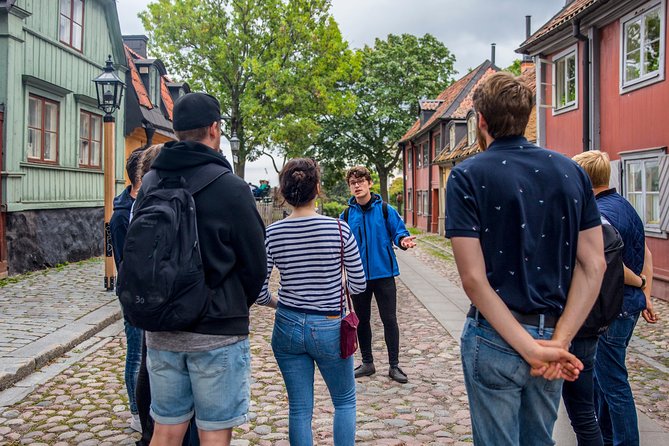
The tour is private, meaning it’s just your group. That matters because your guide can slow down for questions, make one stop longer than planned, or skip the bit that doesn’t interest you. It’s a small thing, but in a city like Stockholm it can be the difference between “I saw stuff” and “I understand what I saw.”
You can also read our reviews of more walking tours in Stockholm

Norrmalmstorg: the spot tied to Stockholm Syndrome
Most walking tours start with a landmark. This one starts with an incident. Norrmalmstorg is where the term Stockholm Syndrome became associated with a bank robbery and hostage situation from the early 1970s.
That’s not just trivia. It sets up how you’ll read the city for the next few hours. You begin noticing the spaces where people gather, the way major buildings face the street, and how public areas can feel calm even when history isn’t. Even if you know the phrase already, the setting gives it a sharper edge.
From there, the walk moves toward Nybroplan and major central meeting points. You’ll pass the Royal Dramatic Theatre (Kungliga Dramatiska Teatern), Sweden’s national stage for spoken drama. It’s a quick stop, but it’s a good reminder that Stockholm isn’t only royal and political. It’s cultural too, and the building is part of that identity.
Kungsträdgården and Riksdagshuset: meeting points and power
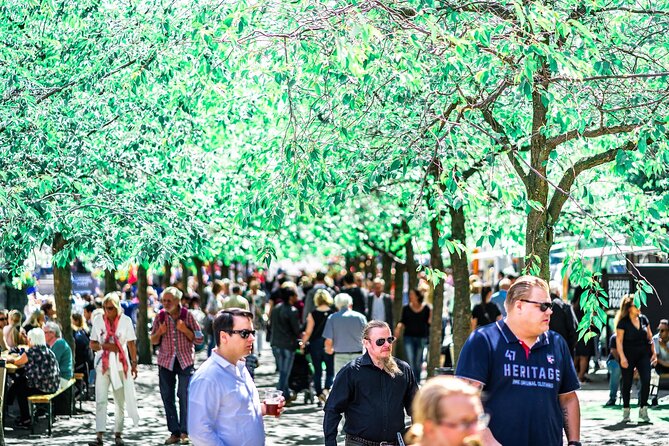
Next comes Kungsträdgården, one of Stockholm’s main public gathering places (locally known as Kungsan). The history here stretches back to the 1400s, when it began as a king’s kitchen garden. By the 1700s, it shifted to public use, which helps explain why this feels less like a museum square and more like a place locals treat as theirs.
This park is also seasonal in a very practical way. In summer, concerts and festivals happen here. In winter, ice skating is possible. In spring you’ll see cherry blossoms, and in autumn the leaves change color. Even if you only see it briefly, it’s a strong example of how Stockholm’s outdoor life is built into everyday spaces.
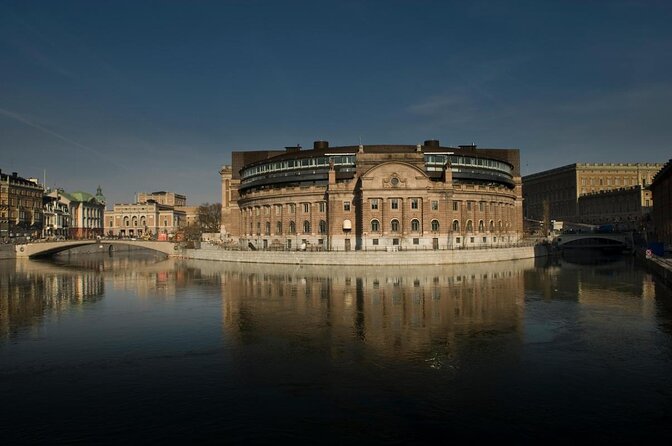
Then you’ll look at the Parliament Building (Riksdagshuset) on Helgeandsholmen. The key detail: it’s an island of its own, and it’s where national governance happens. You’ll get the layout at a glance—the Swedish Parliament has one chamber and members are elected every four years—which gives the surrounding architecture a context beyond “big building.”
If you like politics or just enjoy understanding how countries function, this segment is a good mental reset. You’re moving from public gardens to the formal machinery of government.
Royal Palace area and Storkyrkan: monarchy up close
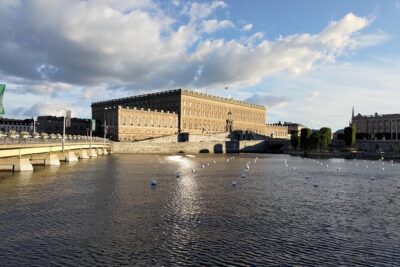
The tour continues to the Royal Palace, described as one of Europe’s largest royal residences. It’s the king’s official residence, and it also hosts key monarchy representation events, which is why Stockholm’s palace feels more alive than some palaces that act only as background scenery.
Worth noting for your planning: the Royal Palace stop is not included in the ticket price. The tour treats it as a high-value exterior look—good for orientation and photos—but if you want to go inside, you’ll need separate arrangements and time.
Nearby, you’ll reach Storkyrkan (Stockholm Cathedral). This is the church area tied to the royal wedding of King Carl XVI Gustav and Queen Silvia, and it’s open year-round. You’ll see the wooden statue of St. George and the Dragon inside, with a history dating back to the 1470s, made after an early battle connected to Sweden and Denmark during the Kalmar Union.
Storkyrkan has a small entrance fee, so again, your tour experience here is mainly about the moment and the story. If you’re the type who likes to step inside briefly, set aside a few extra minutes. If you prefer just the exterior and a quick photo, you can keep the pace moving.
Gamla Stan basics: Stortorget, Iron Boy, and the narrow alley
After the royal and cathedral area, the tour shifts into Stockholm’s Old Town feel. Stortorget is the main square in Gamla Stan, and it’s one of the best places to start if you want your bearings fast. This is where the first Town Hall was built, and today it’s also associated with major historic moments, including the Stockholm Bloodbath.
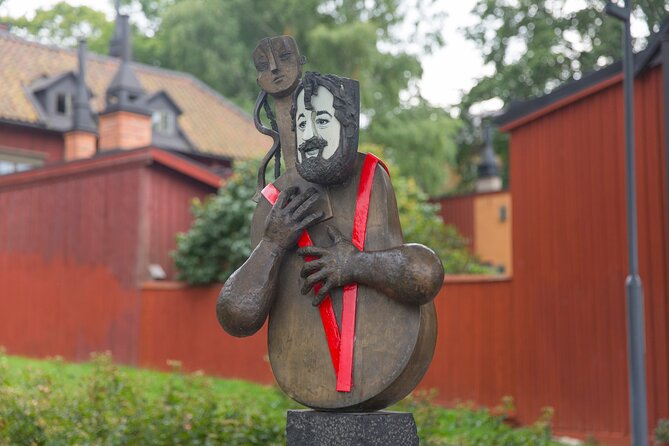
Then comes the Iron Boy—officially Järnpojken, also known as the boy looking at the moon. The story is oddly charming: the statue is partly based on sculptor Liss Eriksson, who as a child sat awake looking at the moon through a window. This kind of stop is exactly why I like guided walking tours in cities with lots of statues. You’re not just counting landmarks; you’re collecting personality.
Right around this Old Town stretch, you also get the symbolism behind St. George and the Dragon again, tied to the battle between Sweden (St. George) and Denmark (the dragon) and connected to Kalmar Union figures like King Kristian I and Sten Sture the elder.
The famous finish of this segment is Mårten Trotzigs grand (Mårten Trotzig’s alley). This is the narrowest alley stop on the walk. At its narrowest point it’s about 90 cm wide. It’s a good example of how Stockholm can be playful with space: a micro street that becomes a photo moment, then a story about how cities evolve.
You can also read our reviews of more private tours in Stockholm





Slussen: the city’s water-level logic
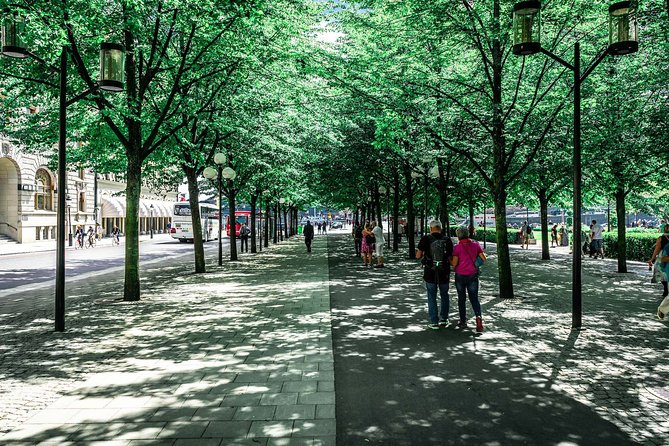
Slussen translates to the lock, and that name is explained by how the city’s waters work. Stockholm is surrounded by Lake Mälaren on one side and the Baltic Sea on the other, and Lake Mälaren sits about 70 cm higher. That difference is why locks exist, and Slussen is where you get that “oh, that’s why” explanation.
This stop is short, but it’s meaningful. Stockholm’s look and feel makes you think the water is the scenery. A good guide reminds you the water is also the infrastructure. Even if you don’t go down to the waterline here, you’ll start connecting the dots as the route continues into Södermalm.
Södermalm: the alternative side, with viewpoints and local streets
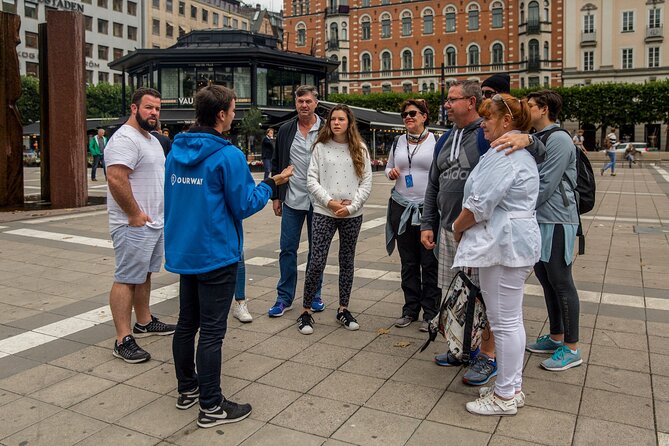
Södermalm is where Stockholm shifts from formal monuments to everyday personality. The tour’s second half is where you’ll feel that.
First is Götgatsbacken, a pedestrian area connected to Götgatan. This is where you’ll spot modern-day shopping brands, but the walk also points out op-shop style vintage finds and laid-back pubs. It’s a useful stop if you want to understand what people do beyond sightseeing.
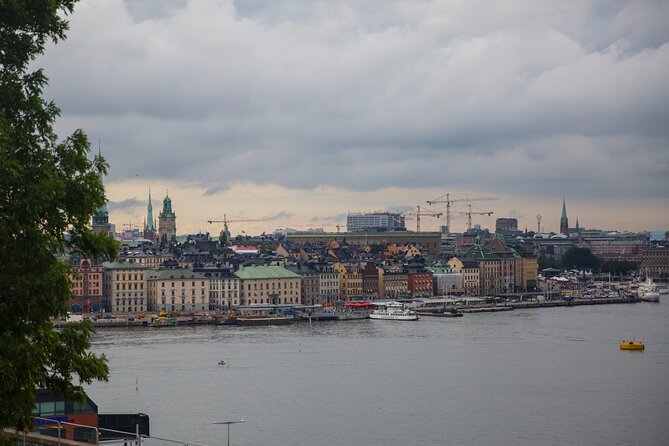
Then you’ll reach Katarinahissen, the Katarina Elevator. It started as a practical alternative to stairs up the cliff side of Södermalm, and today it’s mainly a viewpoint/photo stop. This is one of those places where you don’t have to overthink it. A few minutes here gives you a skyline angle that helps you picture the city’s islands and elevations.
Next is Mosebacke Torg, a quieter square near Södra Teatern. In summer, it’s known for the popular biergarten in Stockholm, and it’s also home to The Sisters sculpture. Even if you’re there outside peak season, it’s a nice breath after the busier walking stretches.
From there, the walk goes to Fiskargatan, where Stieg Larsson pictured Lisbeth Salander’s apartment from the Millennium Trilogy. This is a subtle literary stop, but it makes Södermalm feel like a place with a soundtrack and not just buildings.
Then comes Katarina Kyrka. The cemetery around the church includes the assassinated Foreign Minister Anna Lindh, plus other notable Swedes like Per Anders Fogelström and Cornelis Vreeswijk. Even if you don’t go inside, the stop gives you a sense of how Stockholm layers current memory onto older stone.
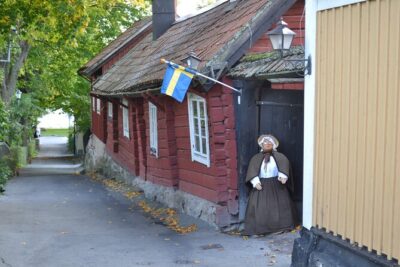
You also pass Master Mikaels Gata, a small street with colorful wooden houses. It was named after Mikael Reissuer, who served as executor of Stockholm in the 1600s. Today, many wooden houses are tied to AB Stadsholmen, a government-owned real estate company focused on cultural heritage buildings. This is the kind of detail that makes wooden Stockholm feel specific instead of generic.
Cornelisparken finish: the last photo and why the ending location matters
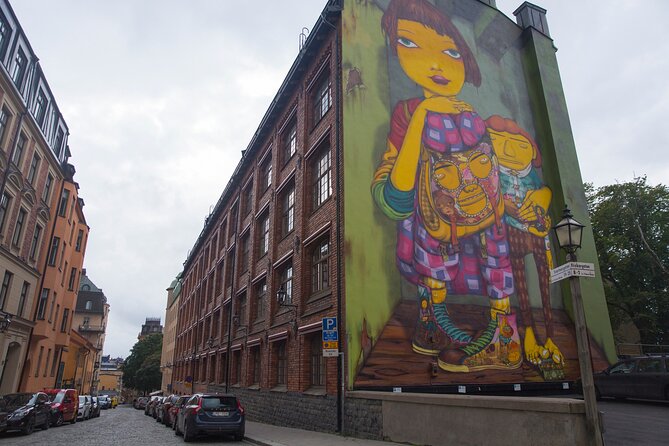
The tour ends at Cornelisparken, inaugurated in 2000 and dedicated to Cornelis Vreeswijk, often seen as the Swedish equivalent of Bob Dylan. It’s also described as offering breathtaking views of Stockholm.
That ending is great for photos and a final sense of place. But remember the earlier drawback: you finish in Södermalm, not back where you started in Norrmalmstorg. If you’re relying on public transit, make a plan before you’re tired. The good news is the guide can also help you decide where to end based on weather, walking comfort, and your interests.
Price and value: what $418.80 per person buys you
At $418.80 per person for about three hours, this isn’t a “cheap walk to fill time.” You’re paying for three things that matter in Stockholm:
1) Private guiding
You’re not trying to hear over a large group, and you’re not forced into a one-size-fits-all route. Your interests can shape the walk.
2) A smart route mix
You get central Stockholm (Norrmalmstorg, Parliament, royal area), then Old Town essentials (Stortorget, Iron Boy, narrow alley), then Södermalm’s local street life and viewpoints. That’s a lot of variety packed into one morning or afternoon.
3) Fika included
Coffee or tea plus pastry sounds small, but it’s the difference between a tour that feels like a sprint and one that feels like a real break. It also keeps energy up for the second half.
You’ll also see many stops that don’t require additional entry. Some important moments do have entrance fees if you want to go in—like the Royal Palace and parts of the cathedral—so think of the tour as orientation plus stories, with optional add-ons for anything you want to explore deeper.
If your goal is a first Stockholm “map in your head,” this is a fair way to buy time and context.
Who should book this Stockholm private walking tour
This works best if you want:
- a first-timer Stockholm overview that still feels like you’re learning details, not just ticking boxes
- a private guide who can answer questions and adjust the route to your interests
- a route that combines major sights with Old Town and Södermalm atmosphere
- a walking day that includes fika rather than pretending coffee is optional
It might not be your best match if you hate walking on cobblestones or you need a tour that returns you exactly to the start point. Stockholm is hilly in places, and the ending location is designed to keep you in Södermalm for further exploring.
Should you book?
I’d book it if you want a guide-driven introduction that connects the dots: why Norrmalmstorg matters, how power and monarchy sit in the city, what to notice in Gamla Stan, and why Södermalm feels like a different mood. The private format and included fika make it feel like a planned morning or afternoon with real pacing.
Skip it only if you strongly prefer a self-paced route, or if you already know Stockholm well enough that you don’t need the story context. Also, if you’re worried about getting back from Södermalm, plan that ride upfront.
If you do book, wear comfortable shoes, bring a camera for viewpoints, and tell your guide what you want more of—history, culture, neighborhoods, or just the best photo moments.
FAQ
How long is the Stockholm private walking tour?
It runs about 3 hours.
Where do you meet the guide, and where does the tour end?
You start at Norrmalmstorg in Stockholm and end at Cornelisparken (Cornelis park 116 20, Stockholm).
Is the tour private or shared with other groups?
It’s private, so only your group participates.
What language is the tour offered in?
The tour is offered in English.
What’s included in the price?
The tour includes a professional guide and fika (coffee and/or tea plus a pastry).
Are admission tickets included for major stops?
Some stops are free, but admission for the Royal Palace is not included, and the cathedral entrance is also not included.
What should I expect in terms of walking and terrain?
You should have a moderate physical fitness level, and part of the route includes cobblestones. The tour operates in all weather, so dress comfortably and appropriately.
Can I customize the route?
Yes. You can tell your guide what interests you and what destinations you want, and the guide can adjust where the tour ends depending on weather, walking comfort, and your preferences.
What’s the cancellation policy?
You can cancel for a full refund up to 24 hours in advance of the experience start time.