REVIEW · STOCKHOLM
Entrance ticket to The Viking Museum
Book on Viator →Operated by The Viking Museum · Bookable on Viator
Vikings show up in motion. The Viking Museum mixes media-heavy exhibits with real archaeological objects, so you get Norse stories plus a hands-on feel for how people lived. I particularly like the Ragnfrid’s saga journey, and I also like that you can ask questions while you move through the displays.
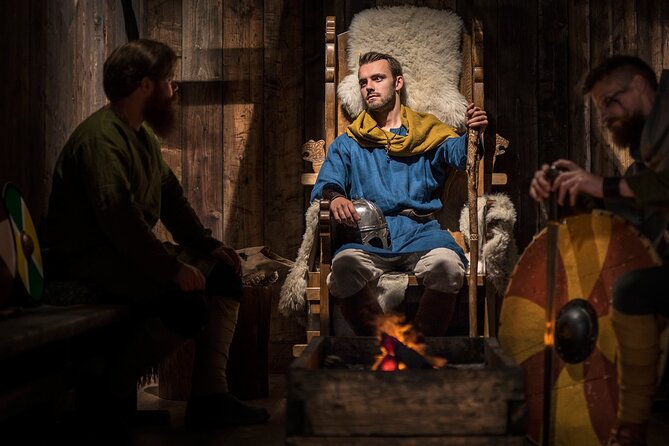
Two things I’d prioritize: the multilingual audio guide (you’ll hear the Vikings in your own language), and the chance to talk with the people in Viking-themed gear who explain what’s behind the finds. If you want a museum that explains the myth-versus-history gap without making you read every label, this fits.
One watch-out: the museum is small and leans into film, sound, and the short electric ride. If you’re expecting a big, artifact-dense deep dive, the reading-heavy parts and the stylized story can feel a bit cheesy.
In This Review
- Key points before you go
- What this museum is really like (and who it suits)
- Ticket value: what you’re paying $22.68 for
- Your visit flow: from room displays to Ragnfrid’s saga
- Stop: The Viking Museum main exhibitions
- The 11-minute ride with Ragnfrid
- A short museum note: what you’ll spend time on
- Exhibits that tend to land: shipbuilding, raids, and farm life
- The ride and storytelling style: where opinions diverge
- Photos and souvenirs: easy wins in a small space
- Cafe and breaks: where reindeer meatballs fit
- Timing tricks for a smooth day in Stockholm
- Should you prebook?
- Quick “not everyone will love this” checklist
- Who this fits best
- FAQ
- FAQ
- How long does The Viking Museum visit take?
- What language options do I get?
- Is the ticket mobile?
- Are service animals allowed?
- Is the museum close to public transportation?
- Can most people participate?
- Can I cancel and get a refund?
- Should you book The Viking Museum?
Key points before you go
- Ragnfrid’s saga ride is a short, guided 11-minute story that turns the Viking Age into something you can follow
- English audio and other languages are available, which matters in a country full of excellent public transport but mixed signage
- Ask-the-guides moments make it feel less like you’re alone with panels and more like you’re getting answers
- Movies, projections, and sound effects do a lot of the heavy lifting in a compact space
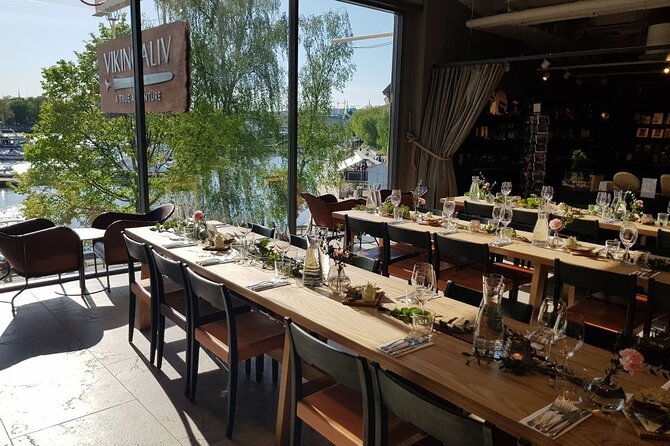
- Cafe and gift shop make an easy half-day stop, with a note on Swedish food like reindeer meatballs
What this museum is really like (and who it suits)
The Viking Museum isn’t trying to be a giant warehouse of artifacts. It’s more like a guided storytelling museum with archaeology as the anchor. You walk through rooms where sound, lighting, projections, and a few tactile replicas help you picture what life might have been like, then you circle back to the real things—objects from the Viking world and how researchers interpret them.
For value, I look at how much “time on your feet” you get versus “time looking at screens.” Here, you get a balanced rhythm: you stand, watch, listen, and then you’re allowed to ask questions as you go. It’s also a straightforward visit length—about 1 to 2 hours—so it fits neatly into a busy Stockholm day.
This stop is a good match if:
- you’re curious about Vikings but you don’t want homework
- you like museums that mix story with explanation
- you want something family-friendly that doesn’t require a long attention span
It may be less satisfying if:
- your idea of a top museum day is lots of artifact cases and long scholarly wall text
- you dislike ride-style attractions or “theatrical” storytelling
- you only have time for one museum and you’re already leaning hard toward something like the Vasa Museum
At an average rating of 4.2 out of 5 (301 reviews), the overall reaction is strongly positive, with most complaints pointing to expectations mismatch and the style of the ride and panels.
You can also read our reviews of more tours and experiences in Stockholm



Ticket value: what you’re paying $22.68 for
The ticket costs $22.68 per person, which is not pocket change. The key is figuring out what you get for that money, because it’s not just entry to an object collection.
You’re buying a guided experience format:
- audio in English (and other languages via a multilingual audio guide)
- films, projections, and sound effects that create context quickly
- archaeological object displays and replicas you can explore
- staff in Viking gear who answer questions as you go
- a specific narrative journey (Ragnfrid’s saga) that’s timed and story-driven
For me, that combination is why the price can feel fair even though the museum is compact. The museum does the explaining for you, in multiple sensory channels, and it keeps the pacing moving. If you enjoy museums where the story is part of the learning, the cost won’t feel like you’re paying for “just a room with captions.”
If you’re the type who wants the past presented in a strictly traditional “case after case” way, you might feel the money spent doesn’t buy enough depth. That’s the trade-off of this style: quick clarity and entertainment, but not a massive, artifact-heavy tour.
Your visit flow: from room displays to Ragnfrid’s saga

Plan on a visit that feels like a short circuit through several themes rather than one long crawl. You’ll start with exhibition spaces built around Viking life and Viking contact with the wider world—raids, journeys, shipbuilding, and everyday life at the farm. Norse mythology is woven throughout, so you’re not only looking at Vikings as warriors and traders; you also see how myth shaped identity and explanation.
Stop: The Viking Museum main exhibitions
In the main exhibition spaces, you meet the Vikings through a mix of:
- movies and projections
- scenery and atmospheric sound effects
- archaeological objects and replicas
- a narrative thread that connects the Viking Age to both myth and real evidence
A nice detail is the way the museum handles the myth-versus-truth angle. You’ll see Norse stories show up repeatedly, but you’re also nudged toward the archaeological thinking behind what’s plausible and what’s legend. That approach helps you understand why some things are remembered as myth while other parts line up with the material record.
You’ll also find moments designed for questions. Instead of being stuck reading only labels, you can ask the people in Viking gear what they think you’re seeing, what’s interpretation, and what’s backed by evidence. If you’re the kind of visitor who always wonders why one artifact looks the way it does, this part pays off.
The 11-minute ride with Ragnfrid
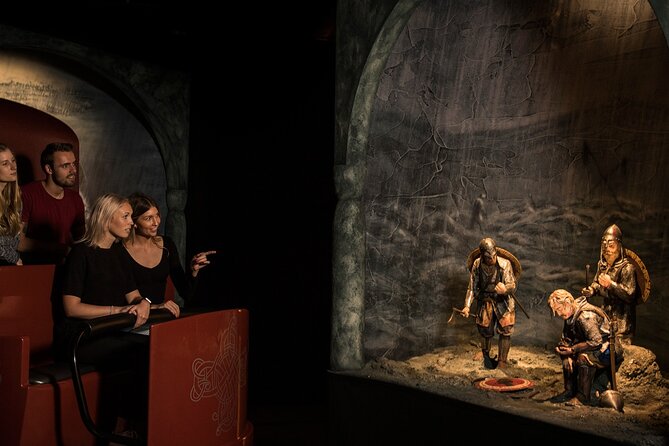
Then comes the star act: Ragnfrid’s saga, an 11-minute journey told as a story you can follow. You begin at Frösala Farm with Ragnfrid and her husband Harald. From there, the route moves through Viking-era action—plundering in the west and slave trade in the east—using sound, light, and atmosphere to make the scenes feel connected.
It’s not a long show, so you don’t feel trapped. You also get a clear narrative arc rather than a random sequence of visuals. One of the reasons this works is that it links people and places to the big Viking themes you’ve already seen in the exhibits.
At the end, you’ll be shown a visual tied to King Harald, which helps close the story thread.
You can also read our reviews of more museum experiences in Stockholm



A short museum note: what you’ll spend time on
This museum does not fill an entire half day. Most people land around the 1-hour mark, and the experience stretches toward 2 hours if you take your time with exhibits and questions.
If you’re moving fast, you can keep momentum. If you’re the slow-and-curious type, you’ll likely spend more time interacting with displays and staff. Either way, you should feel like you’ve “done it” without needing to add another museum just to use up the time.
Exhibits that tend to land: shipbuilding, raids, and farm life
The museum gives you a quick but structured tour through major Viking topics, including:
- raids and journeys
- mastery in shipbuilding
- daily life at the farm
- Norse mythology showing up across the experience
What I like about this set of themes is that it doesn’t reduce Vikings to one stereotype. You see fighters and travelers, sure. But you also get the everyday side—how Viking life wasn’t only about dramatic events; it included work, farming, and community routines.
It also helps that the museum uses practical storytelling tools. Instead of expecting you to build the Viking timeline from scratch, the experience hands you a scaffold. When your brain gets that scaffold, the artifacts and replicas stop feeling random.
The ride and storytelling style: where opinions diverge
Let’s address the thing people either love or roll their eyes at: the stylized ride and story presentation. The Ragnfrid journey is short and designed to be atmospheric. For many visitors, that’s exactly what makes the museum fun. For others—especially teens who want a more straightforward museum vibe—it can feel a bit too storybook or theatrical.
I’d treat this as a choice. If you like multimedia attractions that act like a guided film in a “you are in the scene” format, you’ll likely enjoy it. If you prefer pure object viewing, go in knowing that this museum is part exhibit, part show.
One more reality check: the museum is compact. So if your expectation is a long catalog of historical objects, you might find yourself wanting more time in the artifact cases than the museum can provide.
Photos and souvenirs: easy wins in a small space
Even though this isn’t a “photo studio” museum, it’s built for visuals: projected scenes, guided environments, and the ride itself create plenty of chances for photos. If you like a clear subject in your pictures (not just random interiors), you’ll do fine here.
After you explore, you’ll also have the option to browse the gift shop. It’s an easy end to the visit when your brain is tired of Viking facts for the day.
Cafe and breaks: where reindeer meatballs fit
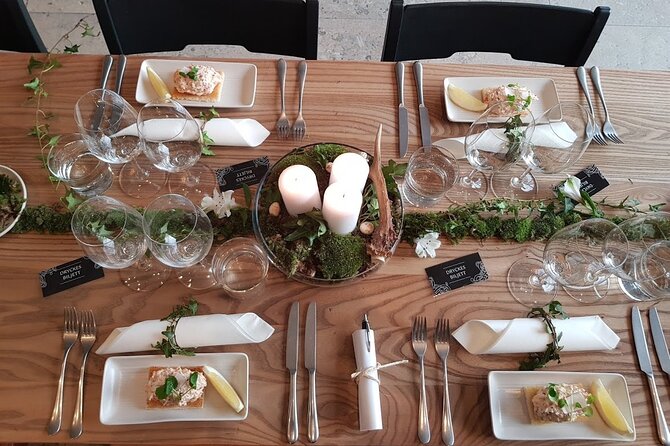
If you’re doing this as part of a Stockholm day, plan for a food stop. The museum has a cafe, and a solid local-food bet is reindeer meatballs. It’s a simple “refuel and reset” move, especially if you’re visiting with kids or you’re coming from another museum where you’ve been on your feet.
Keep in mind: this is a cafe inside a museum experience, so it’s not a destination restaurant. Still, it’s a convenient option when you don’t want to hunt for food immediately after the museum.
Timing tricks for a smooth day in Stockholm
Because the museum is 1 to 2 hours, you can slot it in between bigger stops. If you’re also planning on one major heavyweight museum day, this Viking Museum can act like a palate cleanser—less sprawling, more storytelling.
A smart approach:
- Do it when you want a quick cultural hit without a long line of exhibits.
- Pair it with a larger maritime or history-focused museum if you want variety.
- Give yourself a little buffer so you’re not rushing when the questions and audio start.
If you’re traveling with kids, plan around energy, not just duration. The museum is friendly to younger visitors, but the pace includes some reading. If your children hate reading panels, you can still make it work by focusing attention on the ride and the interactive staff explanations.
Should you prebook?
The ticket is built around mobile entry, and the experience is offered in English (with multilingual audio support). I like prebooking because it cuts friction when you’re in the middle of planning a tight Stockholm route.
Also, this is a popular stop. On average, it’s booked about 26 days in advance, which tells you it can sell out in high seasons or on high-demand days. If you’re visiting during summer or school holidays, I’d rather lock in the time window you want than gamble.
If your plans shift, the experience offers free cancellation up to 24 hours in advance for a full refund. So prebooking isn’t as risky as it can be with other attractions.
Quick “not everyone will love this” checklist
Before you buy, ask yourself:
- Do you enjoy museums with film, projections, and sound effects?
- Are you okay with a ride-style story even if it’s not your definition of serious history?
- Do you want a compact overview of Viking life, not a massive artifact catalog?
If you answered yes, you’re in the right place. If you answered no, you might still enjoy it, but you’ll want to adjust your expectations and maybe pair it with something more artifact-focused.
Who this fits best
You’ll likely be happiest if you:
- want an engaging Viking introduction that mixes myth, archaeology, and everyday life
- enjoy question-and-answer interactions rather than only reading text
- have limited time in Stockholm but still want a memorable history experience
You may struggle a bit more if you:
- need deep object-based scholarship in one visit
- dislike scripted narrative or theatrical show elements
- prefer to spend your museum time where the artifacts take center stage for hours
FAQ
FAQ
How long does The Viking Museum visit take?
The experience runs about 1 to 2 hours.
What language options do I get?
It’s offered in English, and you’ll have access to a multilingual audio guide.
Is the ticket mobile?
Yes, you get a mobile ticket.
Are service animals allowed?
Yes, service animals are allowed.
Is the museum close to public transportation?
It’s near public transportation.
Can most people participate?
The experience is listed as suitable for most travelers.
Can I cancel and get a refund?
Yes. You can cancel up to 24 hours in advance for a full refund, but later than that isn’t refunded.
Should you book The Viking Museum?
If you want a Viking experience that’s easy to understand, not too long, and built to keep you moving, I’d book it. The standout value is the mix of audio in your language, real archaeological objects, and the short Ragnfrid’s saga journey that turns the bigger Viking themes into a story you can follow.
But if you’re the type who only wants traditional artifact viewing and you hate theatrical rides, you might feel disappointed. In that case, put this museum low on your list and spend your time where you’ll get the kind of historical depth you’re craving.
Either way, it’s a very workable add-on to Stockholm’s museum day—especially when you want something Viking-themed that doesn’t swallow your whole afternoon.