REVIEW · STOCKHOLM
Stockholm Old Town Gamla Stan, Historic Walking Tour, Small group
Book on Viator →Operated by Walking tour of Stockholm´s Old Town/Gamla Stan · Bookable on Viator
Gamla Stan turns into a story when you walk it. This small-group Old Town tour threads famous landmarks with street-level details you’d miss on your own. Guide Kiki brings the place to life with clear facts, quick humor, and lots of practical ideas for your next day in Stockholm.
What I like most is the combo of smart pacing and the way Kiki connects the buildings to everyday life in Sweden. I also love that the stops are designed to keep moving while still giving you room to ask questions and talk shop, not just listen.
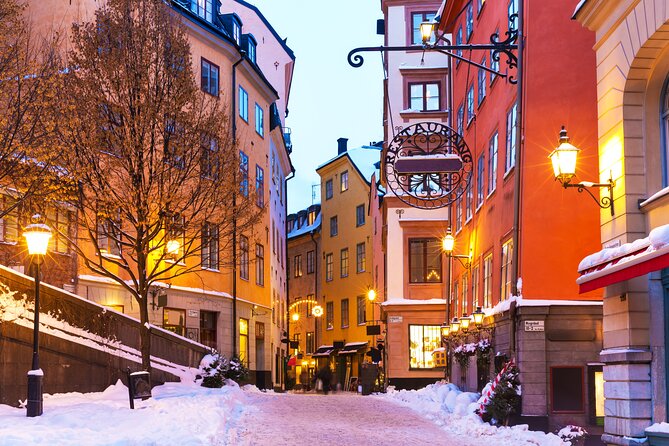
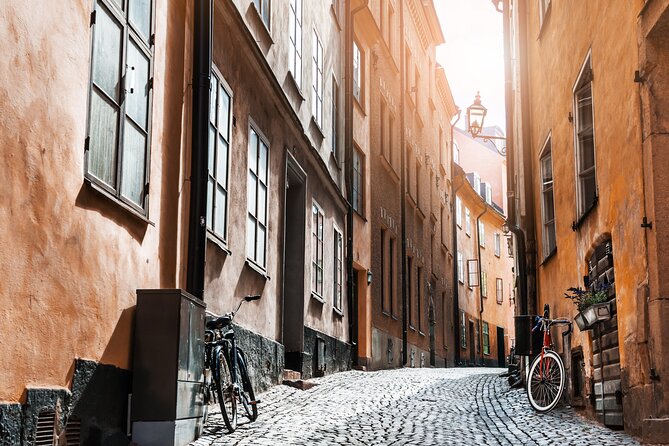
One thing to consider: you’re on medieval cobblestones for about two hours, and it can feel cold and tiring. Also, the Finnish Church area is on the route, but the church is only open during summer for viewing—so you’ll mostly be taking in the exterior and courtyard.
In This Review
- Key highlights
- Entering Gamla Stan from Mynttorget: the “easy start” that matters
- Kiki’s small-group style: questions, pace, and that helpful humor
- Prästgatan and Old Town’s oldest street logic
- Stortorget: the main square that anchors the whole neighborhood
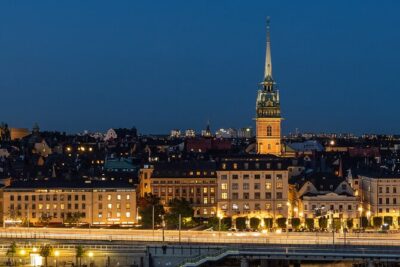
- S:ta Gertrud and Tyska kyrkan: German merchants in plain sight
- Västerlånggatan and Österlånggatan: shopping streets with purpose
- Marten Trotzigs grand: the narrowest street and why it feels dramatic
- Järntorget and Köpmantorget: markets that explain Stockholm’s rhythm
- Statue of St. George: a Swedish twist and a route back to the old shopping core
- Finnish Church (Finska kyrkan): courtyard atmosphere, with summer limits
- Storkyrkan and the Royal Palace: what you’ll learn while staying outside
- What the full route feels like in real life
- Price and value: why $48.55 often beats DIY wandering
- Logistics that keep it from feeling stressful
- Who should book this Old Town Gamla Stan tour
- Should you book this Stockholm Old Town walking tour?
- FAQ
- How long is the Stockholm Old Town Gamla Stan historic walking tour?
- Where does the tour start and where does it end?
- Is the tour offered in English, and how large is the group?
- Are there any indoor visits included?
- What is included in the ticket price?
- Is there free cancellation?
Key highlights
- Small group size capped at 10, so it stays conversational and not hectic
- Kiki’s storytelling style that mixes facts with humor and helps you remember what matters
- Street-name insights that make Gamla Stan easier to navigate later
- Lots of free stops along the way, so you’re not scrambling for entrance fees
- Narrow lanes like Marten Trotzigs grand that make the Old Town feel surprisingly personal
- A practical recommendation list at the end for sights, food, and avoiding big lines
Entering Gamla Stan from Mynttorget: the “easy start” that matters
You begin at Mynttorget 1, 111 28 Stockholm, and the walk loops back there when you’re done. That simple start matters on a first visit, because Old Town is a maze of lanes; having a clean origin point helps you get confident fast.
The tour runs for about 2 hours, and that length is ideal for people who want context without burning half a day. You’ll be walking through compact areas where the sights are close together, and the route keeps you pointed in the right direction instead of zig-zagging randomly.
This is also a good format if you’re not trying to “tick off” every building. The tour focuses on interpretation: what you’re looking at, why it’s there, and how it connects to the way Stockholm evolved.
You can also read our reviews of more walking tours in Stockholm


Kiki’s small-group style: questions, pace, and that helpful humor
The tour is led by Kiki, and the feedback about her shows a consistent theme: she makes the information usable. You don’t just get dates and names dumped on you. You get a guide who explains what you’re seeing, keeps a steady pace, and makes it feel like a conversation.
In a group of up to 10, you’re more likely to get your specific questions answered. That’s especially handy in Old Town, where details live in the corners—street names, small statues, architectural clues—and it helps to ask, Wait, what am I looking at?
If you’ve ever done a guided walk where everyone is rushed along, this feels different. The route timing is built for a “listen, look, and walk” rhythm. One review even noted it turned into an almost private experience with only a couple of guests. The point for you: the tour format supports a relaxed vibe when the group is small.
Prästgatan and Old Town’s oldest street logic
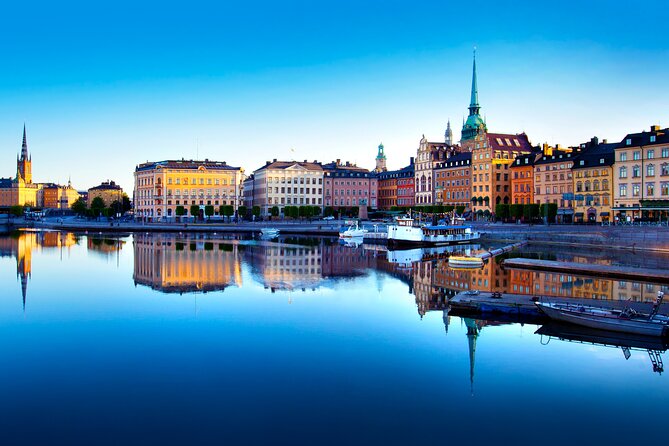
The walk opens at Prästgatan, one of the oldest streets in Gamla Stan. This isn’t just a sightseeing stop—it’s a warm-up that teaches you how to read the area.
What I like about starting here is that it sets expectations. Gamla Stan isn’t laid out like a modern city grid. You’ll feel the medieval planning, the traffic of people over time, and the way commerce and church life shaped routes.
You also get a sense of how Stockholm’s Old Town grew in layers. Instead of pretending everything was planned from one moment, the tour helps you see it as gradual growth—street by street.
Stortorget: the main square that anchors the whole neighborhood
Next comes Stortorget, the central square. This is one of those places where your brain instantly understands the function: a gathering spot for trade, announcements, and civic life.
The tour frames Stortorget as the heart of Old Town’s social engine. Even if you don’t go inside any buildings here, you learn how this square fit into the bigger story of rule, religion, and commerce.
For you, this stop is valuable because it gives context for what comes later. Once you understand Stortorget’s role, the surrounding lanes make more sense. You stop seeing “pretty streets” and start seeing “routes people used.”
S:ta Gertrud and Tyska kyrkan: German merchants in plain sight
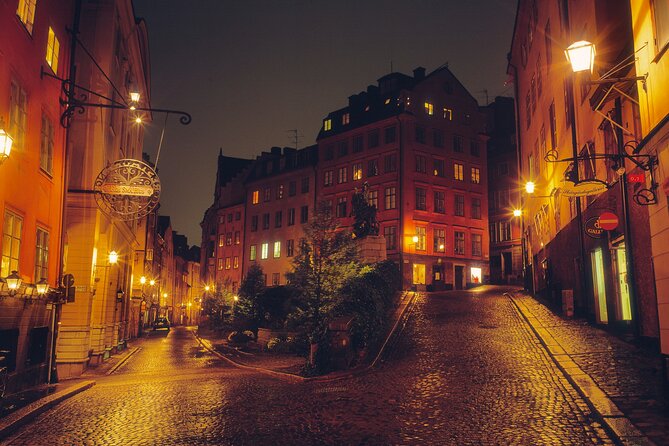
At S:ta Gertrud (Tyska kyrkan area), you get the link between Stockholm and the German merchants who influenced trade. This matters because it explains why Old Town feels international even when you’re standing in Sweden.
What to pay attention to: the way the tour ties religious and community spaces to economic history. In cities like Stockholm, merchants weren’t just doing business—they lived, worshipped, and built networks. That’s how you get a neighborhood identity that lasts.
It’s a short stop, but it’s the kind of context that makes the later market and shopping streets click. You’ll likely start noticing patterns in how different groups left their mark.
You can also read our reviews of more historical tours in Stockholm



Västerlånggatan and Österlånggatan: shopping streets with purpose
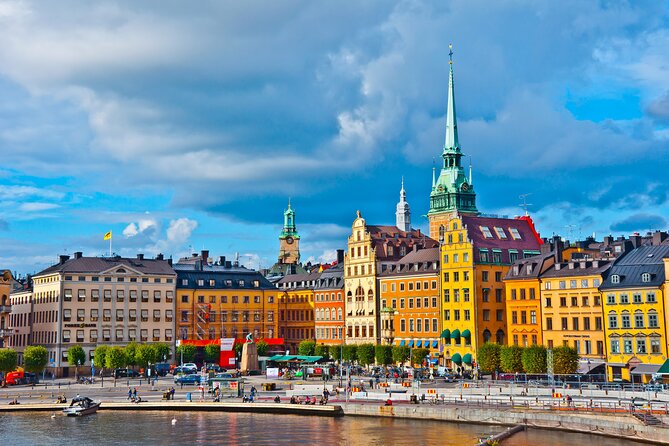
The tour then moves to Västerlånggatan, which the route frames as a main shopping street for souvenirs. It’s a practical stop: you see where the visitor-friendly retail lives.
But the value isn’t only shopping. You’ll also learn how these long streets functioned as movement corridors. A main street in a medieval old town isn’t just for browsing—it’s where foot traffic concentrates.
After that, you’ll hit Österlånggatan, described as a unique shopping street. Again, it’s a “walk and look” stop: compare it to Västerlånggatan, notice how the character shifts, and use that as a mental map.
For you, this is one of the best parts of doing a guided walk mid-trip. Instead of arriving late and hunting for souvenirs with a tired brain, you get oriented early and can shop with a plan.
Marten Trotzigs grand: the narrowest street and why it feels dramatic
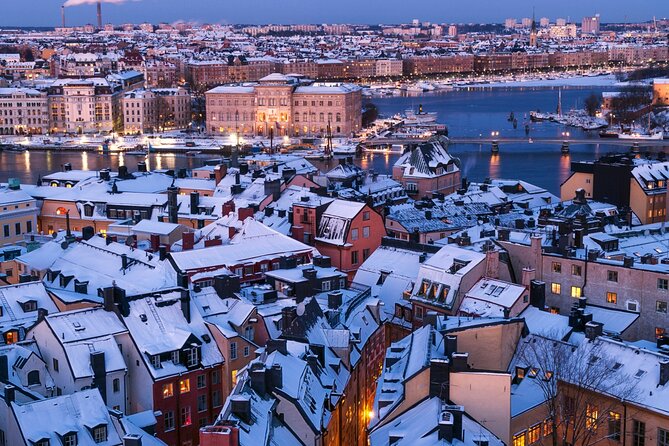
Then comes Marten Trotzigs grand, noted on the route as the narrowest street in Old Town. This is the kind of place you’d find by accident—but you wouldn’t necessarily understand why it exists in the urban pattern.
Expect a short, fun moment where the contrast hits. You go from longer streets to a squeezed-in passage that makes you feel the medieval scale and street constraints. It’s one of those stops that turns architecture into something you can sense.
And because the group is small, you’re not just standing in a crowd taking photos. You can actually listen and look at details without people constantly cutting your view.
Järntorget and Köpmantorget: markets that explain Stockholm’s rhythm
Next you’ll visit Järntorget, a former marketplace now used as a public square. The tour frames it as a living space that has changed roles over time—but kept its social purpose.
That helps you understand Old Town as a system. Squares and markets weren’t just economic nodes; they were daily meeting points. When you can connect the “where” to the “why,” you stop walking in circles.
Later you’ll reach Köpmantorget, the original market street with shops, and the route includes a stop by an interesting painting. This part is great if you like details that don’t feel like a chore. Instead of only looking at facades, you also get pointed toward a specific visual element.
Statue of St. George: a Swedish twist and a route back to the old shopping core
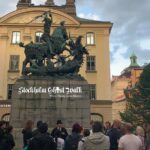
At the Statue of St. George, the tour adds a Swedish historical twist to the well-known myth imagery. The result is better than a standard photo-op because you get the local angle on a story European cities love to reuse.
After the statue, you continue on toward the oldest shopping street. Even if you’re not shopping yet, this sequence helps you connect culture (myth and symbolism) to the practical reality of old streets built around trade.
This is one of those moments where the guide’s framing does more work than the landmark itself. You’ll likely leave with a better sense of which lanes are “old core” versus just “pretty lanes.”
Finnish Church (Finska kyrkan): courtyard atmosphere, with summer limits
The route includes the Finnish Church (Finska kyrkan) area. The key practical detail: the church is only open during the summer for viewing.
So if you’re visiting outside summer, don’t plan on an interior look. For your experience, that’s still okay—the stop is set up around the surrounding area and courtyard feel. You’ll get a sense of the site and the neighborhood logic around it.
This also becomes a weather-planning moment. If it’s cold or windy (and it can be), you’ll want to keep your expectations realistic: you’re there for orientation and atmosphere, not a long interior visit.
Storkyrkan and the Royal Palace: what you’ll learn while staying outside
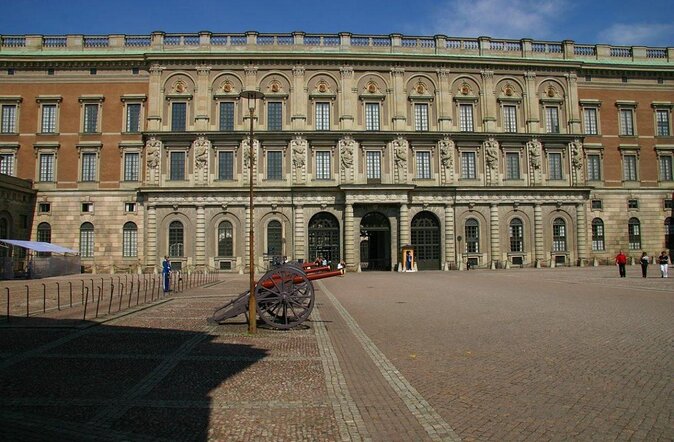
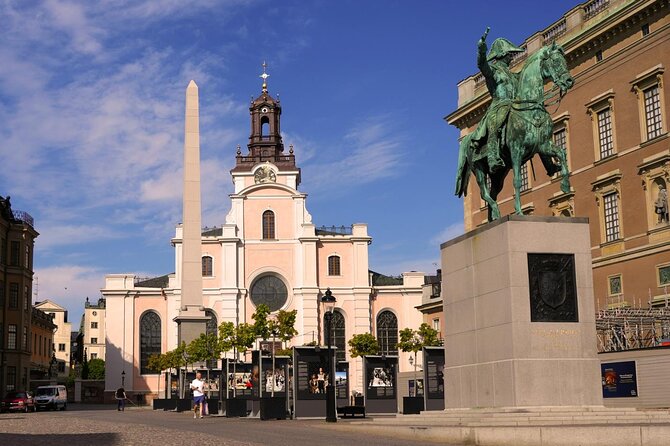
The tour finishes with major-name landmarks you can recognize instantly: Storkyrkan (Stockholm’s Cathedral) and the Royal Palace.
At Storkyrkan, you get a brief history of Sweden’s religion while staying outside the church. Then at the Royal Palace, you learn about royalty and history while outside, including famous statues and sights.
These stops are valuable because they’re layered onto everything you’ve already seen. Earlier you learned about merchant communities, squares, and street patterns. Now you connect that to the structures of power—church and crown—and how they shaped the physical layout of the neighborhood.
You don’t need to be a royalty expert to enjoy this part. The way the tour links these landmarks to what you already noticed makes it feel coherent instead of random.
What the full route feels like in real life
This is a two-hour walking tour with multiple short stops. That means you’ll be on your feet for most of it, with brief moments to absorb and ask questions.
Because you’re moving through medieval lanes, your comfort depends on the day. One review specifically noted the cobblestones can be tiring for seniors, so if that’s you, plan for a slower pace or consider whether two hours on foot is right.
Weather can also change your experience fast. Some participants reported very cold and windy conditions (and even brief snow in May), and the guide still kept things going. For you, that’s a gentle reminder to bring real winter-type gear if you’re visiting shoulder season: hat, gloves, and something for rain just in case.
Price and value: why $48.55 often beats DIY wandering
At $48.55 per person for about two hours, this tour is priced like a mid-range guided experience. The value angle is the focus: you’re paying for interpretation, not entry tickets.
Here’s what pushes the value up:
- The tour includes all fees and taxes
- The marked stops are listed with admission ticket free at each point
- You’re getting the context that helps you enjoy Old Town without guessing what everything means
You also have a built-in reason to book: the average booking time is around 65 days in advance. That suggests it’s popular and can fill up, especially in peak travel seasons.
If you’re the kind of traveler who prefers spending time understanding the city rather than sprinting between photo spots, this price makes sense. You’ll leave with a mental map and a clearer sense of what’s worth revisiting.
Logistics that keep it from feeling stressful
A few details make it easier day-of:
- Offered in English
- You receive a mobile ticket
- It’s near public transportation
- The tour ends back at the meeting point, which helps you avoid the end-of-tour navigation scramble
The group cap of 10 is also a practical advantage. Smaller groups mean less crowding at corners and more chance to hear the guide over street noise.
If you’re traveling with kids or a dog, the rules are friendly: children 13 and under are free of charge, and dogs are welcome. Service animals are also allowed.
Who should book this Old Town Gamla Stan tour
This is a smart pick if:
- You want a first-day orientation to Gamla Stan
- You like walking tours that focus on why places matter, not just what they look like
- You want a small-group experience with time for questions
- You’re planning to return later on your own and shop or explore with a better map
It’s less ideal if:
- You need mostly indoor, seated time (the major sites are discussed outside, and the Finnish Church has limited viewing hours)
- You can’t handle cobblestones for roughly two hours
- You strongly prefer museums or long stops rather than a steady walking rhythm
Should you book this Stockholm Old Town walking tour?
If you’re visiting Stockholm and want your first taste of Gamla Stan to feel organized, human, and useful, I’d book it. The small-group size, Kiki’s storytelling approach, and the fact that stops are structured around free admissions make it a strong value for your money.
My decision rule: book if you want context and a practical route you can reuse the rest of your trip. Skip if you’re physically sensitive to cobblestones or you expect most stops to be indoor.
If you can handle a couple hours of walking and you’re excited by street-level history, this is one of the best ways to start Stockholm without wandering aimlessly.
FAQ
How long is the Stockholm Old Town Gamla Stan historic walking tour?
It lasts about 2 hours.
Where does the tour start and where does it end?
It starts at Mynttorget 1, 111 28 Stockholm, Sweden, and ends back at the same meeting point.
Is the tour offered in English, and how large is the group?
Yes, it’s offered in English. The tour has a maximum of 10 travelers.
Are there any indoor visits included?
Most stops focus on exterior viewing and brief history. The Finnish Church (Finska kyrkan) is only open during the summer for viewing.
What is included in the ticket price?
The price includes all fees and taxes. Admission at the listed stops is free.
Is there free cancellation?
Yes. You can cancel for a full refund up to 24 hours in advance of the experience start time.