REVIEW · STOCKHOLM
Private Tour: 3h Viking History from Stockholm to Runic Kingdom
Book on Viator →Operated by Sweden History Tours · Bookable on Viator
Viking history sounds like helmets and sagas, but this tour turns it into real places and real messages. You get a private guide and round-trip pickup, then you visit rune-stone sites outside the city where you can see how power, law, and memory worked in Viking-age Sweden. I especially loved how the guide connects each stop to everyday life, not just big legends, and how you walk right up to monuments that were meant to be read. One possible drawback: it is short and site-focused, so if you want lots of variety or modern museums, this is more “walk, interpret, ask questions” than “see everything.”
The payoff is that the “Viking world” becomes specific. Estrid’s commemorations, Jarlabanke’s bridge, the Viking thing assembly, and a church connected to early Swedish verse all sit within a tight driving loop. You’ll feel like you’re learning a local story, not repeating a generic Viking slideshow.
In This Review
- Key Highlights Worth Planning Around
- Viking History Outside the City Feel? The Stockholm Bonus
- Price and Logistics: Is $431.94 Per Person Worth It?
- Stop 1 in Täby: Estrid’s Memorials, Gravefields, and Daily Life
- Stop 2: Jarlabanke’s Runestones and the 150-Meter Bridge
- Stop 3: Arkils tingstad, Where Vikings Worked Out Law by Hand
- Stop 4: Vallentuna Church and the First Known Written Swedish Ending Rhyme
- Guide Skill: Why Private Q&A Makes the Stones Come Alive
- What Might Not Click: Short and Stone-Heavy
- Should You Book the 3-Hour Runic Kingdom Tour?
- FAQ
- FAQ
- How long is the tour?
- What time does pickup happen?
- Is this a private tour?
- What’s included?
- Is there a mobile ticket?
- Do you visit rune stones and specific Viking-related sites?
- Are admissions included?
- Where does pickup happen in Stockholm?
- How does pickup work if you arrive by cruise?
- Can I cancel for a refund?
- Is there a minimum number of people to book?
Key Highlights Worth Planning Around
- Private pickup and drop-off from central Stockholm or your cruise port, so you spend your energy on the sites
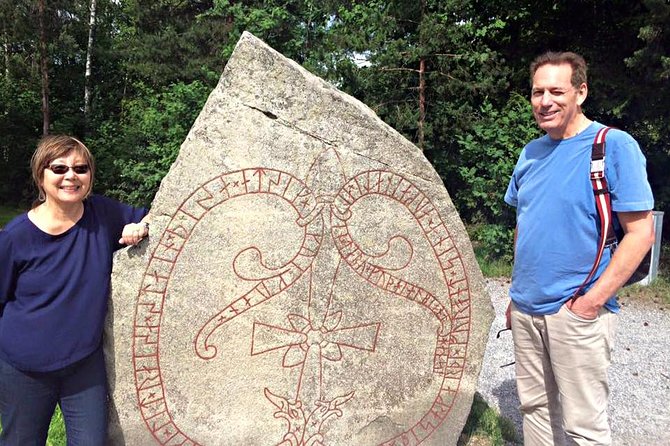
- Runestones in their original settings, not behind glass
- Estrid and memorials at a Viking-age gravefield, including a Christian graveyard layer
- Jarlabanke’s 150-meter bridge (and the stories carved into the stones)
- Arkils tingstad, where law and order were argued about at a Viking assembly place
- Vallentuna church’s early Swedish rhyme reference, tying runic power to later Christian-era language
Viking History Outside the City Feel? The Stockholm Bonus
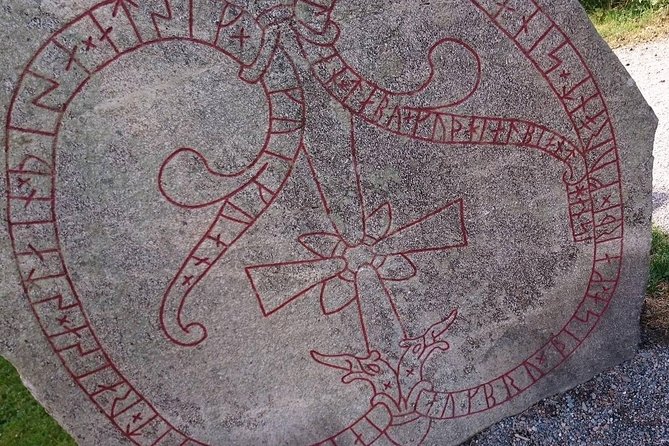
Stockholm is full of water, islands, and stories, but the famous Viking remains are a bit outside the downtown glow. This tour smartly uses that geography. You get driven out into the countryside, then you actually walk through sites where Scandinavians would have recognized the landscape.
What makes this experience feel different is the way it compresses time. In just a few hours, you bounce from Viking memorial practice to a rune-carved causeway to assembly-law tradition and then forward into a medieval church setting. You end up with a timeline you can picture, not just a list of dates.
And yes, the vibe changes as you leave the city. There’s a practical calm once you’re out on the roads and lanes near Täby and Vallentuna. It helps you focus on what your guide points out: stones set into fields, a causeway built for movement and status, and assembly ground beside water.
You can also read our reviews of more private tours in Stockholm



Price and Logistics: Is $431.94 Per Person Worth It?
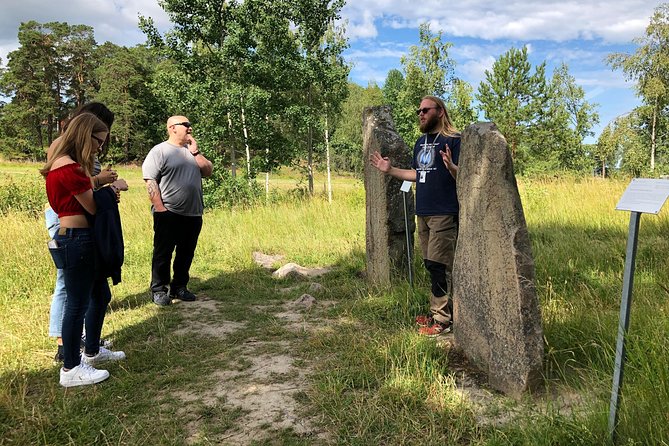
At $431.94 per person for a 3-hour private tour, this is not a budget “hop-on, hop-off” plan. But it is also not just paying for a vehicle and a name. You’re paying for: private pickup, a guide who can answer questions as you go, and round-trip transport to multiple sites in a short window.
A key detail is the minimum booking rule. The tour notes that at least 2 people are required to book. If you’re traveling solo and hoping to slot in, check first. If you’re two people, the math usually starts to look more reasonable because private transport and guiding cost less per person than you might expect.
Timing is tight in a good way. You start with pickup around 9:30 a.m., and while driving time will vary with traffic, the tour keeps the walking segments purposeful. Many visitors like the structure because you see four meaningful stops and still have your afternoon free in Stockholm.
One logistics consideration to keep in mind: no pickup is included at Nynäshamn harbour. If your cruise or hotel is in that area, plan a different meeting arrangement in central Stockholm. It’s doable, but it does take a bit of coordination.
Stop 1 in Täby: Estrid’s Memorials, Gravefields, and Daily Life
Your first stop heads into the Täby area, where you’ll find rune stones tied to the Viking Age landscape. This is where the tour leans into one of its best storylines: the power of Viking women, especially Estrid, and how memorials helped families and communities make their past last.
Here’s what I like about this stop: it doesn’t treat runestones like random rock art. Instead, it frames them as durable public messages. You’ll explore a gravefield and multiple Viking monuments and rune stones, and you’ll learn about Estrid’s commemorations for her family members.
The details that matter most for how the site feels are the layers of history. You’ll see a Viking-age context mixed with an early Christian grave field with over 20 skeletons. That blend is important because it shows change wasn’t a clean switch from pagan to Christian. It was messy, local, and lived in burial practices.
You’ll also hear how Vikings dressed and what daily life might have looked like. That kind of context is exactly why this stop works so well for first-timers. You start seeing the stones as part of a social system, not a standalone mystery.
Practical tip: bring comfortable walking shoes. Even if the site is not physically demanding, you’ll likely move across uneven ground and between memorial markers.
Stop 2: Jarlabanke’s Runestones and the 150-Meter Bridge
Next comes a major status marker: Jarlabanke’s bridge, built around 1030. The causeway is about 150 meters long, which helps your brain grasp scale. This wasn’t a small statement for the road side. It’s infrastructure with political weight.
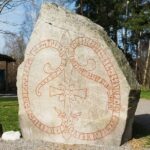
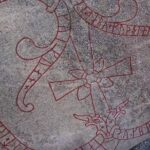
You’ll walk onto the bridge area and hear about the rune stones as messages from dead Vikings. That phrasing might sound dramatic, but it matches how memorial stones were meant to work: they claim attention, they assert identity, and they preserve relationships and obligations.
This stop is also about leadership. You’ll learn the story of Jarlabanke himself—framed as a confident powerful Viking lord—and how the rune stone content connects to his identity and reach. It’s the kind of explanation that makes people slow down and actually read what’s in front of them.
One small drawback to flag: the stop is shorter on-site, about 20 minutes. That’s not enough time to become a rune scholar, but it is usually perfect for getting the message and then moving on. If you’re the kind of person who wants long silent staring time at monuments, you’ll want your guide to pause for questions before you keep walking.
Stop 3: Arkils tingstad, Where Vikings Worked Out Law by Hand
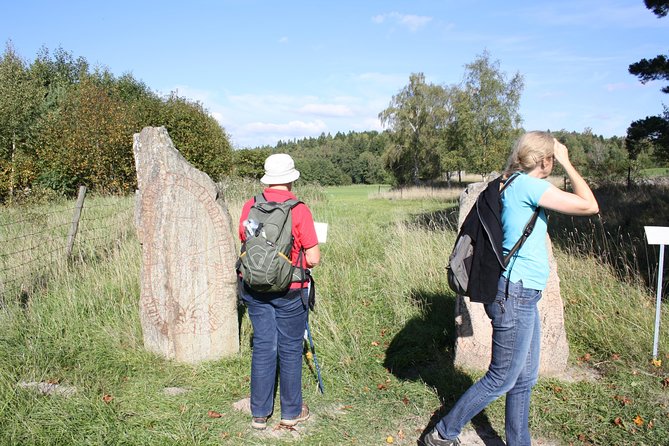
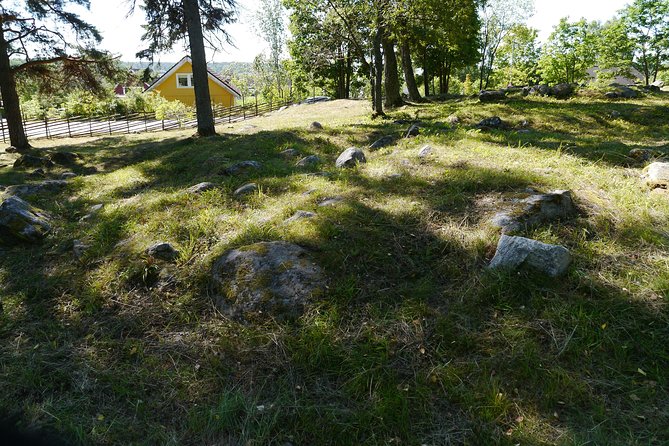
At Arkils tingstad, you step into a place built for discussion and enforcement—what the Vikings called a thing assembly. This is less about burial memory and more about how the community ran itself.
The big idea you’ll take away: law wasn’t abstract. It was argued in a real setting and backed by collective authority. Here you’ll hear about rules around divorce and about violence motivated by insults—those topics may feel modern, but that’s the point. Human conflict and social rules are older than any of us.
You’ll also get an explanation of the tribal system and how life was organized. When your guide connects that structure to what happened at the assembly, the site starts to make sense as a working political machine.
Then there’s the setting itself: you’ll visit the lakeside area. Even if you don’t spend long there, it helps your senses. Assemblies need space for people to gather, and water nearby supports both survival and travel. The landscape supports the story.
Timing here is about 30 minutes. That’s enough to hear the core legal themes and understand why the place mattered, without turning the tour into a lecture marathon.
You can also read our reviews of more historical tours in Stockholm

Stop 4: Vallentuna Church and the First Known Written Swedish Ending Rhyme
The final stop shifts into medieval time at Vallentuna church. This is a clever closing move, because it shows how earlier Viking power and memory didn’t vanish instantly. It gets reinterpreted inside Christian-era structures.
Inside, you’ll see a 13th-century church and learn about contrast in the church room: reformatic and bare compared with earlier Catholic-painted church interiors. That change matters, because it highlights how religious ideas shaped what people displayed and what they chose to keep or remove.
You’ll also visit the church room and look for stone-master signatures from when the church was built. Those small marks are a reminder that builders had identities too. It’s not just Viking ages that left evidence. People always did.
The most striking claim connected to this stop is that the first known written down Swedish ending rhyme is found here. Your guide will connect that to what you’ve seen earlier, so the story doesn’t end at “Vikings.” Instead, it becomes “how Sweden documented itself over time,” using both stones and language.
You’ll also see a local connection to Jarlabanke rune stones in the church context, which helps tie the earlier stop into the closing stop. It’s a tidy thematic loop.
On paper, this is the least “outdoor adventure” stop. In practice, it often leaves people surprised, because churches can feel too quiet after Viking monuments. But here, the church becomes another kind of historical text.
Guide Skill: Why Private Q&A Makes the Stones Come Alive
This is where the tour earns its “private” label. When you’re standing near rune stones, you can’t help asking questions like: What does this message do socially? Who paid for it? Why is it placed here? A generic guide might summarize. A strong guide answers.
Names like Olof, Charlotte, Karl, Erik, and Quentin show up in the guide stories for this tour. One guide described as an archaeologist (Quentin) is exactly the kind of person who can explain not just the legends, but how the sites fit into what we can reasonably say about the Viking Age.
What I look for in a guide on a tour like this is pace plus flexibility. You want time to ask follow-ups as you walk between monuments. You also want someone who can pivot when you want more detail on a specific topic—Estrid, runestone meanings, or the laws discussed at a thing.
Even small extras can help, like recommendations for what to do after the tour. One common theme is that guides end the outing by pointing you toward something in central Stockholm that pairs well with what you’ve just learned. That makes the morning feel like part of a bigger day plan, not a one-off stop.
If you’re a parent traveling with kids, this kind of guiding can also work. The tour’s mix of myths and realities, plus the dramatic “human” topics like divorce and insult-driven killings, tends to keep younger listeners engaged while still giving adults real substance.
What Might Not Click: Short and Stone-Heavy
This tour is built around four outdoor and one church stops in a tight loop. That’s great if you like interpreting monuments. It’s less great if you want lots of different site types, long museum time, or a big shopping-and-photo itinerary.
You should also know what “Viking history” here means. It’s not battlefield reenactment. It’s memorial culture, runic messages, legal assembly tradition, and early Swedish language traces. If your idea of Viking time is more about sagas and gods, you can still expect mythology themes, but the center of gravity is the stones and their context.
Another practical consideration: the driving segments add up. Transfers are approximate and depend on traffic, so plan on some time in the car before you start walking. The payoff is you avoid the hassle of public transit between scattered sites, which is a big deal with limited time.
Finally, if you’re sensitive to quieter communication, be aware that one guide experience was described as less informative than expected. That’s not the norm based on overall scoring, but it’s a reminder that “private” still depends on the specific guide on your date.
Should You Book the 3-Hour Runic Kingdom Tour?
I think this is a strong booking if you want an efficient, high-context Viking experience that actually teaches you how to read what you’re seeing. It’s especially good for first-timers who feel overwhelmed by Viking history and want structure: one theme per stop, short walking time, and lots of room for questions.
You’ll probably love it if you care about:
- Rune stones as communication, not just rocks
- The specific names and stories tied to place: Estrid, Jarlabanke, and the thing
- A calm countryside day that still leaves you time in Stockholm
You might skip it (or pair it with something else) if you want:
- Many more stops or a full-day itinerary
- A museum-heavy approach
- A focus on action scenes rather than interpretation
If you’re choosing between this and a broader, more general tour, I’d pick this one when you want fewer sites done well. It’s short, but it lands key ideas with enough time to let the stones mean something.
FAQ
FAQ
How long is the tour?
The tour runs for about 3 hours.
What time does pickup happen?
Pickup starts around 9:30 a.m..
Is this a private tour?
Yes. It’s described as a private tour/activity, with only your group participating.
What’s included?
Included are a local guide, the driver/vehicle, all taxes and surcharges, and hotel or cruise port pickup and drop-off (with the noted exception of Nynäshamn harbour).
Is there a mobile ticket?
Yes, the tour offers a mobile ticket.
Do you visit rune stones and specific Viking-related sites?
Yes. The tour includes rune-stone-related stops such as sites tied to Estrid, Jarlabanke Runestones, Arkils tingstad (Viking assembly place), and Vallentuna church.
Are admissions included?
The stops list admission ticket free for the visited sites, so you should not expect separate admission fees for those included stops.
Where does pickup happen in Stockholm?
Pickup is offered for central hotels, ports, and accommodations within 5 km of Stockholm central station, and it does not include Nynäshamn harbour.
How does pickup work if you arrive by cruise?
The meeting instructions depend on your pier, with specific guidance for STADSGÅRDEN (S165/S167), FRIHAMNEN (F638), and VÄRTAHAMNEN (V523). You should follow the instructions for your exact pier.
Can I cancel for a refund?
Yes. Free cancellation is offered up to 24 hours before the experience starts for a full refund.
Is there a minimum number of people to book?
Yes. The tour notes a minimum of 2 people to book.